Plating Thickness: What to Specify
Gold, silver, nickel or zinc — the thickness belongs on the drawing, with where it is measured. How to specify plating so the shop plates what you need.
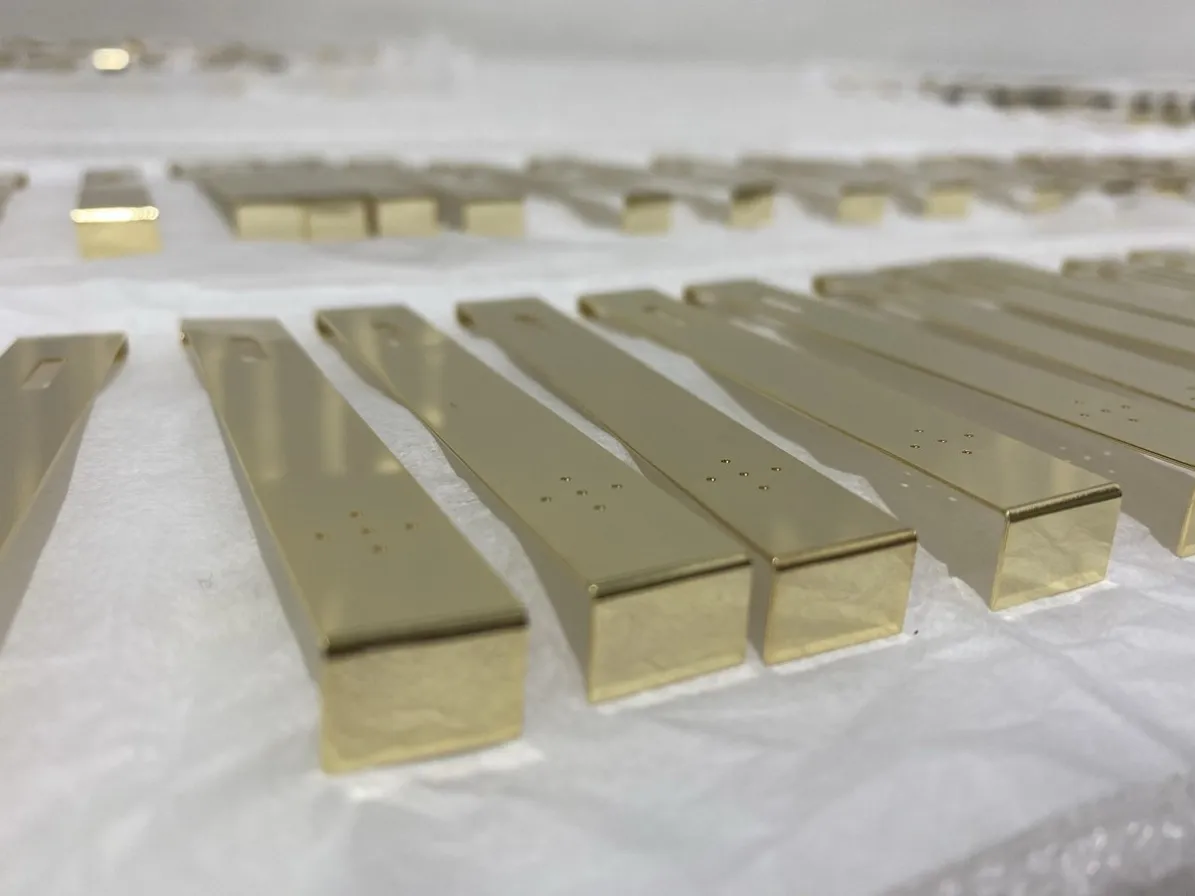
A plating callout that only names the metal — "gold plate" or "nickel plate" — does not tell the shop enough. The thickness, where it is measured, what sits underneath it, and whether the part can be racked or has to be masked all change the result, and all of them belong on the drawing. A complete callout costs one line; an incomplete one costs a round of rework, or a part that looks right and fails in service.
Why thickness is specified per drawing
There is no single right thickness for a plating. A gold contact that is wiped every mating cycle needs more gold than a gold surface that is mated once and left alone. A nickel underplate under gold is there to stop the base metal migrating through; a zinc coating on a steel fastener is there to keep rust away, and its life depends on how thick it is and what environment it lives in.
Because the requirement changes with the job, the thickness is always specified on the drawing, for that part. We do not publish standard thickness values, and we do not guess them from the part type. If the drawing gives a thickness, we plate to it; if it does not, we ask before plating, because plating to the wrong thickness is worse than not plating at all.
Where thickness is measured
Plating does not deposit evenly. It builds up faster on edges and high points, and slower in recesses, blind holes and the inside of a bore. A thickness called out without a location is therefore ambiguous: the same part can measure thick on an edge and thin in a recess.
The drawing should say where the thickness is measured — usually a significant surface, the face that does the work — and the measurement should be taken there. On a contact, that is the contact face. On a fastener, it is the thread or the head. On a part with masking, it is the plated area. If the drawing does not say, the shop will measure the most accessible flat face, which may not be the face that matters.
The stack: what sits under the plating
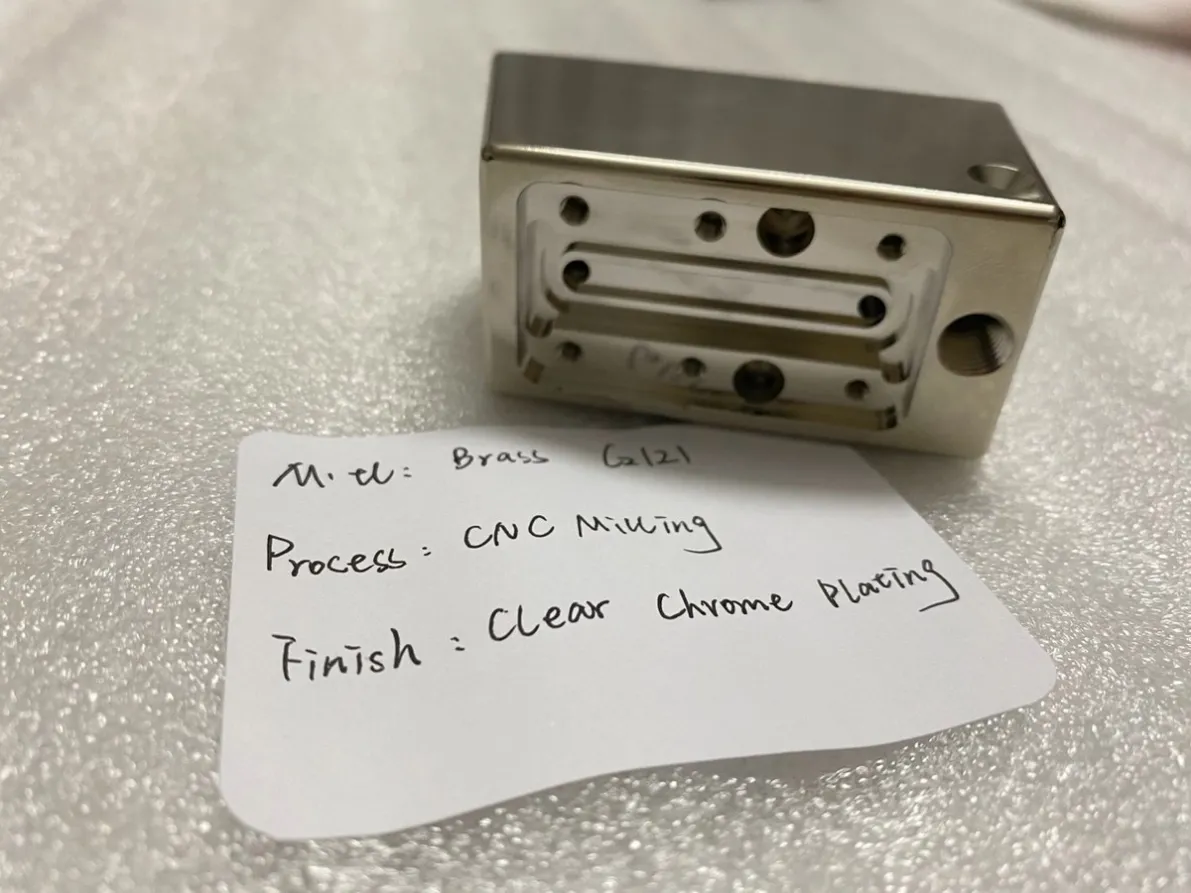
Most platings are not a single layer. Gold on copper usually sits on a nickel underplate, which stops copper migrating into the gold and keeps the contact resistance stable over time. Silver on brass may sit on a nickel or a copper strike. Zinc on steel may be followed by a chromate passivate, which is part of the corrosion protection.
The drawing should name the stack, or at least the top coat and any underplate that matters. A gold callout with no underplate can be read as gold straight onto copper, which will not last. For how each metal is used, see gold plating for electrical contacts, silver plating for electrical contacts, nickel plating: electrolytic vs electroless and zinc plating for steel parts.
Threads, bores and masking
Plating adds thickness, and on a thread or a tight bore that thickness changes the fit. A thread plated after machining will measure larger than the machined size, and a bore plated after machining will measure smaller. The drawing should say whether the thread is machined to allow for the plating, or plated after machining to a size that still fits — and on a tight fit, it should say which.
Masking is the other side of the same question. A face that must stay unplated — a ground, a sealing face, an electrical contact area that needs a different finish — must be masked, and the drawing should mark it. We can mask with tape, stop-off lacquer, plugs or dedicated fixtures, and selective plating is available where only the working face needs the coating.
The standard behind the callout
A plating callout usually names a standard as well as a metal and a thickness — for example, ASTM B633 for zinc on steel. The standard defines how the thickness is measured, what the adhesion test is, and what the salt spray requirement is. Naming the standard removes arguments about how the result is judged.
If no standard is named, the shop will work to the common practice for that plating, but the acceptance test should still be agreed at the quote stage. A part that has to pass a salt spray test and a part that only has to look right are plated and tested differently, and the price follows the test.
Racking, batch size and appearance
Small parts are usually racked or barreled, and the method affects the thickness distribution and the marks left behind. Rack marks are small bare spots where the part touched the rack, and their position can be agreed in advance — on a hidden face rather than a cosmetic one.
The appearance also depends on the base material and its finish. A plated part shows the surface it was plated over: a rough base gives a rough plate, and a polished base gives a bright one. If the appearance matters, the base finish should be specified with the plating, not left to the shop.
What to send for a quote
A drawing with the plating metal, the thickness and where it is measured, the underplate if any, the standard if one applies, the faces to be masked, and any test the parts must pass. With that, the shop can quote the plating, the masking and the testing together, and there is nothing to guess. If you want a plated part quoted, send us your drawing — inquiries are answered within 8 hours and quotes usually within 24 hours.
FAQ
Why is plating thickness always specified on the drawing? Because the right thickness depends on the job — a contact that is wiped every cycle needs more gold than one that is mated once. There is no universal value.
Where is plating thickness measured? On the significant surface — the face that does the work, such as the contact face or the thread. Plating builds up unevenly, thick on edges and thin in recesses, so the location matters as much as the number.
Does plating change the size of a thread or a bore? Yes. Plating adds thickness, so a plated thread measures larger and a plated bore measures smaller than the machined size. The drawing should say whether the machining allows for the plating.
What is an underplate and why does it matter? A layer under the top coat — nickel under gold, for example — that stops the base metal migrating through and keeps the finish stable over time.
Can some faces be left unplated? Yes. Faces that must stay bare — a ground, a sealing face, a different finish — are masked with tape, stop-off lacquer, plugs or fixtures, and the drawing should mark them.