Machining Nylon: Moisture and Tolerances
Nylon absorbs moisture and grows with it, so a part that measures right on the machine can be out later. How to machine nylon and hold its size.
Nylon is one of the most useful engineering plastics to machine: it is tough, it slides well, it takes a thread, and it costs less than most of its rivals. It also has a habit no metal has — it absorbs moisture from the air, and as it does, it grows. A nylon part that measures exactly right on the machine can be a fraction of a millimeter bigger a week later, and a bore that was a press fit can become a slip fit. Machining nylon well means designing and measuring with that movement in mind.
Moisture: the dimension that keeps changing
Nylon (PA) absorbs water, and the amount depends on the grade and the environment. A part stored in a humid shop grows; a part dried out in a heated room shrinks. The change is small in absolute terms but large next to a tight tolerance, and it does not happen evenly — a thin section reaches equilibrium faster than a thick one.
The practical consequence is that nylon dimensions should be checked at a known condition, and the drawing should say what that condition is. Parts that will live in a wet environment should be measured after conditioning; parts that will live dry should be measured dry. What matters is that the shop and the customer are measuring the same part in the same state. A part quoted to a tight tolerance without any note on moisture is a part that will be argued about later.
Tolerances: leave room for the material
Because nylon moves, tolerances on nylon parts are usually looser than on metal parts of the same size. A bore that needs a bearing fit, or a shaft that must slide in a slot, should be designed with the moisture movement in mind — the fit that is right when the part is dry may be too tight when it has absorbed moisture, or too loose when it has dried out.
That does not mean nylon cannot be precise. On a well-made part, machined from stress-relieved stock and measured at a stable condition, tolerances of ±0.1 mm (±0.004") are realistic. Tighter than that is possible on small features, but it is the exception, and it should be discussed before the part is quoted rather than assumed from the drawing.
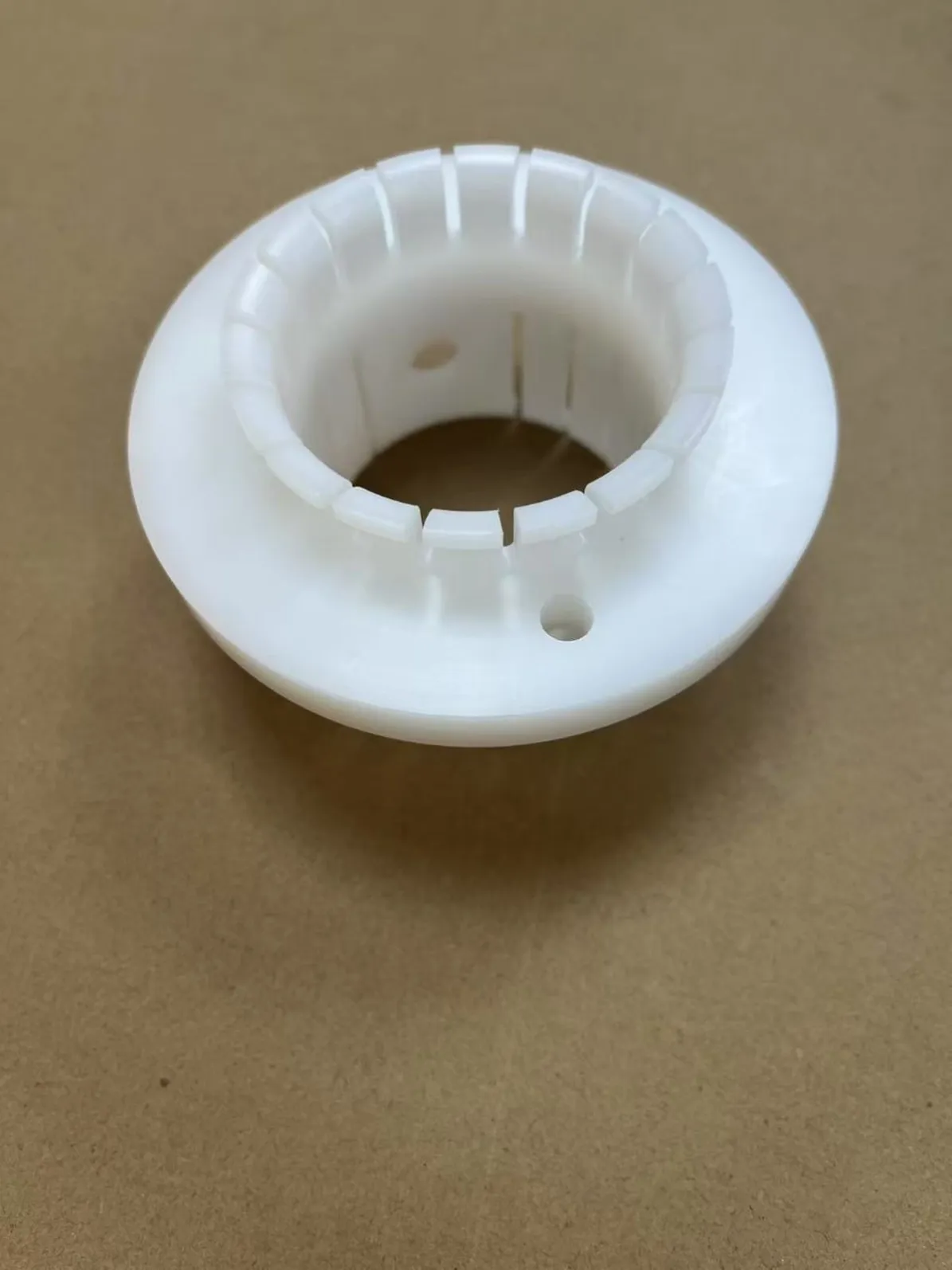
Machining: sharp tools and light cuts
Nylon machines easily, which is part of the problem. A dull tool rubs instead of cutting, and the friction heats the surface. Hot nylon smears, and a smeared surface is a poor surface — it looks rough, it measures wrong, and it can hide a burr that only shows up at assembly.
The fix is the same as for other plastics: sharp tools, light cuts, and enough feed to keep the tool cutting rather than rubbing. Clamping matters too. Nylon is soft enough that a vise can squeeze it out of shape, and a part that is round in the vise is oval when it comes out. Light clamping, soft jaws, and support under thin sections keep the part true. For how other engineering plastics behave under the cutter, see machining PEEK, Ultem and PTFE.
Surface finish: what to expect
A machined nylon surface is naturally smooth, and with a sharp tool and a fine finishing pass it can be very smooth indeed. But the surface that looks good on the machine is not always the surface that stays good — moisture absorption can raise the surface slightly, and a part handled with bare hands picks up marks more readily than a metal part.
Where the surface matters — a sealing face, a sliding surface, a cosmetic face — the finish should be called out on the drawing, and the part should be packed to protect it. The finish comes from the machining itself, and from keeping the part clean after it is cut.
Threads and inserts in nylon
Nylon takes a tapped thread directly, and a coarse thread holds better than a fine one — the material is soft, and a fine thread strips easily under load. For threads that will be used repeatedly, a threaded insert is the better answer: a brass insert, pressed or heat-set into the part, carries the thread and survives many assembly cycles. The insert should be sized for nylon, not borrowed from a metal design, since the material around it moves with moisture — see threaded inserts for plastic parts.
Stress relief and warping
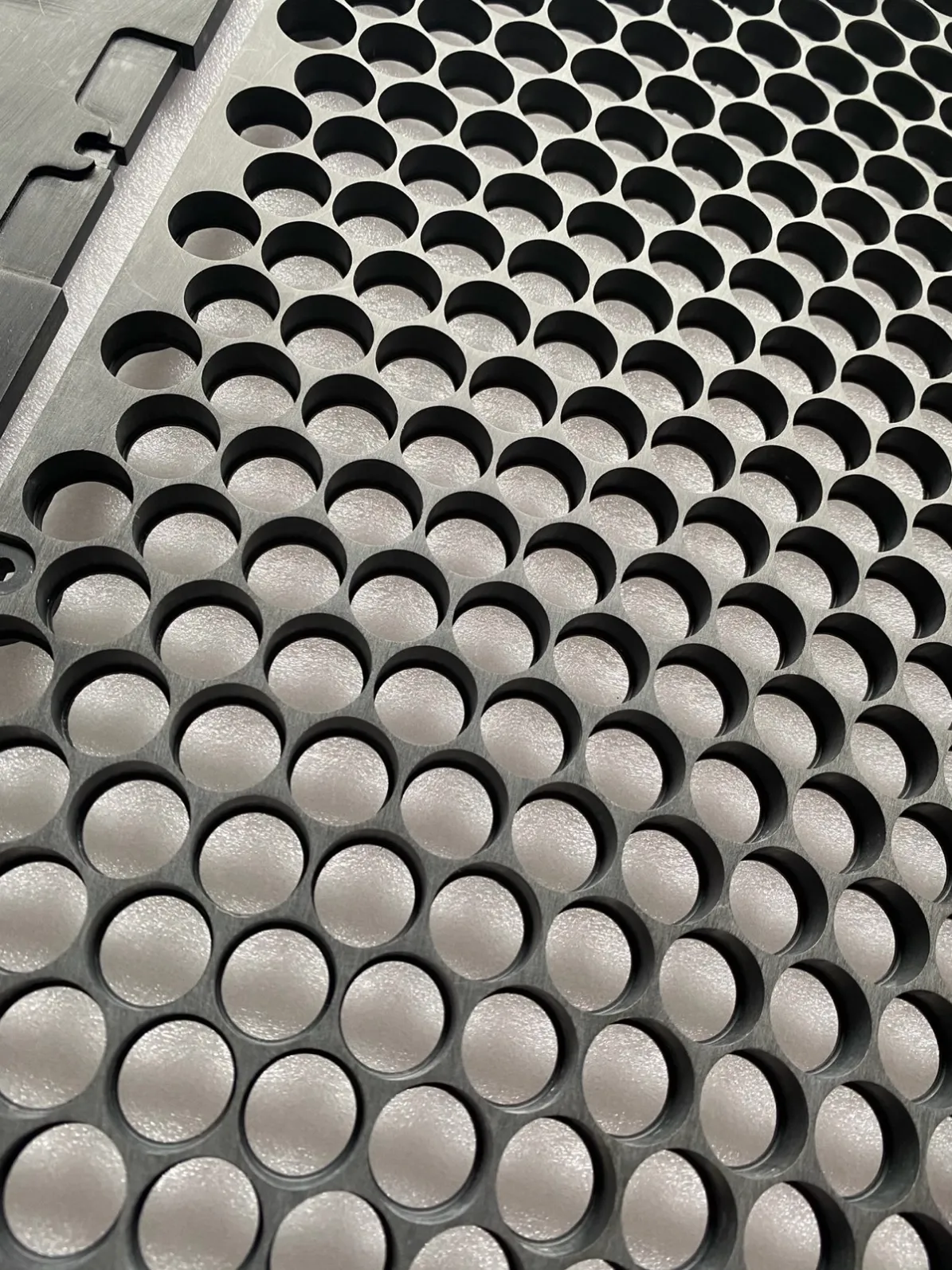
Like other plastics, nylon carries internal stress from the extrusion or molding of the stock. Machining away a large part of a block — a pocketed plate, for example — releases that stress unevenly, and the part can warp. The countermeasure is the same as for other plastics: machine in stages, relieve the stress between stages, and take the final finishing pass last. Large areas of material removed from one side only are the worst case, and the drawing or the quote should flag them — see machining pocketed POM plates for the staged approach in detail.
What to send for a quote
A drawing with the tolerances and the finish called out, the nylon grade if it is specified, and a note on the environment the part will live in — wet, dry, or normal indoor air. That note decides how the part is measured and what tolerance is realistic. If you want a nylon part quoted, send us your drawing — inquiries are answered within 8 hours and quotes usually within 24 hours.
FAQ
Why does a nylon part change size after machining? Nylon absorbs moisture from the air and grows as it does, and shrinks as it dries out. A part that measures right on the machine can be a fraction of a millimeter different a week later, so dimensions should be checked at a known moisture condition.
What tolerance can machined nylon hold? ±0.1 mm (±0.004") is realistic on a well-made part measured at a stable condition. Tighter tolerances are possible on small features but should be discussed before quoting, since moisture movement can exceed them.
Does nylon warp after machining? It can, when a large amount of material is removed from one side and the internal stress in the stock is released unevenly. Machining in stages with stress relief between stages keeps the part flat.
Can nylon be threaded directly? Yes, and a coarse thread holds better than a fine one in this soft material. For threads that will be assembled and removed repeatedly, a brass threaded insert is the better answer.
How should nylon parts be stored? In a stable environment, protected from extreme humidity changes, and packed so the surfaces are not marked. Parts that will live wet should be measured after conditioning, not straight off the machine.