Gold Plating for Electrical Contacts
Gold plating keeps contact resistance low and stable for years. When gold beats silver, where selective plating saves cost, and what to specify.
An electrical contact has one job: pass current across a joint that opens, closes or slides, the same way on the ten-thousandth cycle as on the first. The base metal underneath — copper, brass or beryllium copper — carries the current and provides the spring force, but the surface is what actually touches. Gold plating is the finish engineers reach for when that surface cannot be allowed to change: it does not oxidize or tarnish, and its contact resistance stays low and predictable. This article explains why gold works, when silver is better, and how selective plating controls cost. Send us the drawing for a combined quote — inquiries are answered within 8 hours and quotes usually within 24 hours.
Why gold: the surface that stays the same
Most metals protect themselves with an oxide film. On a structural part that film is useful; on a contact it is a resistor sitting exactly where two surfaces meet. Copper alloys conduct well in bulk, but their surfaces oxidize in air, raising contact resistance as the part ages or sits in storage.
Gold behaves differently:
- It forms no oxide. Gold is a noble metal: the surface you plate is the surface that mates years later, so contact resistance starts low and stays low. It also resists corrosion in storage.
- It is soft and ductile. Under pressure it flows slightly, increasing the real contact area and lowering resistance further.
- It survives low-energy circuits. Signal contacts switching small currents cannot break through a surface film — a film-free surface makes those circuits reliable.
The trade is obvious: gold is expensive. The real questions are how much of the part needs it, and whether a cheaper finish would do the same job.
Where gold-plated contacts show up
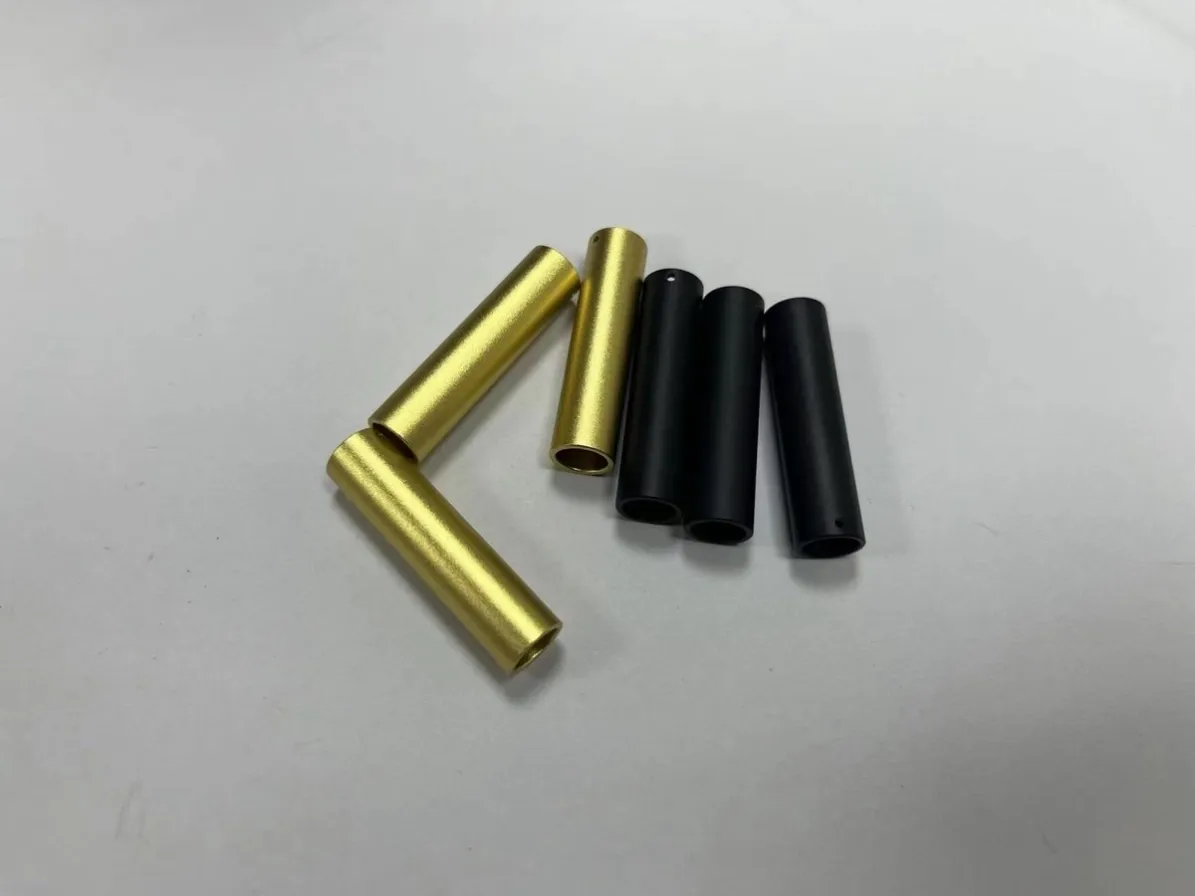
The parts we plate with gold are the usual contact family: stamped spring contacts, terminals, contact blades, connector fingers and busbar contact faces. A typical example is a stamped C17200 beryllium copper contact, punched and bent, then gold plated — beryllium copper for spring and strength, gold for the surface.
Gold vs silver: how to choose
Silver is the other precious-metal finish we plate regularly — a different tool, not just a cheaper one:
| Gold plating | Silver plating | |
|---|---|---|
| Surface film | None — no oxide, no tarnish | Tarnishes in sulfur-bearing air (dark sulfide film) |
| Contact resistance | Low and very stable over time | Lowest of any metal when clean; rises with tarnish |
| Best at | Signal and low-force contacts, long storage, rarely mated joints | Power contacts and busbar joints, where contact force wipes the surface clean |
| Solderability | Good, and stays solderable in storage | Good when fresh; tarnished silver solders poorly |
| Cost | Higher — priced by area and thickness | Lower per part |
The rules of thumb: if the contact mates with light force, switches a signal, or must work after years on a shelf, gold is safer. On a bolted busbar joint, silver usually gives the best conductivity for the money, and clamping force breaks through light tarnish. If parts will be soldered after storage, gold wins again. Our article on silver plating for electrical contacts covers the silver side in depth.
Selective plating: gold only where it works
Gold is priced by area and thickness, so plating a whole part when only one face makes contact pays for metal that does nothing. Selective plating puts gold only on the working area — contact face, mating finger, the pad that meets the bolt — and leaves the rest bare or with a simpler finish.
Unplated areas are held back by masking:
- Masking tape for flat faces and simple boundaries.
- Stop-off lacquer for areas with awkward shapes.
- Plugs and caps sealing holes, threads and bores.
- Fixture masking, where the rack itself shields part of the component.
Decide selective plating at the drawing stage: mark the contact area and say what the rest of the part should be. A boundary that is clear on paper is far cheaper than one interpreted at the plating rack.
Thickness and underplate: set by the drawing
We do not publish a standard gold thickness, because no single value suits every contact. The right build depends on mating cycles, contact force, sliding and service life — a finger that plugs in twice needs far less than a sliding contact that wipes every cycle. Call out thickness and area on the drawing and we plate to it.
Gold is also normally plated over an underplate, commonly nickel, which stops the gold and copper base diffusing into each other — write the full stack on the drawing, not just the top layer.
What to put on the drawing
- The contact area, dimensioned or hatched, if plating is selective.
- The plating stack and thickness, per your specification.
- The base material in full — grade and temper, e.g. C17200 beryllium copper or C11000 copper.
- Any areas that must stay bare, such as solder tails or surfaces that will be bonded.
- The mating expectation, if known: how often the contact mates over the product's life.
With those items on the drawing, the quote covers part and finish as one job.
FAQ
Why not just make the whole contact out of gold? Solid gold would be too soft and too expensive. Spring force comes from the base metal — C17200 beryllium copper, for example — and gold only has to be a surface, so plating gives the electrical behavior at a fraction of the cost.
Is gold plating always better than silver plating? No. Silver conducts slightly better and costs less, and on high-force power joints such as busbar connections it is often the right choice. Gold wins where the surface must not change.
Can you plate only part of a component? Yes. Selective plating is routine — we mask the areas that stay unplated and plate the working face only. Mark the area on the drawing so the boundary is unambiguous.
How thick should the gold be? It depends on mating cycles, contact force and service life, so we plate to the thickness on your drawing rather than a house standard. If you have no value yet, tell us how the contact is used and we will suggest one before quoting.
Does gold plating change the part dimensions? Yes, by the plating thickness itself. On tight-fitting contacts that build-up belongs in the tolerance calculation — flag the fits that matter.