Nickel Plating: Electrolytic vs Electroless
Both nickel platings protect a part, but they deposit differently: electrolytic nickel follows the current, electroless nickel (ENP) coats every surface evenly. How to choose for your part.
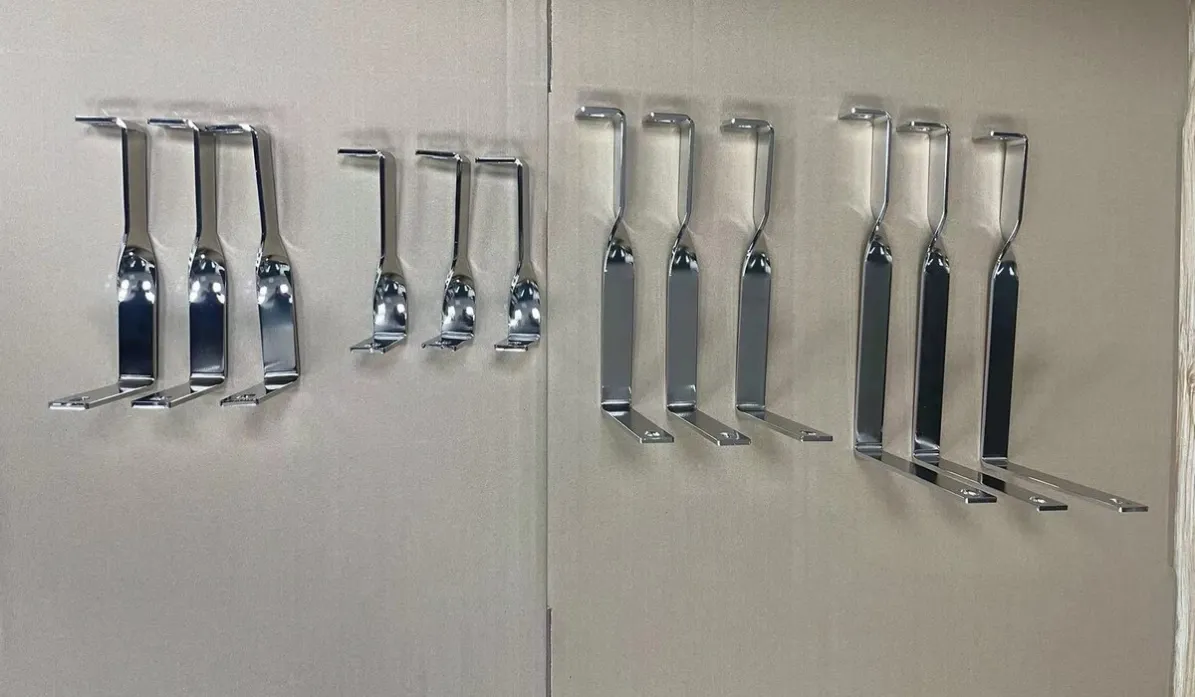
We plate nickel both ways — electrolytic nickel and electroless nickel (ENP) — and they are not interchangeable. They differ in how the metal gets onto the part, and that one difference decides the thickness pattern, the cost, and which parts each process suits. Choosing the wrong one usually still plates; it just plates expensively, or unevenly where the part could not afford it.
Why nickel at all
Nickel is plated for corrosion protection first — a barrier between the part and its environment — then for wear resistance, for a surface that solders and conducts well, and for a clean, professional appearance. Our nickel-plated brass busbars are a typical case: the nickel keeps the contact faces from oxidizing so the electrical joint stays honest.
Electrolytic nickel: follows the current
Electrolytic plating drives nickel onto the part with electric current, and the deposit follows the current density: edges and corners plate thick, recesses and bores plate thin. On a simple, open shape that hardly matters. On a part with deep holes or sharp geometry, the thickness can vary several-fold across the part.
Its strengths are price and finish: on simple shapes it is the cheaper process, and bright nickel gives the polished, decorative look used on visible hardware. Electrolytic nickel is commonly specified to ASTM B689.
Electroless nickel (ENP): coats everything evenly
Electroless nickel needs no current — the deposit forms chemically, at the same rate on every surface the solution touches. Thickness is uniform across the part: outside, inside bores, down threads, into recesses. A bore that needs 15 µm of nickel gets 15 µm, not whatever the current felt like leaving there.
ENP is a nickel-phosphorus alloy. Mid-phosphorus ENP is the general-purpose grade; high-phosphorus ENP gives the strongest corrosion resistance and is non-magnetic. The deposit is hard as plated and harder again after a heat treatment. It is specified to ASTM B733, and it costs more than electrolytic nickel — the premium buys the uniformity.
How to choose
- Complex shape, bores, threads, a thickness tolerance that matters: ENP. Uniform deposit is the whole point, and dimensions after plating stay predictable — threads and fits can be machined with the build allowed for.
- Simple shape, visible part, decorative bright finish: electrolytic nickel, usually over a copper underplate that levels the surface first.
- Corrosive environment, longest life from the coating: high-phosphorus ENP.
- Electrical contact parts: either can work; busbars and terminals are usually electrolytic or a specified ENP, decided by the thickness and contact requirements on the drawing.
If the drawing just says "nickel plate" without a type, the quote will ask — or propose the one that fits the part's geometry, and say why.
How it runs
Both routes start the same way: cleaning and activation, because nickel only sticks to a properly prepared surface. Where the system needs it, a copper underplate goes down before the nickel. After plating, parts are rinsed, dried and inspected for coverage and thickness; a hydrogen-relief bake is added where the specification or the base material's hardness calls for it.
What to send for a quote
The drawing with the plating callout — type, thickness, and any surfaces to mask — plus the base material and quantity. If the callout is incomplete, send it anyway; we will propose the system that fits. Reach us via our contact page — enquiries are answered within 8 hours and quotes usually come back within 24 hours.
FAQ
Which is more corrosion resistant? High-phosphorus electroless nickel, generally — the uniform, pore-free deposit is hard to beat. Electrolytic nickel systems with a copper underplate are close behind in most service conditions and cost less.
Can ENP plate inside a deep bore? Yes. As long as solution can flow there, it plates at the same thickness as the outside. That is the main reason it is chosen for manifolds, valve parts and threaded components.
Will plating change my dimensions? Yes, by the deposit thickness on each surface — and with ENP that number is exact, so machining allowances are straightforward. With electrolytic nickel, allow for thicker build on edges and corners.
Is electroless nickel magnetic? High-phosphorus ENP is non-magnetic as plated, which matters for some instrument parts. Mid-phosphorus grades are slightly magnetic. Say which you need on the enquiry.
Can you plate nickel on aluminum? Yes, with the right preparation — aluminum needs a zincate treatment before plating, and usually a copper layer under the nickel. It is routine work, quoted with the preparation included.