Why Anodized Parts Vary in Color
Two anodized parts in the "same" black rarely match perfectly, and the reasons are physical, not careless. Where anodizing color variation comes from, and how to keep it small.
It happens on real orders: a housing and its cover come back in the same specified black, from the same supplier, and side by side they are visibly two blacks. The buyer's first thought is that something went wrong. Usually nothing went wrong — anodized color is a range, not a point, and several ordinary physical reasons push parts around inside that range. This page explains where the variation comes from, what actually controls it, and how to write the requirement so the parts you receive match the way you expect.
First: what "color" is on an anodized part
Anodized color is not a layer of paint sitting on the metal. Anodizing grows a porous oxide layer out of the aluminum itself, the dye soaks into those pores, and a sealing step locks it in. So the final color is a product of three things multiplied together: the metal underneath, the oxide layer grown on it, and the dye absorbed into that layer. Anything that moves one of the three moves the color. Paint can be mixed to a formula; an anodized color is grown, part by part, and growing has tolerances like everything else in a factory.
The main causes of variation
- Different batches. This is the big one. Parts anodized in different tank loads, on different days, see slightly different bath conditions — dye concentration and temperature drift as a bath works and ages, immersion times vary, sealing varies. Each load comes out consistent within itself and slightly different from the next load. Two parts of one assembly anodized in different weeks are the classic mismatch.
- Different material. The alloy shows through. The same dye on 6061-T6 aluminum and on 7075-T6 aluminum gives two visibly different results, because the alloying elements change the oxide and how it takes dye. Even within one grade, different material lots — different heats of metal from the mill — anodize a shade apart. Cast parts differ from wrought parts more strongly again. If one part of a set is machined from a different alloy or a different batch of bar, color will tell on you.
- Film thickness. A thicker anodic film holds more dye and reads deeper and darker; a thinner one reads lighter. Thickness varies with the part's position in the tank and the load around it, so even one load is not perfectly uniform from the middle of the rack to the edge.
- Surface preparation. The finish under the color matters. A bead-blasted face and a machined face in the same dye come out different shades, because the texture scatters light differently. Etching time before anodizing shifts the surface too. A set whose parts were prepped differently will not match, however good the dye work is.
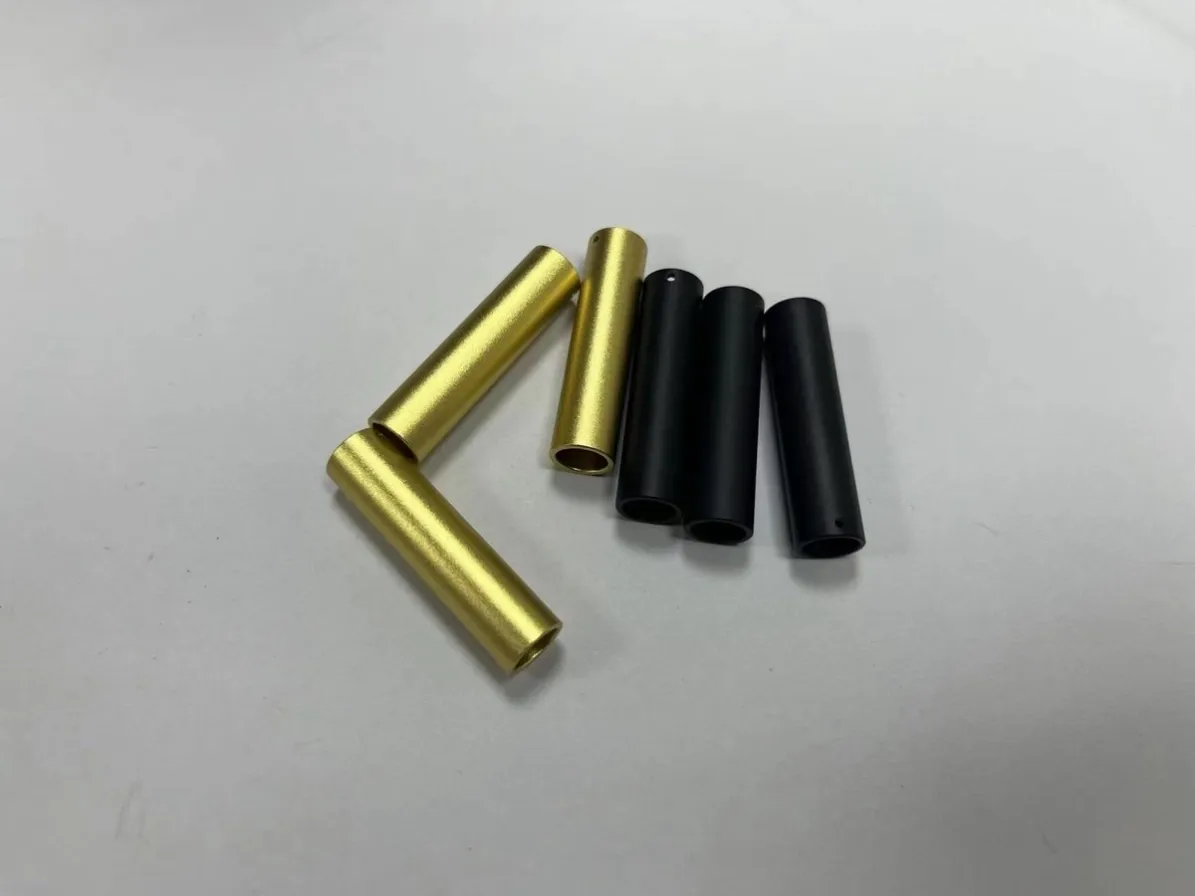
- The color itself. Black is the most forgiving color in anodizing — deep, saturated, and small differences hide in it. Clear (undyed) finishes show the metal's own tone, so alloy differences show most there, and light or bright dyed colors sit in between: the lighter the color, the more any variation reads.
None of these is a defect in the sense of a process failure. They are the physics of the finish, and every anodizer on earth works inside them. What separates a good outcome from a bad one is whether the order was planned around them.
How we keep a set matching
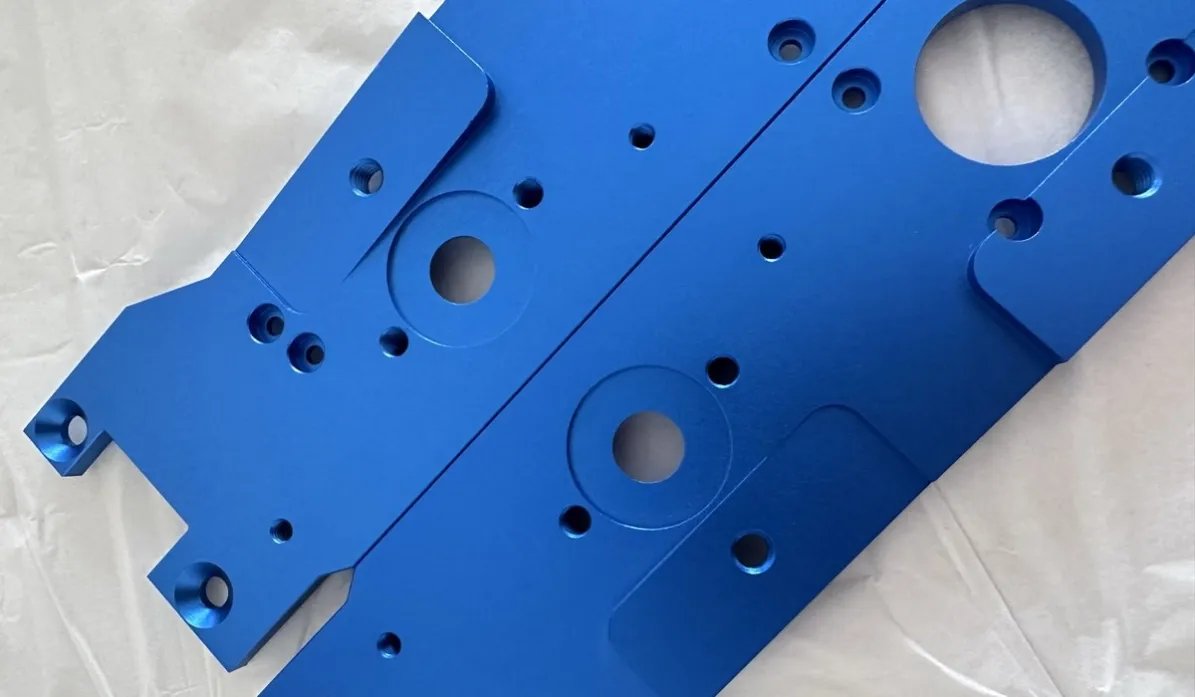
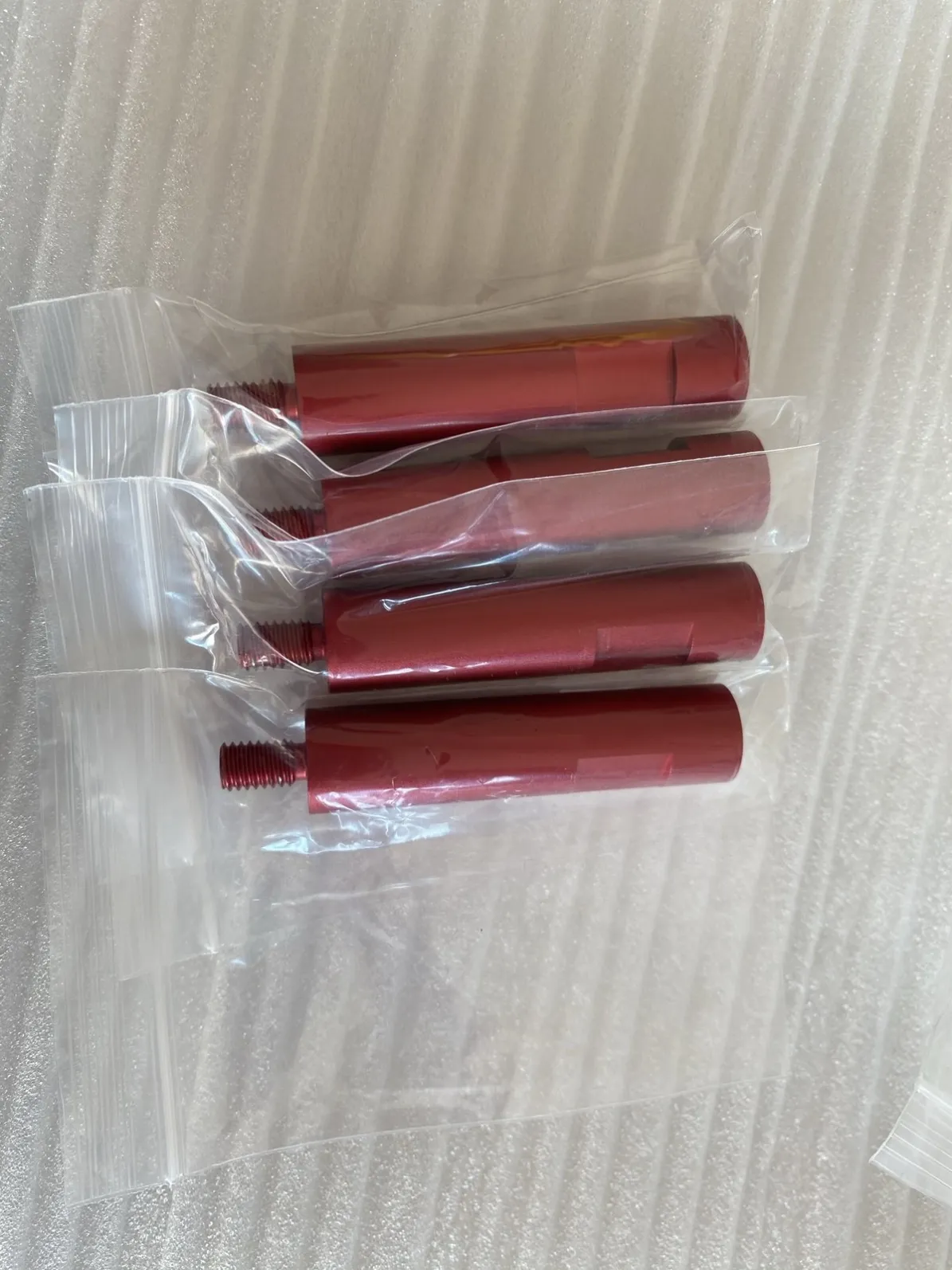
The single most effective rule is also the simplest: parts that must match are anodized together. A housing, its cover and its brackets, ordered as a set, go through blasting, anodizing, dyeing and sealing in the same load, from the same prep, on the same day. Within one load the variables above are shared, so the parts share the result. This is the practice behind our black anodized plate parts work, where flat parts are judged side by side and a split batch would be obvious.
The failure mode we watch for is the quiet split: an order where most parts ship from one run and a late remake — one damaged part, one drawing revision — is anodized again weeks later and lands a shade off from its mates. If a set matters, tell us it is a set. We would rather re-run or hold parts so the visible set stays one batch than ship a technically-in-spec part that does not match its neighbors.
How to specify color so you get what you expect
- Send a sample. A physical color sample — a part, a coupon, an approved first article — beats every written description. "Black" covers a hundred blacks; a sample is one of them. We anodize to the sample and keep it as the reference for repeats.
- Agree an acceptable range, not a single point. Experienced buyers approve limit samples: this dark is fine, this light is fine, outside the pair is not. That is how anodized color is honestly specified — the range is agreed before production, not argued after it.
- Order mating parts together, and say they are a set. Same order, same instruction, same load. If you will need spares later, order a few extra in the original batch — a spare from the same load matches; a spare made next quarter is a new roll of the dice.
- Keep the alloy consistent across the set. Do not let one part of a visible set drift to a different grade for machining convenience. If a grade change is forced, expect the color to move and re-approve a sample.
- Write the spec properly. The anodizing specification itself — type and class under MIL-PRF-8625 (formerly MIL-A-8625) — is covered in our guide to anodizing specs; the color requirement rides on top of it as sample plus range.
When color matching really cannot move
Occasionally the requirement is not "close" but "identical" — consumer-facing panels, branded enclosures, parts matched against an existing product line. Be honest about whether anodizing is the right finish for that. Where an exact, repeatable color across any batch and any alloy is the hard requirement, paint or powder coat is the more controllable finish, because its color is mixed rather than grown — our comparison of black finishes walks through that trade. Anodizing wins on hardness, feel and the metallic look; it does not win on Pantone discipline, and a supplier who promises you an exact color match in anodize, batch after batch, is promising something the process cannot sign.
What to send for a quote
The drawing with the anodizing specification, the color, and — if the parts form a visible set — a note saying so, plus a color sample if you have one. Send it via our contact page — enquiries are answered within 8 hours and quotes usually come back within 24 hours.
FAQ
Why do two parts in the same order sometimes differ in shade? If they were anodized in different loads, or machined from different alloys or material lots, a shade difference is the normal result. Within one load and one material batch, parts match closely; across loads, small differences are expected.
Can anodized color be matched to a Pantone or RAL number? Not exactly. Anodized color is dye in a grown oxide layer over a specific alloy, so it can be matched closely to a physical sample, but it cannot be held to a printed color standard the way paint can. If an exact standard color is a hard requirement, paint or powder coat is the safer finish.
Is black the easiest color to keep consistent? Yes. Black is deep and saturated, so small variations hide in it. Clear anodize shows alloy differences most, and light colors fall in between — the lighter the color, the more visible the variation.
How do I make sure a repeat order matches the first one? Keep the approved sample as the reference, keep the alloy and material source consistent, and accept a range around the sample rather than a single shade. Tell us the new order must match the previous batch and we will work to the retained sample.
Should mating parts always be ordered together? If they will be seen together, yes. Anodizing them in one load is the strongest control there is over color match — stronger than any inspection after the fact.