How to Reduce CNC Machining Cost Without Changing Your Design
How to reduce CNC machining cost without changing the design: tolerance choices, material callouts, order batching and clearer finish specs.
Short answer: most of the cost of a machined part is set by decisions that are not the geometry itself — how tight the tolerances are, which material is called out, how many separate small orders you place, and how clearly the finishing requirements are written. Keep the design exactly as it is, tighten up those four things, and you will usually pay less. Below: where the money goes, five practical ways to reduce it, and the two places you should not try to save.
Where the cost of a machined part comes from
Tolerances. Every tight tolerance costs time: slower machining, more measuring, more parts checked one by one instead of sampled. A dimension held to ±0.01 mm (±0.0004") takes far longer to produce and prove than the same dimension at ±0.1 mm (±0.004"). Tolerance a whole drawing tightly "to be safe," and you pay precision prices for dimensions that do not matter.
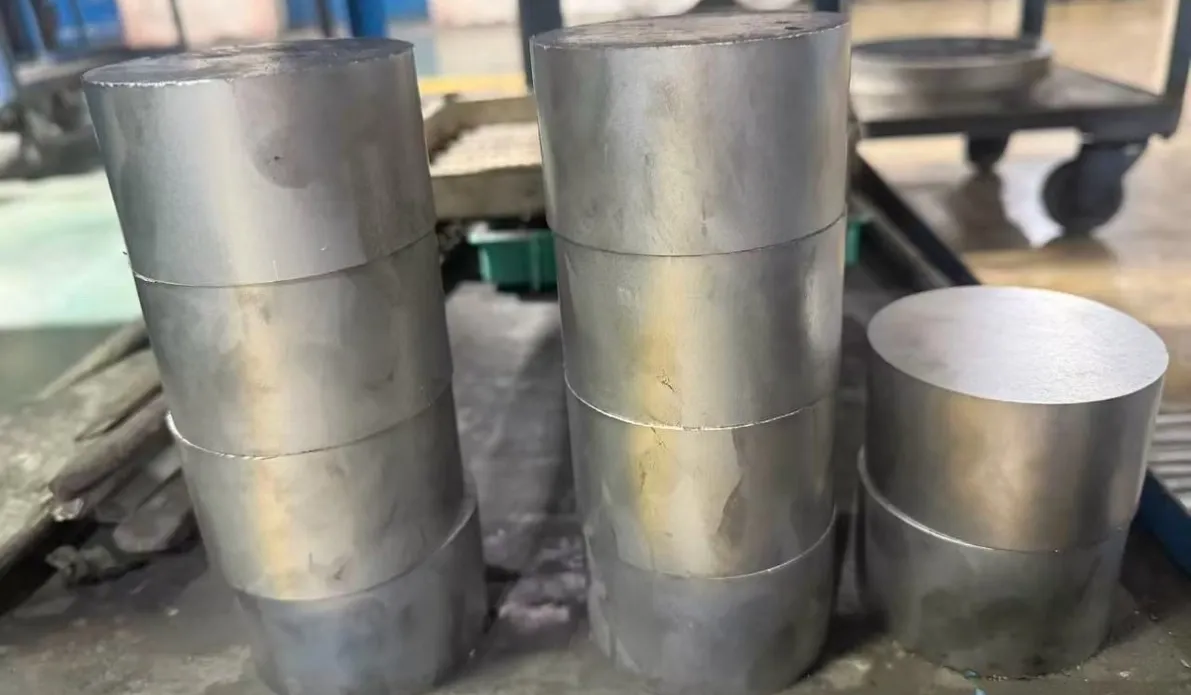
Material. Material cost is not just the price of the bar or plate. It is also how much of it gets cut away, and how fast it machines. Some grades cut quickly and cleanly; others are slow, hard on tools, or only available in sizes that waste stock.
Quantity and setup. Every job carries fixed work: programming, setting up the machine, making and checking the first part. Spread over five parts, that setup is a large slice of the unit price. Spread over fifty, it nearly disappears.
Part structure. Deep pockets, thin walls, sharp internal corners and features needing several setups all add machine time. This is the part of the cost that really is the design — and we are leaving the design alone.
Finishing and documents. Surface treatments, special packaging and inspection documents all add cost on top of the machining. Some of it is necessary. Some appears on quotes only because the requirement was written broadly, and the shop must price the broad version.
Five ways to save without changing the design
1. Put tight tolerances only where they matter
Our standard machining tolerance is ±0.1 mm (±0.004"), and we can hold ±0.01 mm (±0.0004") where a dimension genuinely needs it. The saving comes from using each where it belongs: bearing seats, locating faces and mating dimensions may need the tight value; outside profiles, clearance holes and non-mating faces almost never do.
Before you send a drawing, look at every tight callout and ask whether the part fails if that dimension moves by a tenth of a millimeter instead of a hundredth. Where the honest answer is no, relax it to standard. This single step is usually the largest saving available, and the design has not changed at all — only the tolerance block has. Our guide to CNC tolerances covers which dimensions typically deserve the tight value.
2. Consider an equivalent material grade
Designs often inherit a material grade from an earlier project, a catalog, or habit — not from an actual requirement. Sometimes the specified grade is hard to source in small quantities or slow to machine, while a near-equivalent grade is on the shelf and cuts faster. If your part does not depend on a specific property of the grade you named — a particular strength, corrosion behavior or certification — ask whether an equivalent grade is acceptable. We always flag the substitution and wait for your approval; nothing gets swapped silently. Asking costs nothing, and on some parts the material line drops noticeably.
3. Combine quantities and batches
If you order the same part four times a year in small lots, you pay the setup four times. Combining those into fewer, larger runs removes repeated programming, setup and first-article work, and the unit price falls accordingly. The same applies across a set of parts ordered together in one shipment.
4. Write finishing requirements clearly, not broadly
Vague finishing notes are expensive because the shop must price the strictest reading of them. "Perfect cosmetic finish, no visible marks anywhere" on a part that sits inside a machine means every surface gets the full treatment, including faces nobody will ever see. A clearer note costs less: name the faces that are actually visible, state the finish those faces need, and let the rest be a normal machined finish with proper deburring.
The same applies to deburring. Every part should be deburred — sharp edges are a handling and assembly problem. But "break all edges" is not the same as a cosmetic requirement that every edge look identical under close inspection. State which one you need.
5. Order enough in one run
Repeated tiny runs are the most expensive way to buy machined parts. Each run restarts the whole chain: quote, setup, first article, inspection, packing, shipping. If you know a part will be reordered, ordering a sensible quantity in one run — enough to cover the next period of demand — almost always beats three small runs on total cost. For genuinely small quantities, our notes on low-volume CNC machining explain how small runs are priced.
What not to save on
Fit surfaces. Tolerances on surfaces that locate, seal or slide against another part are not fat to trim. Saving there buys assembly problems, leaks or premature wear, and the rework costs more than the saving. Cut tolerance cost from dimensions that do not control fit — never from the ones that do.
Inspection documents. If your customer, your quality system or your end market requires a first article inspection, material certificates or a certificate of conformity, keep them in the order. Retrofitting paperwork after parts are made is slow and sometimes impossible — material traceability cannot be recreated after the fact. The documents are a small part of a quote; missing them can hold up an entire project. Our article on FAI, material certificates and CofC explains what each one covers.
What to send for a quote
Send the drawing or 3D model, the quantity (and the likely repeat quantity, if there is one), the material grade, and your finishing and document requirements. If you are open to an equivalent material or relaxed tolerances on non-critical dimensions, say so in the enquiry — it gives us room to quote the cheaper version. We answer enquiries within 8 hours, and quotes usually go out within 24 hours.
FAQ
What is the single biggest way to reduce machining cost? Tolerance discipline. Holding only the dimensions that control fit to a tight value, and letting the rest run at the standard ±0.1 mm (±0.004"), removes more cost than any other change.
Will relaxing tolerances make my parts worse? Not if it is done selectively. Dimensions that control fit, sealing or alignment keep their tight tolerance; the ones that relax are dimensions whose variation does not affect how the part works.
Is it cheaper to order more parts less often? Almost always. Setup, programming and first-article work are fixed per run, so fewer, larger runs spread that cost over more parts.
Can a different material grade really change the price? Yes. Grades differ in purchase price, availability in small quantities, and how fast they machine. Where a near-equivalent grade meets the part's real requirements, the saving can be significant. Any substitution is confirmed with you first.