Powder Coating for Sheet Metal Parts: How to Specify It
Powder coating for sheet metal parts: film thickness 60-80 µm, masking, gloss and texture, and the five things to put on the drawing when you specify it.
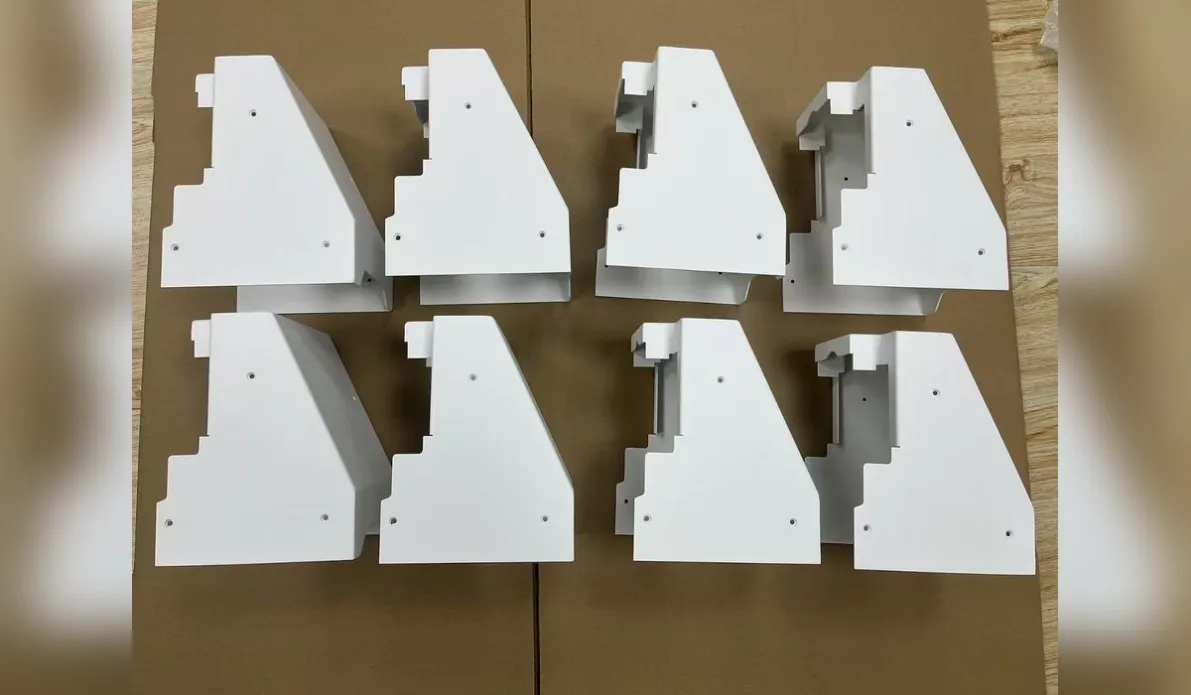
Short answer: powder coating is a dry paint finish, sprayed on as a powder and baked into a hard, even film. It is the standard finish for sheet metal enclosures, frames, panels and brackets that need color and decent protection at a sensible cost. To specify it properly you need five things on your drawing or order: color, gloss or texture, film thickness, which faces to mask, and any areas that must stay bare metal. Get those five right and the parts come back ready to assemble.
What powder coating is, and which parts suit it
The process is simple. A fine polymer powder is sprayed onto the part with an electrostatic gun, so the powder sticks to the metal surface. The part then goes into an oven, where the powder melts, flows out and cures into a continuous film. With no solvent involved, the cured film is usually tougher and more even than a wet-painted one.
Powder coating suits flat and moderately shaped sheet metal parts well: equipment enclosures, machine frames, covers, doors, mounting panels and brackets. It covers large areas evenly, where wet paint tends to show runs and thin spots. It is less suitable for parts with very deep, narrow recesses, assemblies that cannot take oven heat, and precision bores or close-fitting faces, because the film adds real thickness to every surface it lands on — more on that below.
Our overview of sheet metal finishes compares powder coat with the other main routes, including anodized and brushed stainless.
How to specify powder coating on an order
Color
Name the color with a standard code, usually a RAL code, or send a physical sample if the match is critical. "Black" on its own is not a specification — there are dozens of blacks, differing in undertone and texture. A RAL code plus a gloss level is enough for most jobs.
Gloss and texture
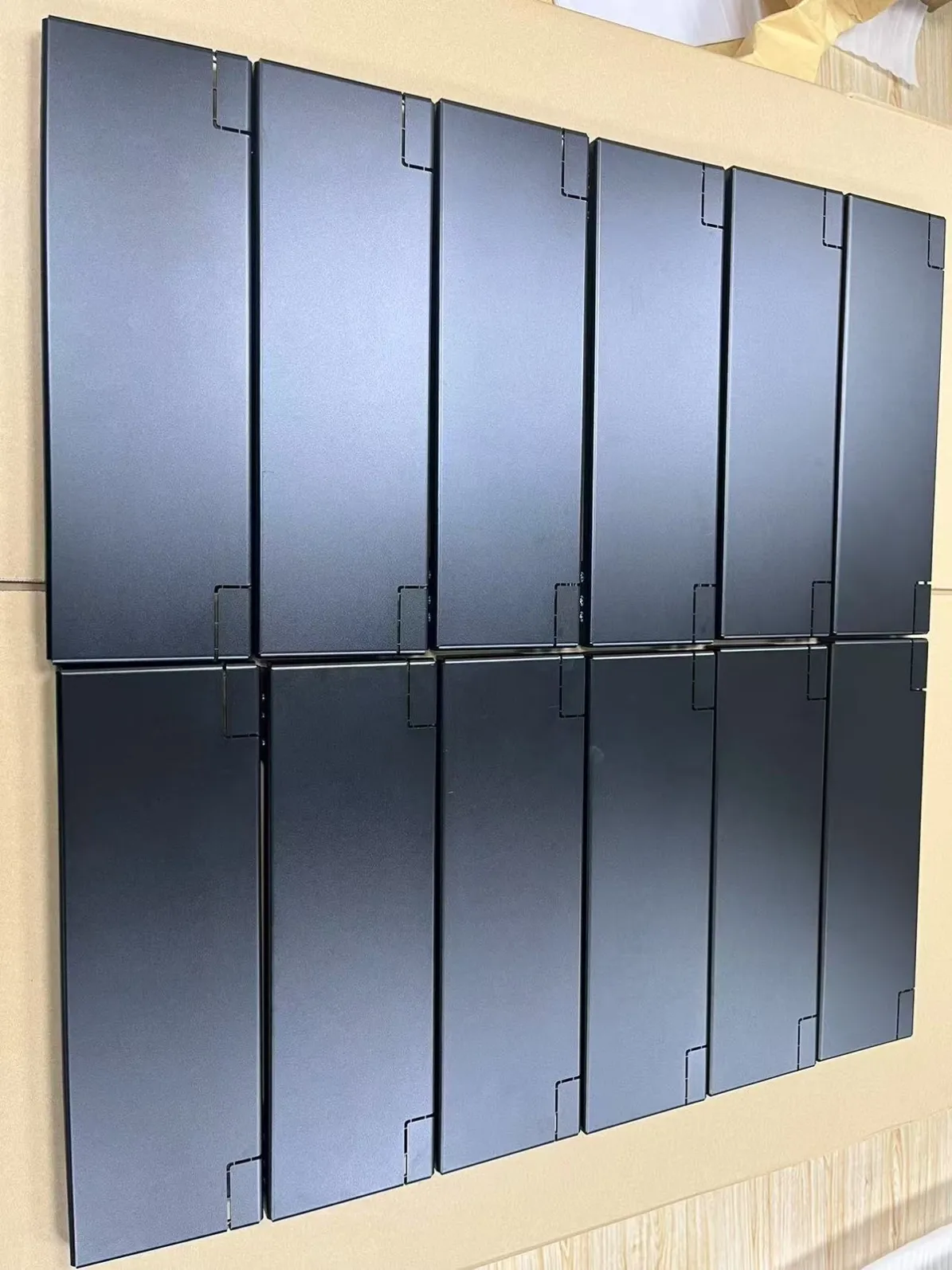
State the gloss level (matte, satin or gloss) or the texture (smooth, fine texture, coarse texture or wrinkle). Gloss is not just cosmetic: a matte textured powder hides minor marks and handling scuffs far better than a high-gloss smooth one, so on welded frames and large panels a fine texture is often the practical choice. Panels that sit side by side must use the same powder and gloss to match.
Film thickness
For general industrial sheet metal parts, we work to a film thickness of 60–80 µm (2.4–3.1 mil). That range gives full color coverage and normal indoor protection without building up so much film that edges and holes cause trouble. Outdoors, 80–120 µm (3.1–4.7 mil) is the usual range.
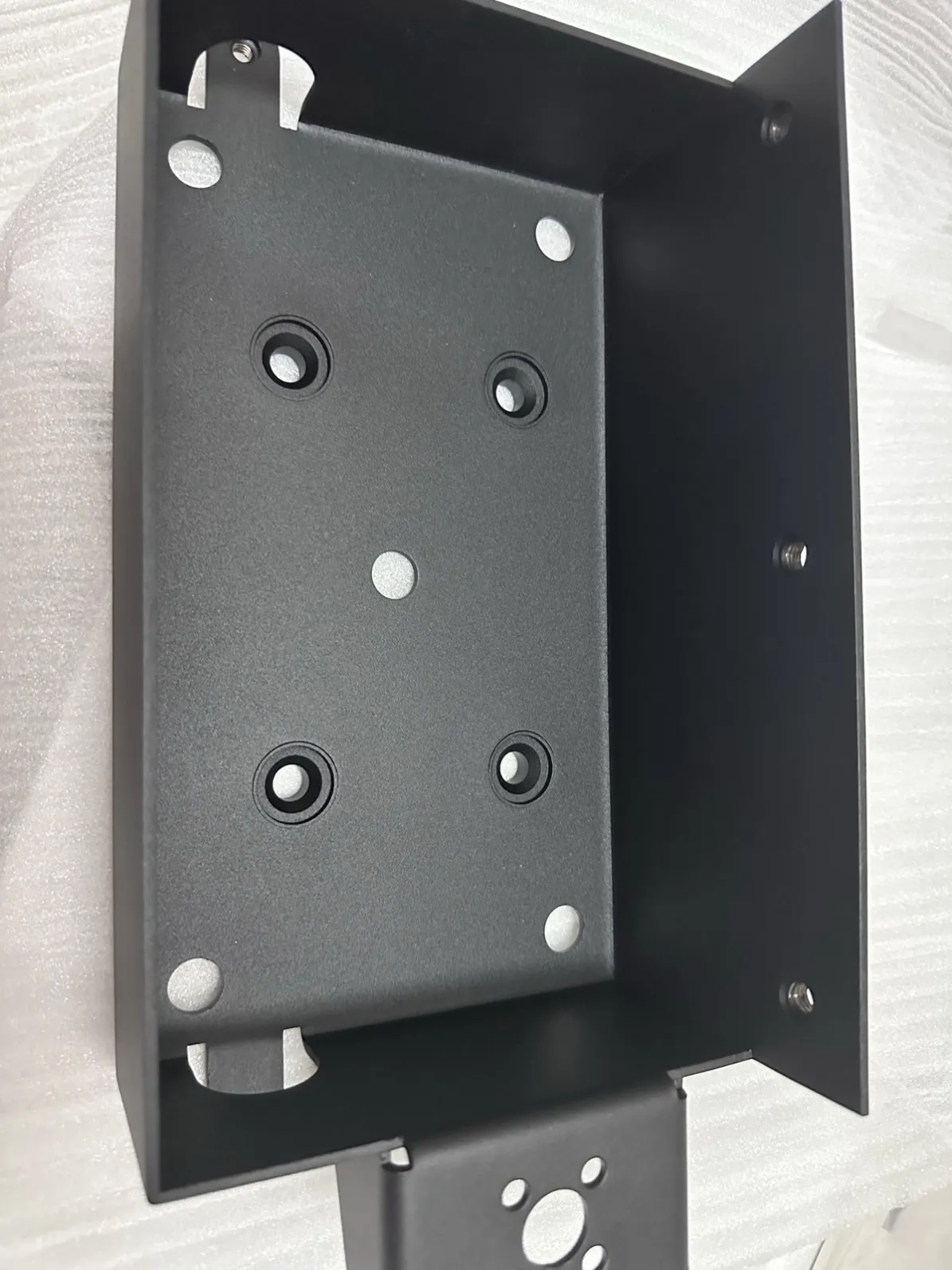
Thickness matters for fit. The film sits on top of the metal, so a hole gets smaller by twice the film thickness, and an outside dimension grows by the same. On holes and slots that must fit fasteners or mating parts, either allow for the film in the design or have those features masked.
Masking and bare areas
Masking is available, and worth asking for where it matters. The usual candidates:
- Threads that must stay clean to assemble properly
- Precision bores and close-tolerance holes
- Grounding and electrical contact faces, which need bare metal to work
- Mating faces that sit flat against another part
- Areas to be welded, glued or labeled later
Mark what must be masked on the drawing or in the order notes. Masking with tape, plugs and caps is a normal part of the job, but it has to be planned before coating.
Powder coating vs wet painting
| Powder coating | Wet painting | |
|---|---|---|
| Film build | One coat gives a full film, typically 60–80 µm (2.4–3.1 mil) | Thinner per coat; several coats for the same build |
| Durability | Hard, chip-resistant; good for handled parts | Softer; scratches and chips more easily |
| Coverage | Even on large flats; weaker inside deep recesses | Reaches into recesses better; can run or sag |
| Touch-up | Hard to touch up invisibly after curing | Easy with matching liquid paint |
Neither is "better" in general. For batches of enclosures and frames, powder coating is usually the stronger choice. For a one-off part, a part with deep pockets, or a finish you expect to repair in the field, wet paint can make more sense. Our comparison of black finishes goes deeper on the common dark finishes.
Common issues worth knowing about
Edge coverage. Powder pulls slightly away from sharp edges as it cures, so sharp corners get a thinner film and are the first place rust or chipping shows. A small radius on outside edges — even a broken edge from deburring — improves coverage noticeably.
Deep recesses. Inside deep, narrow pockets the electrostatic charge works against you: the powder is repelled from the inside corners and lands mostly near the opening. This is the Faraday cage effect — in plain terms, the inside of a deep box or channel gets a thinner coat than the outside. It can be managed with gun settings and technique, but if the inside of a deep recess must be fully coated, raise it when you order.
Touch-up limits. A cured powder film cannot be blended the way liquid paint can. Small chips can be touched up with matching liquid paint, but the repair is usually visible on close inspection and will not be as hard as the original film. A textured finish hides small marks far better than a smooth gloss.
Holes and threads. Unmasked holes shrink by twice the film thickness, and coated threads can refuse to assemble. This is the most common powder coating problem we see, and it is almost always a specification problem, not a coating problem — the masking was never asked for.
What to send for a quote
Send the drawings or a 3D model, the quantity, the color code, gloss or texture, the film thickness if your drawing specifies one, and a note of what must be masked. If the part goes outdoors, say so — it changes the thickness range. We answer enquiries within 8 hours and usually quote within 24 hours.
FAQ
How thick is a standard powder coat film? For general industrial sheet metal parts, 60–80 µm (2.4–3.1 mil). Outdoor parts are usually coated at 80–120 µm (3.1–4.7 mil). If your drawing specifies a thickness, we work to the drawing.
Can threads and holes be kept free of coating? Yes. Masking is available for threads, bores, grounding faces and other areas that must stay bare. Just mark them on the drawing or in your order notes.
Will the coating change my part dimensions? Yes, slightly. The film adds its thickness to every coated surface, so holes get smaller and outside dimensions grow by that amount. Allow for it, or have critical features masked.
Can powder coating match an exact color? A RAL code or a physical sample gets a close, consistent match. Matching an existing painted part exactly is harder, because gloss and texture change how a color looks — send a sample if the match is critical.
Is powder coating suitable for outdoor parts? Yes, with the thicker film range and the right powder type. Tell us the part is for outdoor use when you order.