Flat, Black, and Precise: Machining Aluminum Plate Parts with Black Anodizing
Flat aluminum plate parts want to stop being flat. Machining thin plates so they stay true, then finishing them with even black anodizing.
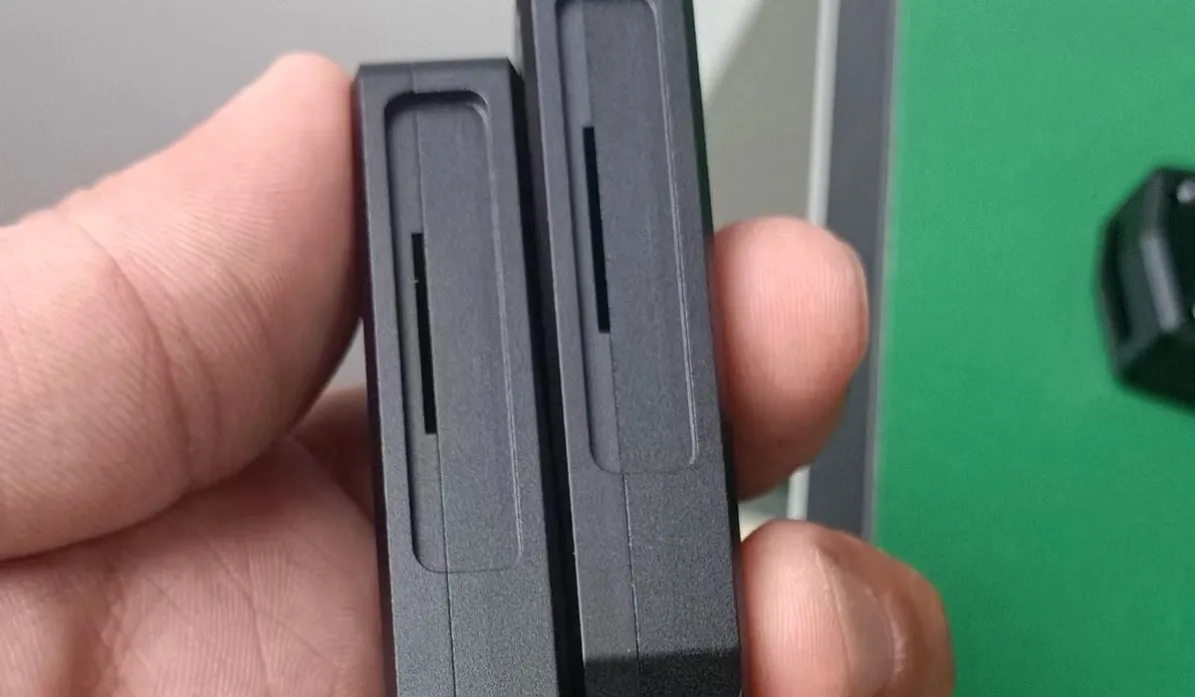
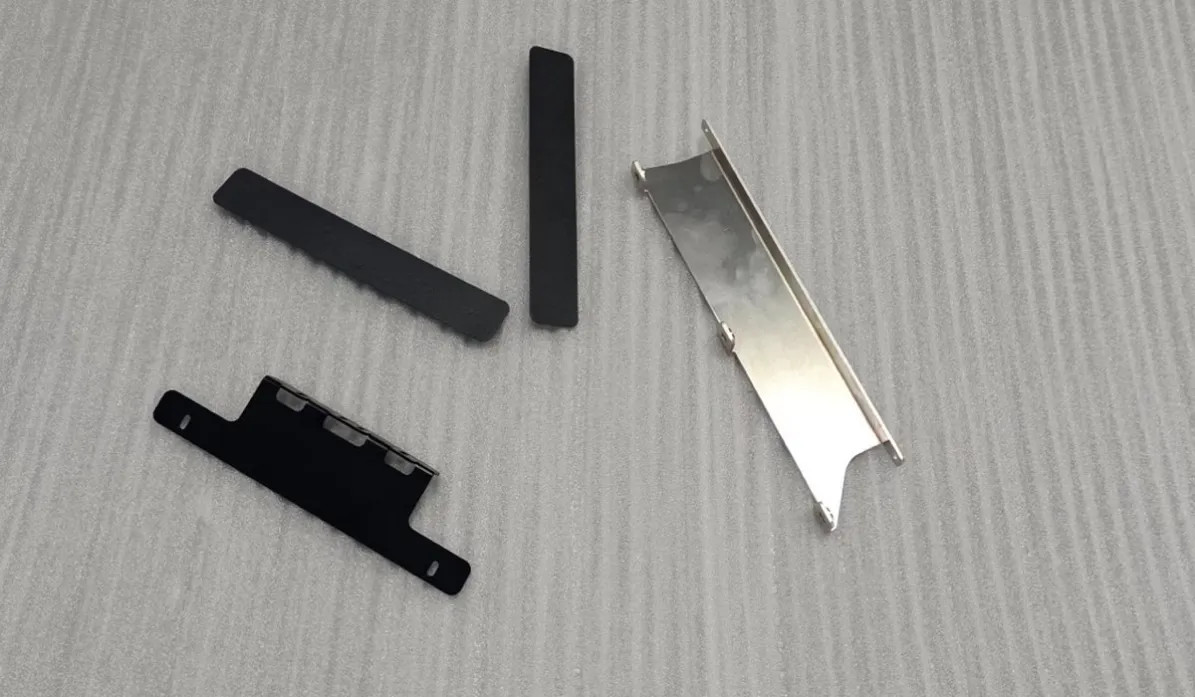
The pair of parts in the photo doesn't look like much of a machining challenge: flat aluminum plates, a recessed pocket, a narrow slot, clean chamfered edges. Anyone who has actually made parts like these knows better. Flat parts are quietly some of the most demanding work in a machine shop — not because any single feature is hard, but because the whole part wants to stop being flat.
Here's what goes into a part like this, and why the black anodized finish is more than a color choice.
The Flatness Problem
Aluminum plate carries internal stress from its own manufacture. Machine a pocket into one face — like the recess on these parts — and you've removed more material from one side than the other, which gives that stress permission to move. The part bows. Sometimes it bows on the machine, sometimes overnight, sometimes when it comes out of the anodizing tank.
The countermeasures are process, not luck: rough the part out and let it settle before finishing, take material symmetrically where the design allows, hold the part in fixtures that support it without forcing it flat (a part clamped flat and released isn't flat — it's just temporarily flat), and finish with light, even passes. Getting two parts of a matched pair to come out equally flat, like the pair in the photo, is the real test: they have to match each other, not just the drawing.
Thin flat parts also misbehave under the cutter. A wide, thin floor in a pocket can chatter or lift, and the edges of a narrow slot need a cutter small enough to fit and a strategy gentle enough not to push the walls around. None of this is exotic machining — it's the accumulation of small disciplines that separates a flat part from a potato chip.
Edges Are a Feature, Not an Afterthought
Look at the edges in the photo: every corner is broken with a clean, consistent chamfer, including around the pocket. On flat parts, edges matter more than usual. The part is all surface and edge — there's nothing else to look at — and a sharp edge on an anodized part is a practical problem as well as a cosmetic one, because the anodize layer is at its thinnest and most fragile exactly on a knife edge. A proper chamfer gives the finish something to hold onto and gives the person assembling the part something that doesn't cut back.
Why Black Anodizing Suits These Parts
The finish on these parts is black anodizing to MIL-A-8625 Type II Class 2 — the class number is what specifies the dyed version — over a bead-blasted surface. As standard we bead blast before anodizing (fine 120# media), which is what gives the parts that even, deep matte black with no machining lines showing through; the process is covered in our article on why we bead blast before anodizing, and the types and classes are explained in our anodizing specs guide.
For a flat part specifically, black anodizing earns its place three ways. It protects a large, exposed face from corrosion and handling wear with a hard surface that won't peel at the edges. It keeps the part dimensionally honest — the oxide layer is thin and controlled, so flatness and fits stay as machined, and precision holes and threads need no masking. And it makes a matched set look like a set: parts anodized in the same run match exactly, which is why pairs and sets are always run together, never split across batches.
One honest caveat about black: it shows dust and light scratches more readily than a natural finish. On a part that lives a hard life in the open, that's worth a thought at design stage — the finish is hard, but it's not armor.
Getting Flat Parts Quoted
Send the drawing or model through our CNC machining page. If flatness matters — and on a part like this it always does — put the flatness callout on the drawing rather than leaving it to chance, and tell us if parts are used in matched pairs so we machine and anodize them as sets. Standard tolerances are ±0.1 mm, with ±0.01 mm available on critical features; quotes come back within 24 hours, and prototypes typically ship in 3–5 days. FAI reports, material certificates, and a certificate of conformance are available on request, and we'll sign an NDA before drawings change hands if you'd like one.