Aerospace Brackets and Fittings: Machined Aluminum Parts
Machined aluminum brackets and fittings for civil aircraft and ground support equipment: hole position, flatness and weight control, with FAI and material certs.
Brackets and fittings look simple on a drawing. In practice they are the parts that hold everything else in place, so hole position, flatness and weight all matter at once. We machine these parts for civil aircraft interiors, avionics installations, ground support equipment and similar applications, mostly in aluminum, with titanium and stainless steel used where the loads or the environment call for them. This page covers the parts we see most often, the materials that suit them, and what we check before a part leaves.
Typical parts
The work that comes to us in this category is mostly:
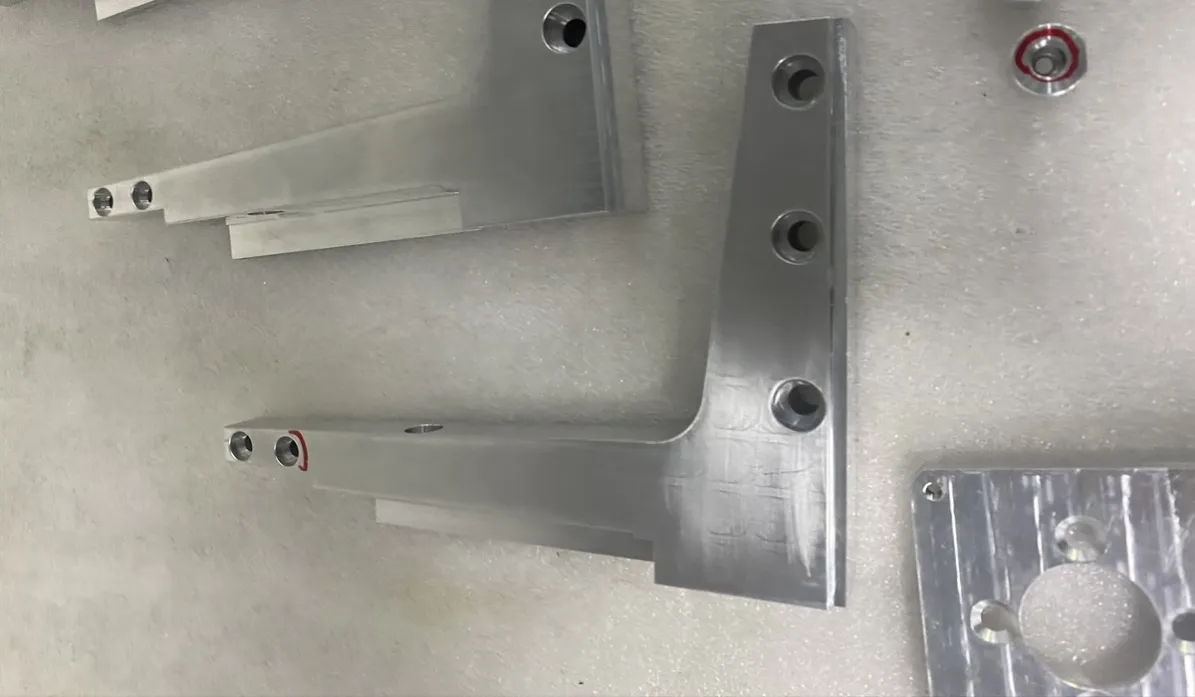
- Mounting brackets for avionics boxes, displays and control units
- Angle brackets and corner fittings for interior structures and seat rails
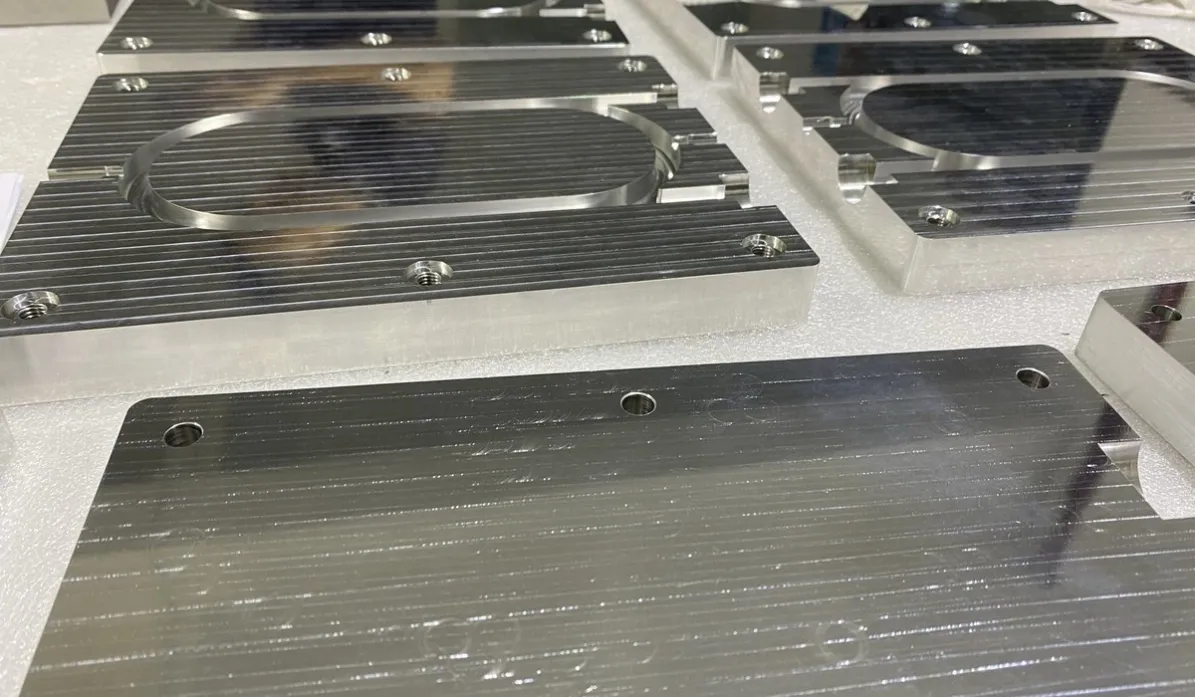
- Mounting bases and adapter plates that join one assembly to another
- Cable and harness support brackets
- Equipment trays and their side rails and end fittings
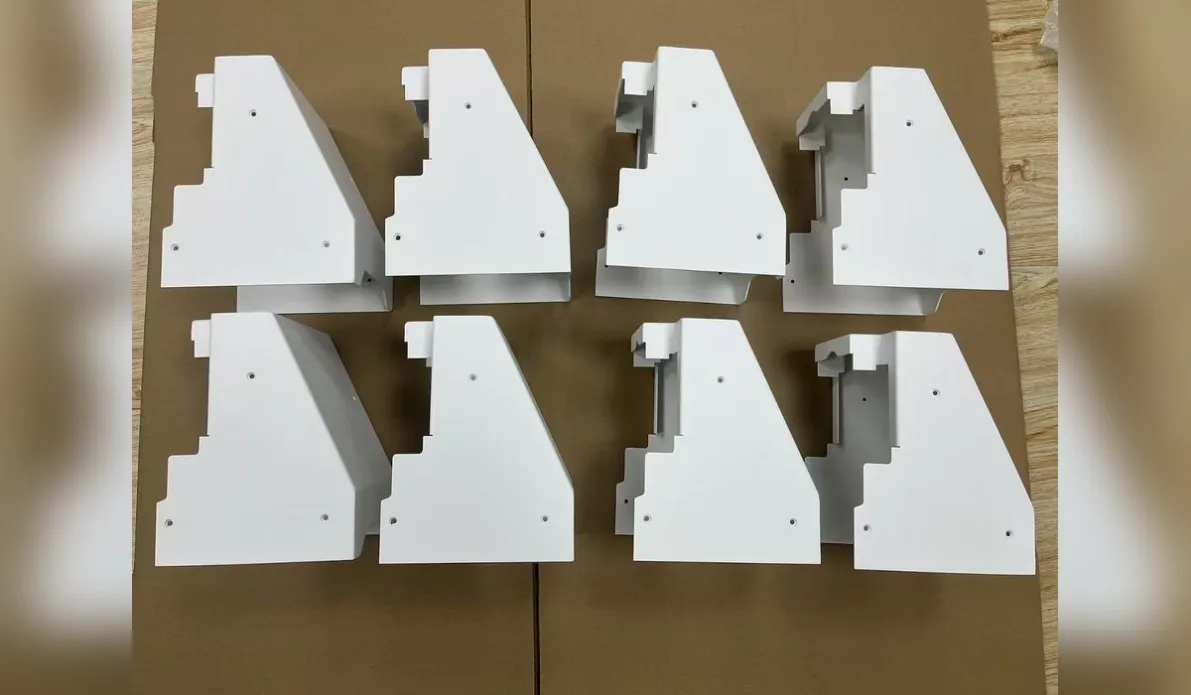
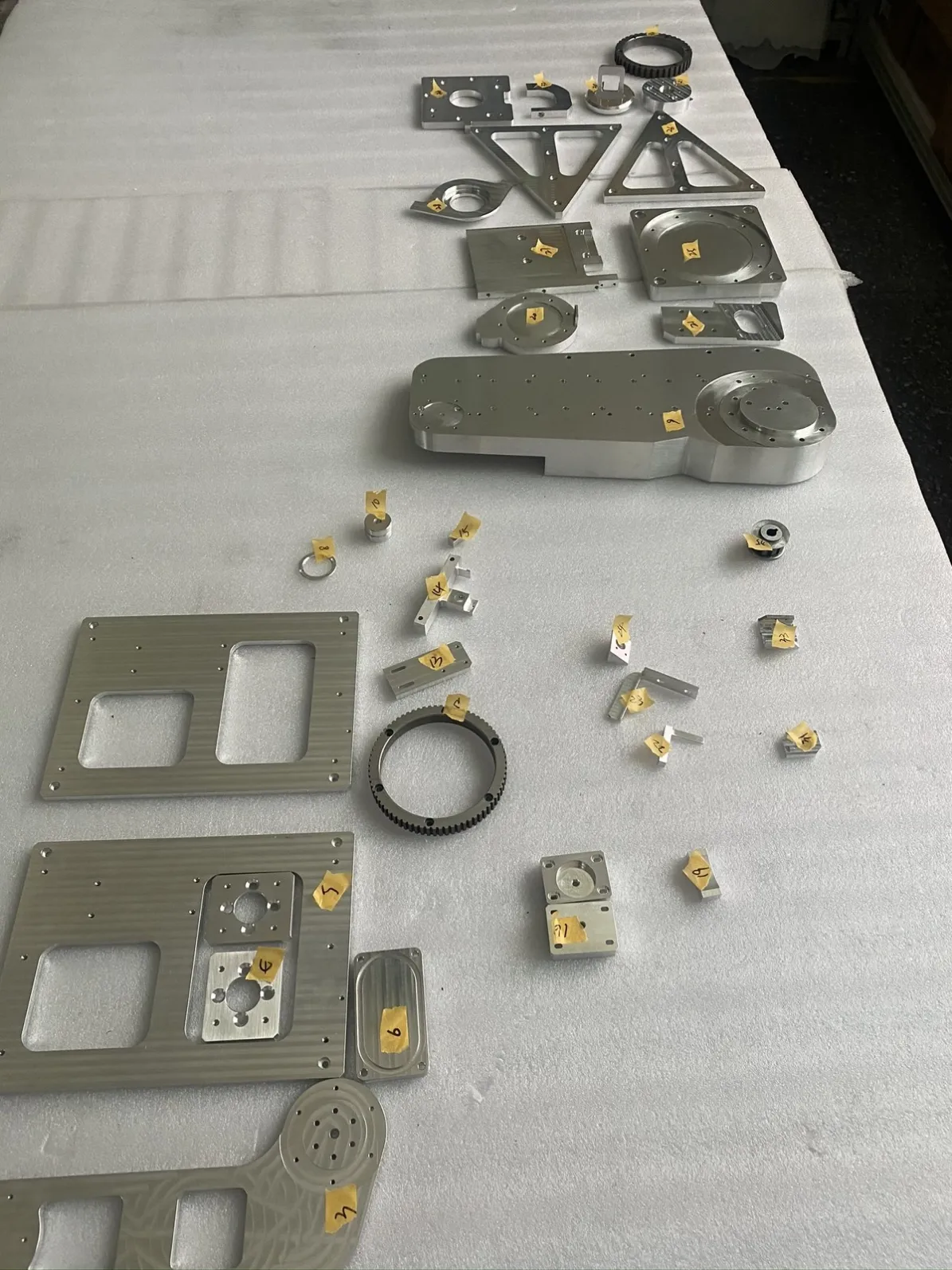
Most are small to medium sized parts, machined from plate or bar in quantities from a handful of prototypes to low-volume production runs. Many combine several functions in one piece: a mounting face, a locating edge, a set of threaded holes and a pocketed back side to keep the weight down. That combination is exactly where CNC machining earns its place over fabrication, because the features stay in one setup and in one datum scheme.
Common materials
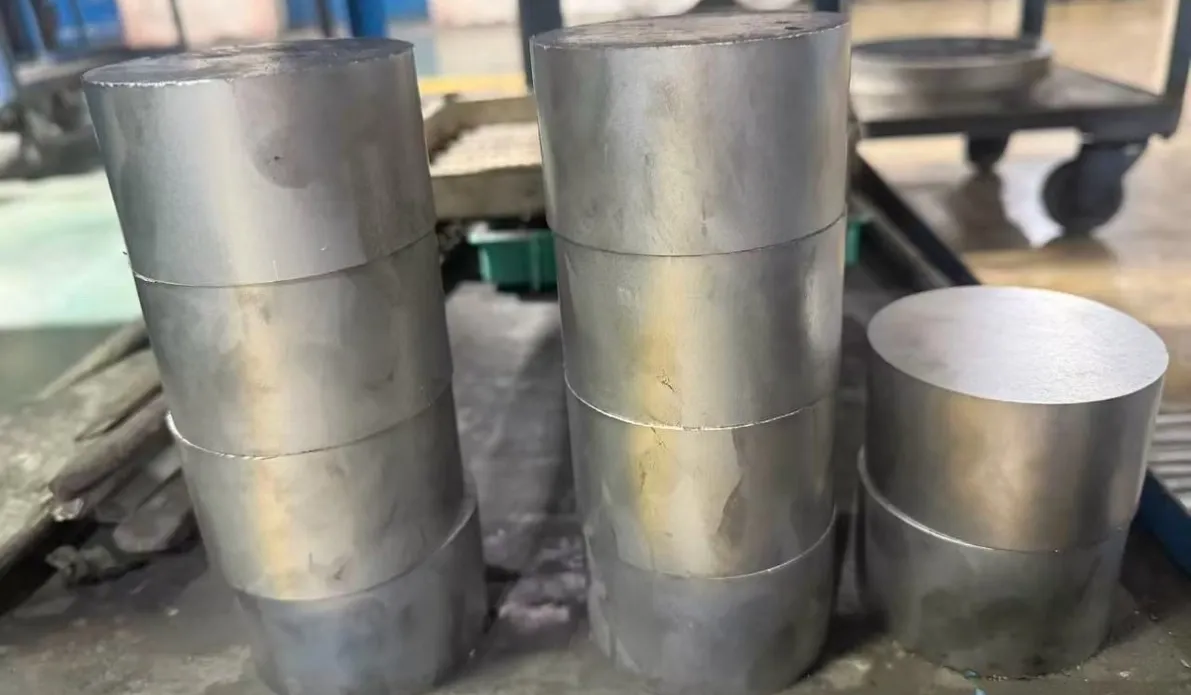
6061-T6 aluminum is the default for brackets and fittings. It machines cleanly, anodizes well, and has enough strength for most mounting and support duties. If a bracket carries a display, a pump or a piece of avionics, 6061-T6 is usually the sensible starting point.
7075 aluminum is chosen when the part needs more strength at the same weight, or when the section is thin and 6061-T6 would flex too much. It costs more and is less forgiving to machine, so we normally see it on smaller, more heavily loaded fittings. We covered the trade-offs in more detail in our article on machining 7075 lightweight parts.
Grade 5 titanium shows up on fittings that need high strength in a small envelope, or where corrosion rules out aluminum. It is slower to machine and harder on tooling, so it tends to be reserved for the parts that genuinely need it.
Stainless steel, usually 303 stainless steel or 304 stainless steel, is used for fittings that see moisture, cleaning fluids or high clamp loads on threads. Where a stainless part needs its corrosion resistance restored after machining and welding, passivation or a solution anneal can be part of the route; our article on solution annealing stainless steel explains when that step is worth it.
Key requirements
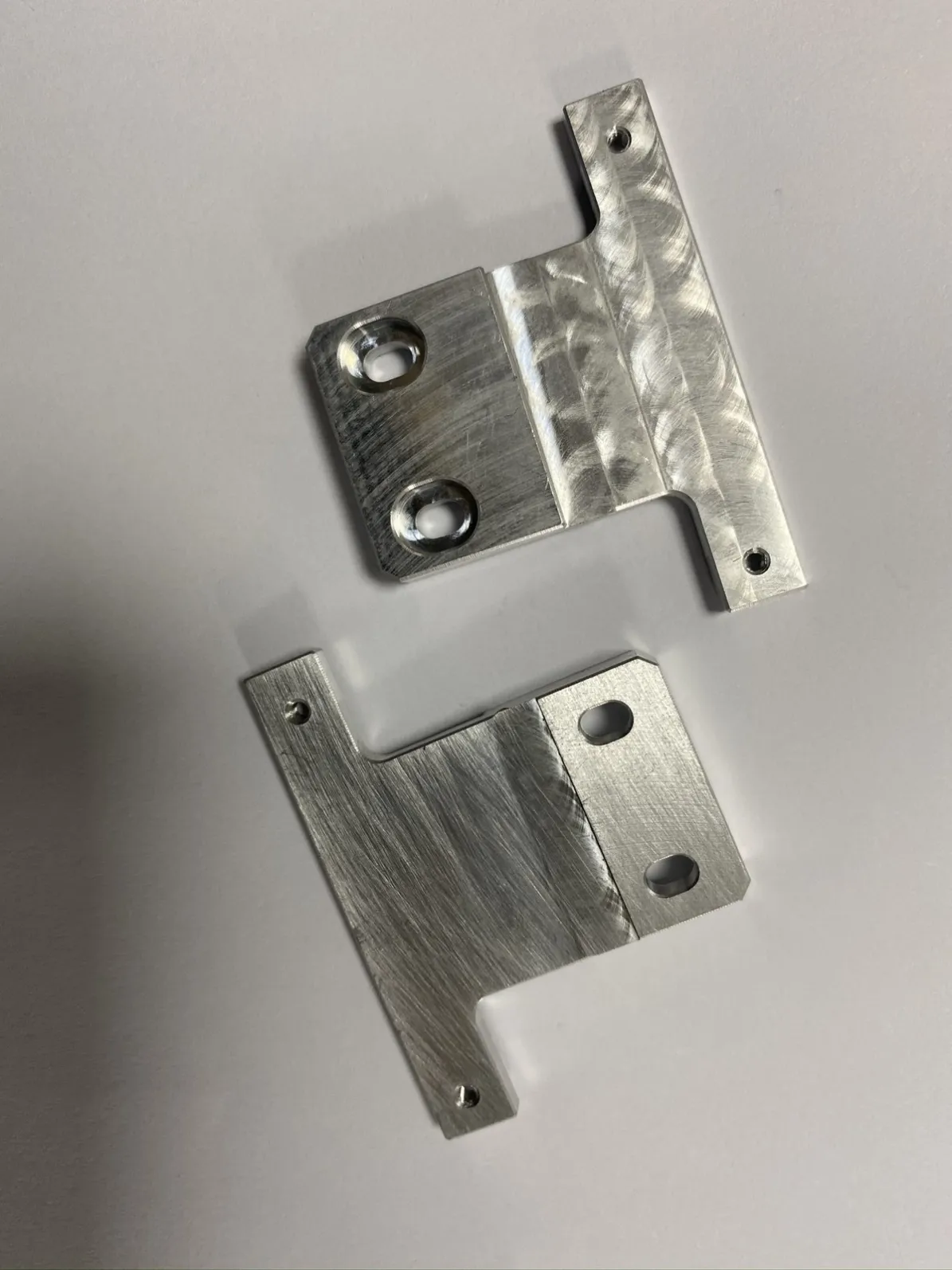
Weight. Aircraft parts are weighed twice: once on the drawing and once in service. Pocketing the back side and thinning non-structural walls is standard practice on brackets. We machine to the wall thicknesses on the drawing and keep enough material around holes and fillets so the part stays stiff.
Hole position. A bracket that does not line up with its mating holes is scrap, however good it looks. Standard machining on these parts runs to ±0.1 mm (±0.004"), and hole positions and critical faces can be held to ±0.01 mm (±0.0004") where the drawing calls for it. Tell us which holes are locating holes and which are clearance holes; that decides where we spend the inspection time.
Edges and finishes. Interior and cabin-adjacent parts need clean break edges so they do not cut hands, harnesses or insulation blankets during installation. Anodizing per MIL-PRF-8625 (formerly MIL-A-8625) Type II is the usual finish on aluminum brackets, in clear or black, with chem film used on parts that need electrical bonding or will be painted later. Threads, grounding faces and mating surfaces can be masked so they stay bare where the drawing requires it.
Traceability. Material certificates are available on request, and parts can be supplied with a certificate of conformance. If your quality system needs the material batch recorded against the part batch, say so at the quote stage so it is set up from the start.
Inspection and documents
First article inspection (FAI) is available on request, covering the dimensions on the drawing with the measured values recorded. For repeat orders, we inspect against the same checklist so part ten matches part one. Critical dimensions — hole patterns, mounting face flatness, thread fit — are checked on every part, not sampled, on small batches. If you need a specific inspection report format for your incoming quality department, send it with the enquiry and we will work to it.
For a sense of how the same requirements play out in another weight-critical field, see our article on CNC machining for motorsport parts; the parts differ, but the thinking about weight, stiffness and hole position is much the same.
What to send for a quote
A 3D model (STEP is fine) plus a 2D drawing with tolerances, material, finish and quantity gets you a proper quote rather than a guess. Enquiries are answered within 8 hours, and quotes are usually back within 24 hours. If the drawing is still being finished, send the model and tell us which tolerances you are planning to tighten; we can flag anything that will drive cost before you release it. Small-batch prototypes typically take 3–5 days once the order is placed, and simple parts can ship in 24–48 hours. We ship worldwide, packed so machined faces and anodized surfaces arrive undamaged. If your documentation is under NDA, we can sign one before you send anything.
FAQ
Can you machine brackets to ±0.01 mm (±0.0004")? Yes, on the features that need it — hole positions, locating faces and bores. Holding every dimension on the part to that level adds cost without adding function, so we recommend tightening only the features that locate or seal.
Which aluminum should I choose, 6061-T6 or 7075? 6061-T6 aluminum for most brackets: it is strong enough, machines well and anodizes evenly. Choose 7075 aluminum when the part is thin, heavily loaded, or when you need the extra strength to cut weight elsewhere.
Can you anodize the parts, and mask threads? Yes. We anodize to MIL-PRF-8625 Type II in clear or black, and we mask threads, grounding faces and other bare-metal areas on request. We also machine with the coating build-up in mind so bores and threads stay in tolerance after finishing.
Do you provide material certificates and FAI? Yes, both are available on request, along with a certificate of conformance. Ask at the quote stage so the paperwork is prepared with the parts rather than chased afterwards.
What quantities do you take? From single prototypes to low-volume production. Most orders in this category are between 5 and 500 pieces.