Solution Annealing Stainless Steel: Why Parts Get It
Why stainless parts are solution annealed: welding and machining leave stress and sensitized metal that warp parts and rust at the welds. What the anneal does, how it runs, and when a part needs it.
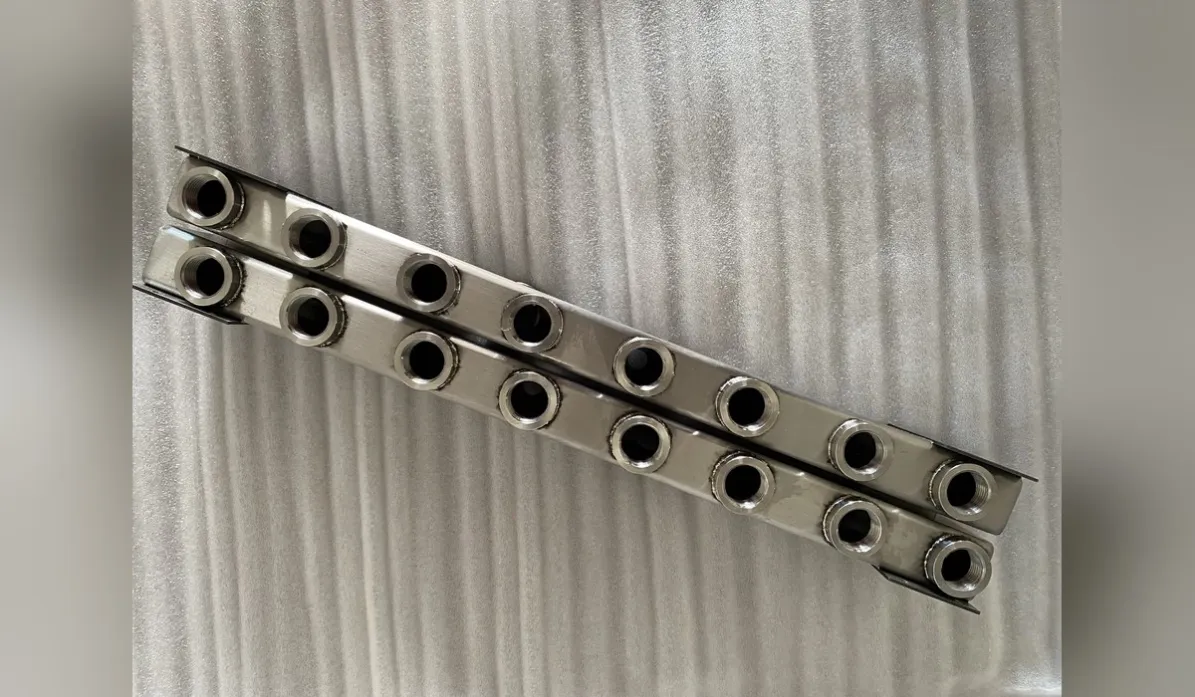
Yes — stainless steel parts that are welded, thin-walled or heavily machined usually get a solution anneal, and we build it into the process where the part needs it. Skip it and two things tend to happen: the part moves — flat faces go out of flat, machined parts distort once they are unclamped or once they sit — and welded areas can start to rust months later, on metal that is supposed to be stainless. The anneal is what stops both.
What the anneal actually fixes
Stress. Machining and welding leave stress locked in the metal. The part measures fine on the machine, then relaxes and moves. Solution annealing heats the part until that stress lets go, so the shape it takes afterward is the shape it keeps.
Sensitization. When stainless sits in the wrong temperature range — the heat-affected zone next to a weld is the classic case — chromium ties itself up in carbides along the grain boundaries and leaves the metal next to them short of chromium. That is the chromium the corrosion resistance comes from. The result is a part that rusts along its welds. A solution anneal re-dissolves those carbides and puts the chromium back where it belongs. This is also why the 316 fittings and welded parts we make are treated differently from a simple turned pin: the pin never sees the problem, the weldment does.
How it runs
The part is heated to roughly 1,040–1,120 °C (1,900–2,050 °F), depending on the grade, held long enough for the carbides to dissolve and the stress to relax, then quenched — cooled fast, usually in water — so the carbides stay dissolved instead of forming again on the way down. Slow cooling would undo the point of the exercise.
The heat leaves scale on the surface, which is removed afterward, and a passivation to ASTM A967 is the usual finishing step so the part goes out with its corrosion-resistant surface restored. (17-4 PH is a different story — it is precipitation hardened, not solution annealed for service; our stainless grades comparison covers where each grade sits.)
How we sequence it
Annealing sits in the middle of the process, not at the end:
- Weldments: weld → solution anneal → finish machining. The anneal takes the welding stress and sensitization out, then the final faces, bores and threads are cut into stable metal.
- Heavily machined parts: rough machine → anneal → finish machine, when the part removes a lot of material or has thin walls that would move after finish machining.
- Simple parts: a turned or milled part with no welding and generous walls usually does not need it, and we will say so at quote stage rather than sell you a process step that earns nothing.
What to send for a quote
The drawing, the grade, and a note if the part is welded or will be welded at assembly. If your specification calls the anneal out — many do — it is quoted in. Send your drawing via our contact page — enquiries are answered within 8 hours and quotes usually come back within 24 hours.
FAQ
Does every stainless part need solution annealing? No. Welded parts, thin-walled parts and parts with heavy material removal are the ones that need it. A simple turned part in 303 or 304 stainless steel usually goes out without it.
Does the anneal soften the part? It returns the metal to its annealed condition, so yes, hardness drops to the annealed range for that grade. If the design needs hardness, that is a different treatment route — tell us at enquiry stage and the quote will reflect it.
Why does the part get quenched in water? Wouldn't that distort it? The fast cool is what keeps the carbides dissolved; slow cooling lets them form again. Any movement from the quench is taken out by the finish machining that follows the anneal — which is exactly why the anneal is sequenced before finishing, not after.
Can you anneal 316L, or only 304? Both, and the other austenitic grades as well. The L grades resist sensitization better by design, but welded or stressed L-grade parts are still annealed when the stress side of the problem calls for it.
How much time does it add? It is one process step in the middle of production; on a typical small batch it adds days, not weeks, and it is included in the delivery date we quote rather than added afterward.