Machining 7075 Aluminum for Lightweight Parts
7075 aluminum saves weight only where a design is strength-limited — its stiffness and density match 6061-T6. When 7075 earns its price, when 6061 is the better lightweight answer.
7075 aluminum is the grade people reach for when a part has to lose weight — and it works, but only for a specific reason that is worth understanding before the drawing is finished. 7075 aluminum is not lighter than 6061-T6 aluminum (their densities are nearly identical) and it is not stiffer. It is much stronger. Every gram a 7075 part saves comes from that strength: walls, ribs and sections can be designed thinner because the material carries more load per square millimetre. Design a 7075 part with 6061 dimensions and you have saved nothing at all.
The stiffness fact that decides everything
All common aluminum alloys have nearly the same elastic modulus — around 70 GPa, whether the grade is 6061, 6082 or 7075. Stiffness-limited parts (a plate that must not flex, a housing that must stay flat, a bracket whose deflection is the spec) therefore gain nothing from 7075: the same thickness in 6061 weighs the same and deflects the same, at lower cost and with better corrosion resistance.
7075 earns its price on strength-limited parts: highly loaded brackets, thin-walled components near their stress limit, parts where a section cannot be made bigger because the space is fixed. There, its roughly 570 MPa typical tensile strength (against about 310 MPa for 6061-T6 aluminum) lets the designer cut sections down until stress, not space, says stop. The full four-grade comparison is in our aluminum alloys compared guide.
Where the grams actually come from
On real lightweight parts, the weight comes out in predictable places:
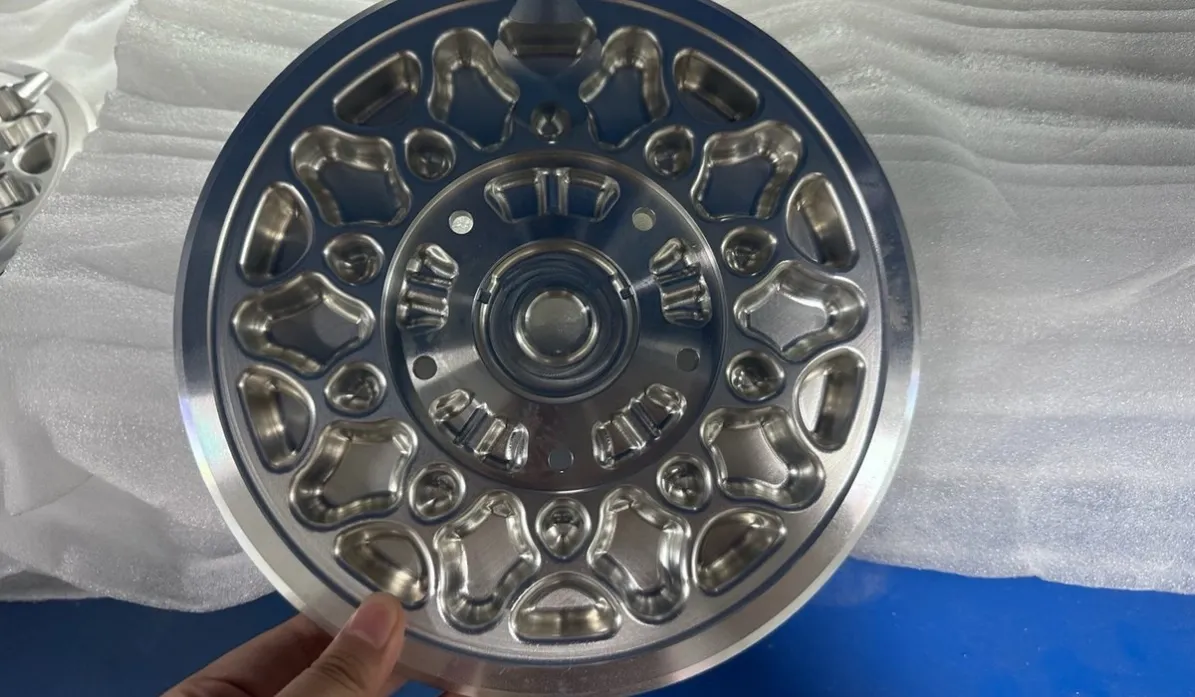
- Pocketed faces. Large flat areas are milled down to a thin floor with a rib grid left standing — the classic motorsport and aerospace pattern, and most of the saving on plate-like parts.
- Thinner walls. Housings and covers drop a wall class when the strength allows it, which also shortens machining time per part once the design is settled.
- Sculpted transitions. Material that carries no load path is removed around bosses and mounting points, leaving the metal where the forces actually travel.
Each of these is a machining commitment as much as a design one: thin floors and walls need sharp tools, light finishing passes and workholding that supports the part instead of crushing it. That is normal work for us — but it is why a lightweight part should be quoted from the real model, not from a weight estimate.
Machining behavior
7075 aluminum machines well: it cuts cleanly, breaks chips properly and holds fine detail and thin sections without the tearing that soft, gummy alloys show. Two cautions belong in the plan. Thin sections can move as internal stresses redistribute during heavy pocketing, so roughing and finishing are sequenced to keep the part stable. And a part machined down to minimum sections has no spare material for a second attempt — first-article checking matters more, not less, on lightweight work.
Protecting it: the corrosion bill
7075's weakness is corrosion resistance, the poorest of the common machining grades. A lightweight part is usually a high-value part, so the finish is not an afterthought:
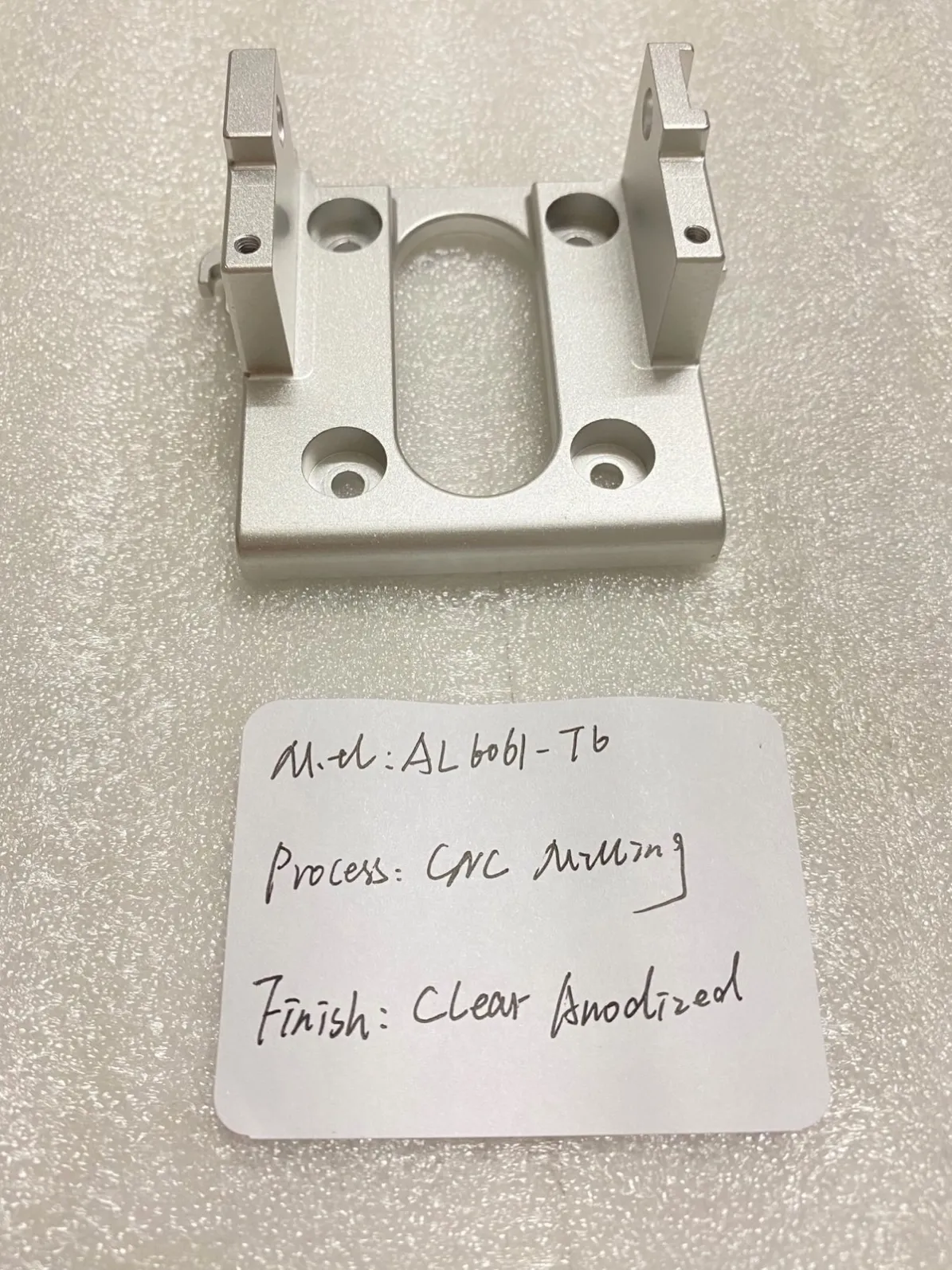
- Anodizing — clear or black anodize is routine on 7075 and is the usual protection for equipment and motorsport parts. Dyed colors can come out less even than on 6061, so cosmetic color work is usually specified in 6061 instead.
- Conversion coating / primer + paint where the part lives outdoors or in a wet assembly.
Leave bare 7075 for dry, indoor, inspected service only — and say so on the drawing if that is the intent.
When 6061 is the better lightweight answer
It happens more often than the grade's reputation suggests. If the part is stiffness-limited, if it is a housing whose walls are set by screws and seals rather than stress, or if it needs welding or bright colored anodizing, 6061-T6 aluminum will produce the same weight at a lower price with fewer corrosion worries. The honest question at design stage is not "which grade is better" but "what limits this section — stress or deflection?" Our CNC machining team will run that check with the quote when the grade is left open.
FAQ
Is 7075 aluminum lighter than 6061-T6 aluminum? No. Their densities are nearly the same (about 2.8 vs 2.7 g/cm³). A 7075 part is lighter only because its strength lets the design use thinner sections. Same geometry, same weight.
Is 7075 aluminum stiffer than 6061-T6 aluminum? No — all common aluminum alloys share roughly the same elastic modulus, around 70 GPa. If your part's problem is flexing, changing grade will not fix it; changing geometry will.
How thin can walls be machined in 7075? It depends on the part's size, shape and how it is held, but thin walls and pocket floors are routine in this grade because it machines cleanly and holds an edge. Send the model and we will flag the sections that risk distortion before quoting.
Does 7075 need a protective finish? In most service environments, yes. Its corrosion resistance is the weakest of the common grades. Clear or black anodizing is the standard route; bare 7075 should be reserved for dry indoor use.
Why do motorsport parts use 7075 so much? Because racing parts are usually strength-limited and space-limited at once: the envelope is fixed, the loads are high, and every gram counts. That is exactly the combination 7075 is for.
Can a 6061 design be converted to 7075 to save weight? Only by redesigning the sections thinner where stress allows — a material swap alone saves nothing. If you send both the part's loads and its model, we can tell you whether a conversion is worth doing before you commit to it.