Tapped Holes: Through, Blind and Inserts
Through holes tap clean through; blind holes cannot be threaded to the bottom. How tap depth, drill depth and inserts work in machined parts.
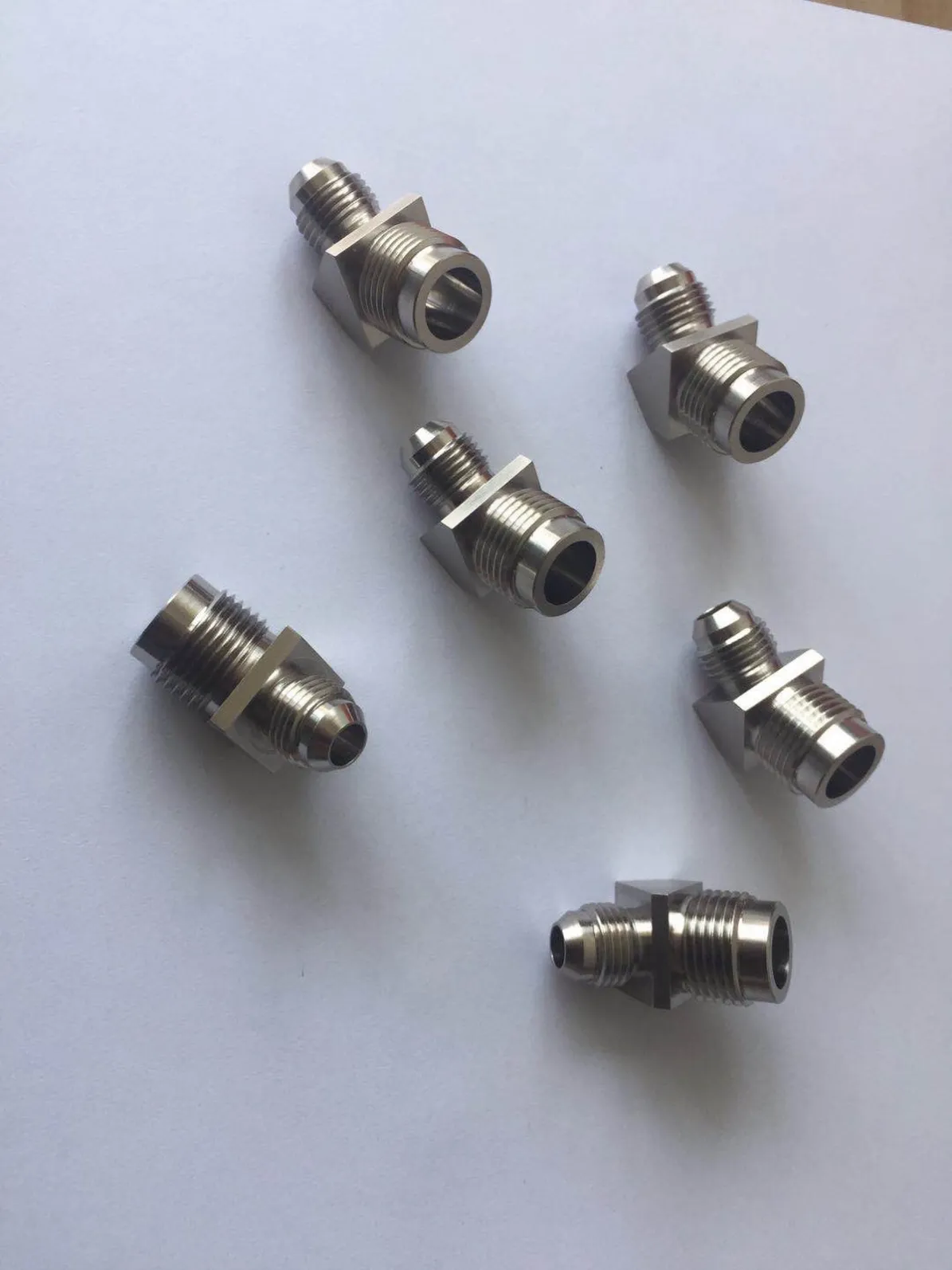
Almost every machined part has at least one tapped hole, and most thread problems trace back to a simple misunderstanding: a tap cannot cut a full thread all the way to the bottom of a blind hole. Through holes are easy and forgiving. Blind holes need the drawing to say how much usable thread is required, because the drilled hole always runs deeper than the thread inside it.
Through holes: the simple default
A through hole passes all the way through the part, and the tap passes with it. The thread is complete from face to face, chips clear out the far side, and a screw can thread in from either face. There is no depth to specify beyond the part thickness.
So through holes are the default wherever the design allows them. Where a hole must stop inside the part — a cavity, a sealing face, or a wall behind it — it becomes a blind hole, and the rules change.
Blind holes: why the thread stops short of the bottom
A tap is not flat-ended. Its tip carries a chamfered lead that starts the thread gradually, and only the portion behind that lead cuts a full, usable thread:
- The drilled hole is always deeper than the thread. The drill must reach beyond the threaded section, leaving room for the tap and for chips.
- The bottom of the hole is never fully threaded. Below the usable thread sits a short unthreaded remainder: the tap's lead-in portion, plus the cone left by the drill point. A screw driven to the bottom binds there before it clamps anything.
- Usable thread depth is the number that matters — the depth of full thread a screw can actually engage, from the entry face, and always less than the drilled depth.
So a blind hole has two depths, and they are not interchangeable. Read one given depth as drilled depth, and the usable thread comes out shorter than intended. Read it as thread depth, and the drill goes deeper — which, on a thin wall, can mean breaking through. Blind tapping is also slower, because chips have nowhere to go.
How much thread engagement is enough
A screw does not need unlimited thread: once the engaged length gives the joint its full strength, extra depth adds machining time and bottoming risk without adding clamp load. How much is enough depends mainly on the material — steel holds strongly at a shorter engagement, while a softer material such as 6061-T6 aluminum needs more length before the thread itself becomes the weak point.
For a blind hole, work backward from the screw: usable thread depth must cover the engagement required, with the screw tip stopping clear of the incomplete thread at the bottom. A screw too long for the hole feels tight while clamping nothing, because it has bottomed out — the most common blind-hole failure we see, and the easiest to prevent.
Threaded inserts in metal parts
Sometimes the base material is the problem: a thread cut into a soft or thin part wears or strips when the joint is taken apart repeatedly. An insert puts a harder, replaceable thread inside the hole:
- Wire thread inserts — a coiled insert installed into a tapped hole — give a steel thread inside an aluminum part. They suit threads serviced often, and can repair a damaged thread back to its original size. - Solid bushing inserts are one-piece threaded sleeves, often locked in place mechanically, for heavier loads and joints where the insert must not move under torque. Typical cases: housings in 6061-T6 aluminum with service covers, thin walls that cannot offer enough engagement on their own, and joints opened many times over the product's life.
Inserts add a part and an installation step, so they are not a default — but on a soft-material housing with a service cover, they are the difference between a thread that lasts and one that strips in the field. Tell us at quote stage if a thread will see repeated assembly. In plastic parts the insert usually carries the whole load, as a brass insert in a machined or molded boss — see threaded inserts for plastic parts.
How to call out a tapped hole on a drawing
Our article on UNC/UNF vs metric thread callouts covers choosing the thread system and class; the callout itself should state:
- Thread size, pitch, and class — a metric or unified designation with its fit class, so there is no doubt about which tap and gage apply.
- Through, or a depth — THRU for through holes; for blind holes, the usable thread depth you need. If the drilled depth is also critical — a wall behind the hole must not be broken — give that as a maximum too.
- Chamfer or countersink at the entry, if the screw must start easily or sit below the surface. A chamfer also removes the burr a tap leaves at the face; see deburring and edge breaks.
- Inserts by type and size, where specified, rather than leaving the hole to be read as a plain tapped hole.
If a callout is missing a depth, we will ask rather than guess — inquiries are answered within 8 hours and quotes usually within 24 hours. Send your drawing through our contact page; we ship tapped parts worldwide.

FAQ
Why can't a blind hole be threaded all the way to the bottom? Because a tap starts its thread over a tapered lead, and the drill point leaves a cone below that. The last portion of a blind hole is always incomplete thread.
What depth should I put on the drawing for a blind tapped hole? State the usable (full) thread depth your joint needs. If the drilled depth also matters — a wall behind the hole — add it as a maximum.
My screw feels tight but the joint is loose. What happened? The screw has most likely bottomed: its tip reached the incomplete thread and stopped before the head clamped the parts. A shorter screw, or a deeper usable thread, fixes it.
When should I specify a threaded insert instead of a tapped hole? When the material is soft, the wall is thin, or the joint will be assembled and disassembled repeatedly — the standard case being service covers on aluminum housings.
Do you tap both metric and inch threads? Yes: metric coarse and fine, and UNC/UNF unified threads. Give the full designation and fit class on the drawing.