Matte Black Anodized Parts: Bead Blast and Black Anodize Across Different Shapes
A flat plate, a ring flange and a round cover walk into the same black anodize tank. Why bead blasting first is what makes the matte black match across shapes.
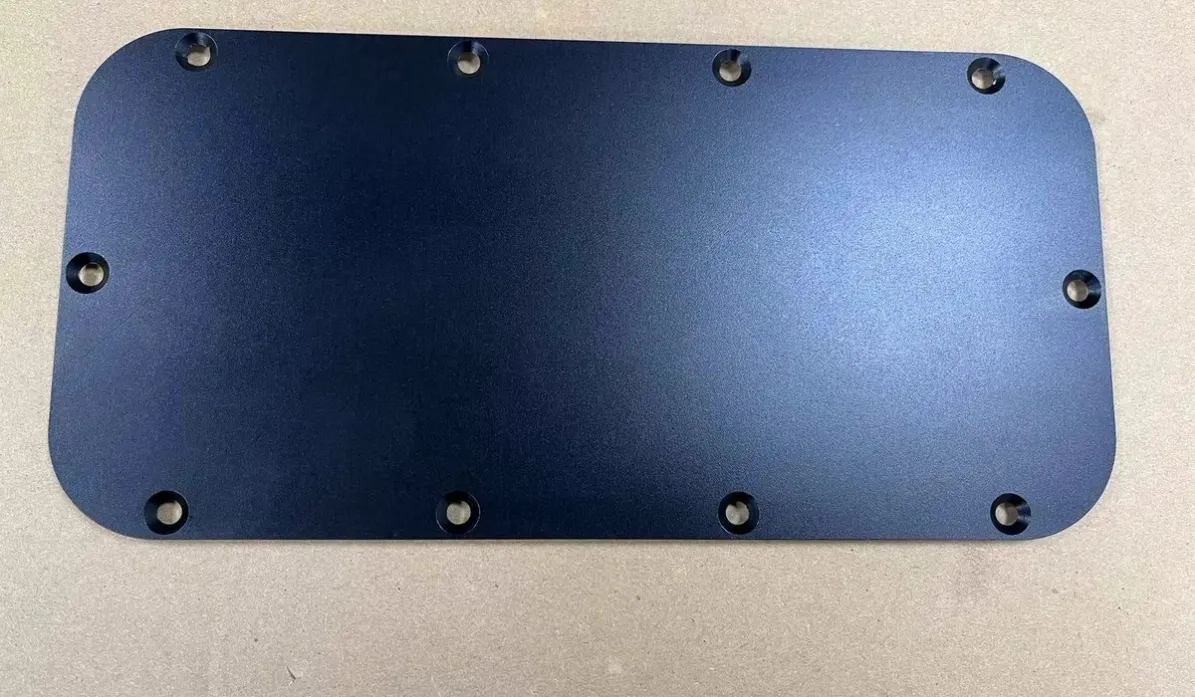
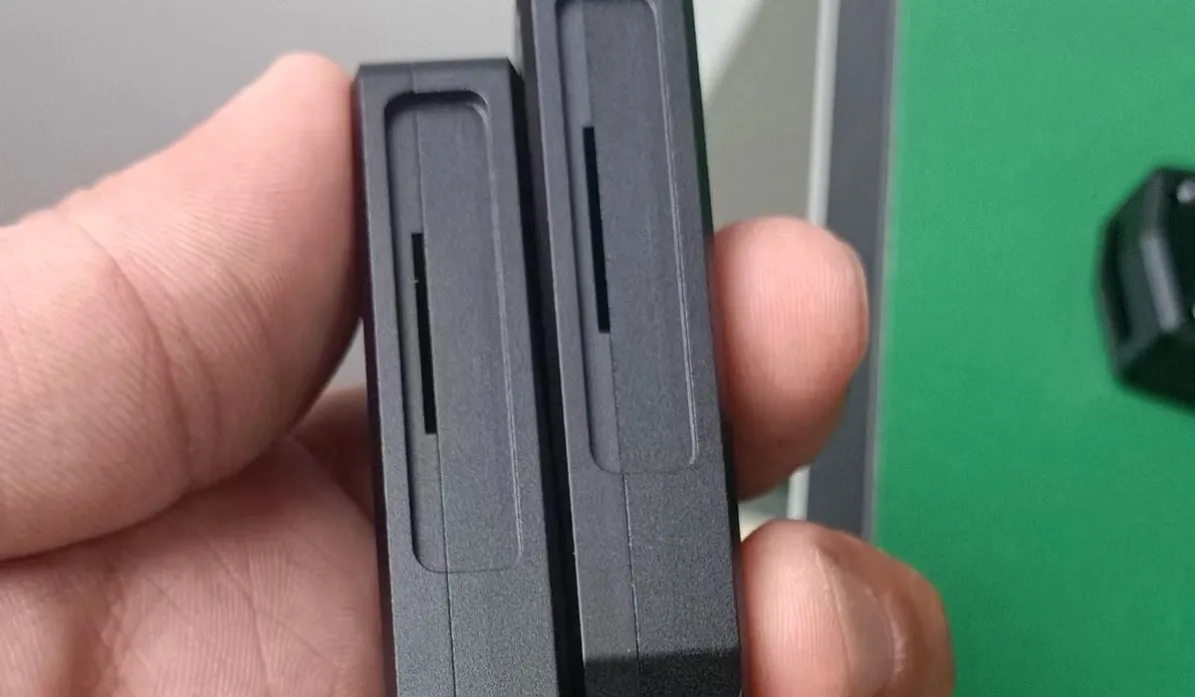
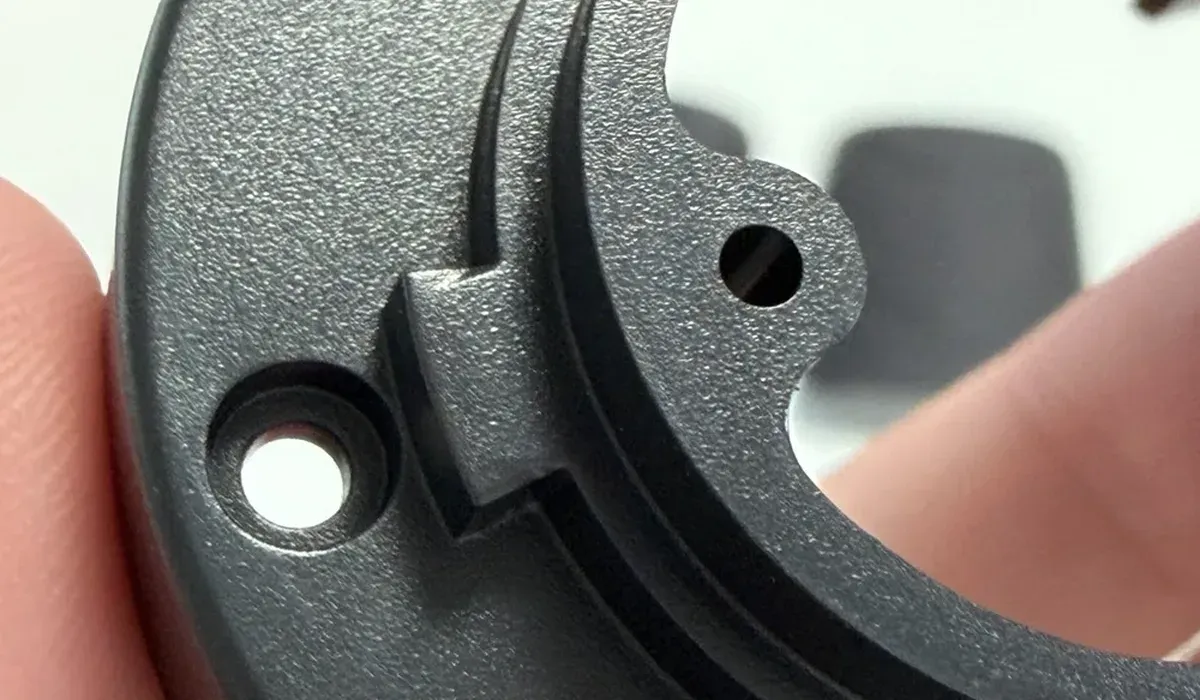
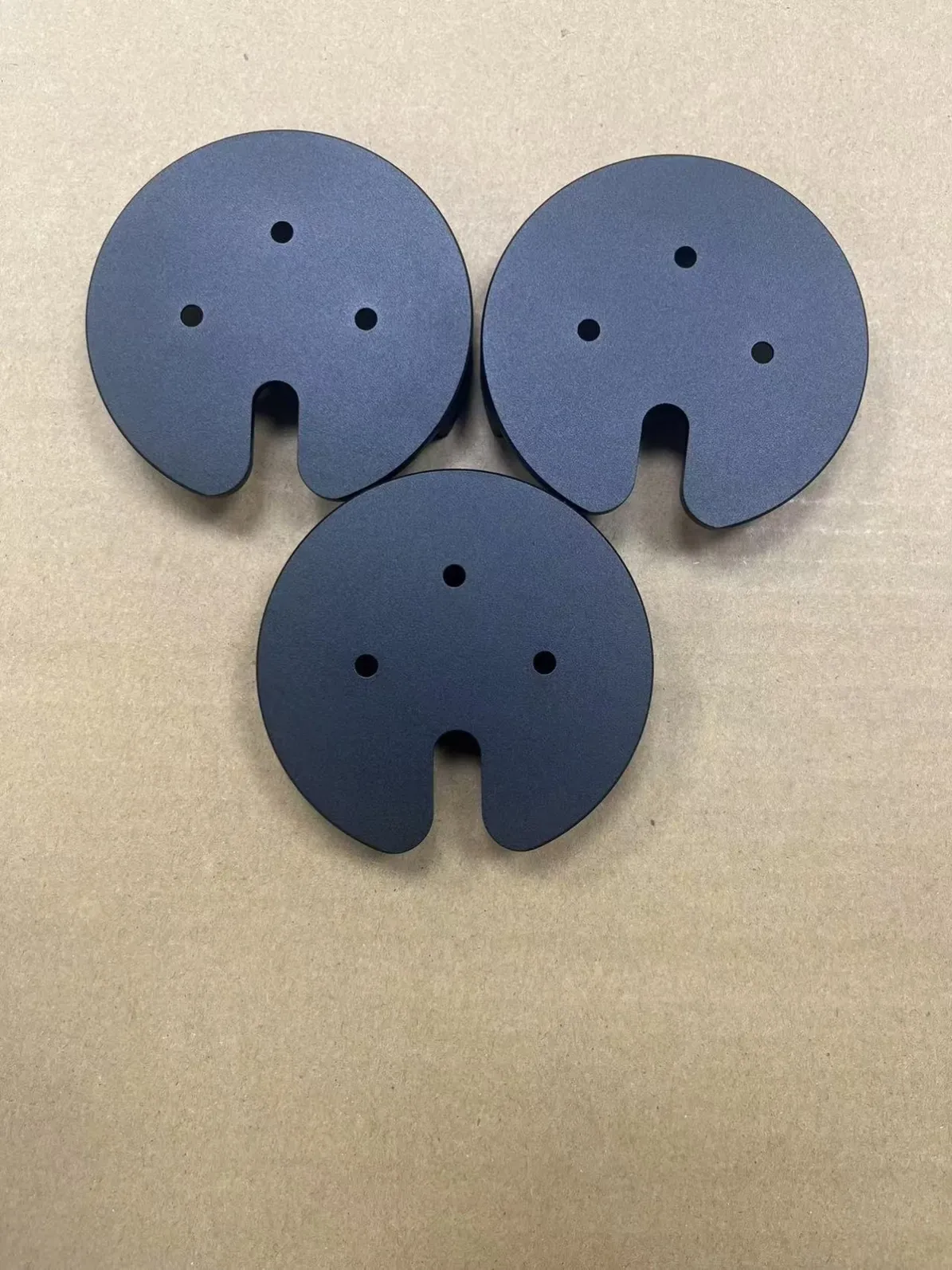
The three parts in our photos share a finish and almost nothing else: a flat plate, a ring flange and a notched round cover, in different sizes, machined different ways. All three came out of the same process — bead blast, then black anodize — with the same even, matte black. That consistency is not automatic. Black anodize is an honest finish: it shows exactly the surface it was given. This piece is about the preparation that makes one finish read the same on three different shapes.
Why black shows everything
Anodizing converts the aluminum surface into oxide and the black dye lives inside that layer — it adds no coating thickness to speak of and hides nothing underneath. Machining marks, a change of direction in the milling, a slightly rougher patch on a turned face: all of it prints through into the finished black, as variations in sheen if not in color. A part anodized straight off the machine looks like what it is — a machined part, dyed. Our article on black anodized flat parts shows the flat case; shapes with turned and milled faces mixed together make the point harder, because each face reflects differently.
Bead blasting: the equalizer
Bead blasting (120 mesh glass bead media in our standard route) replaces all of those machining textures with one uniform micro-texture of its own. Milled face, turned face, drilled edge — after blasting they are the same surface, and the anodize that follows is the same matte black on all of them. It is the entire reason we bead blast before anodizing, and on multi-shape orders like this one it does a second job: it makes parts from different batches and different machines match each other, because the blast, not the machining, sets the final texture. The same logic in clear anodize is behind our bead blasted aluminum housings.
What the matte black does on each shape
- On the flat plate, the blast removes the milling pattern that would otherwise streak the black, and the result is a panel-flat matte that does not reflect the room back at you.
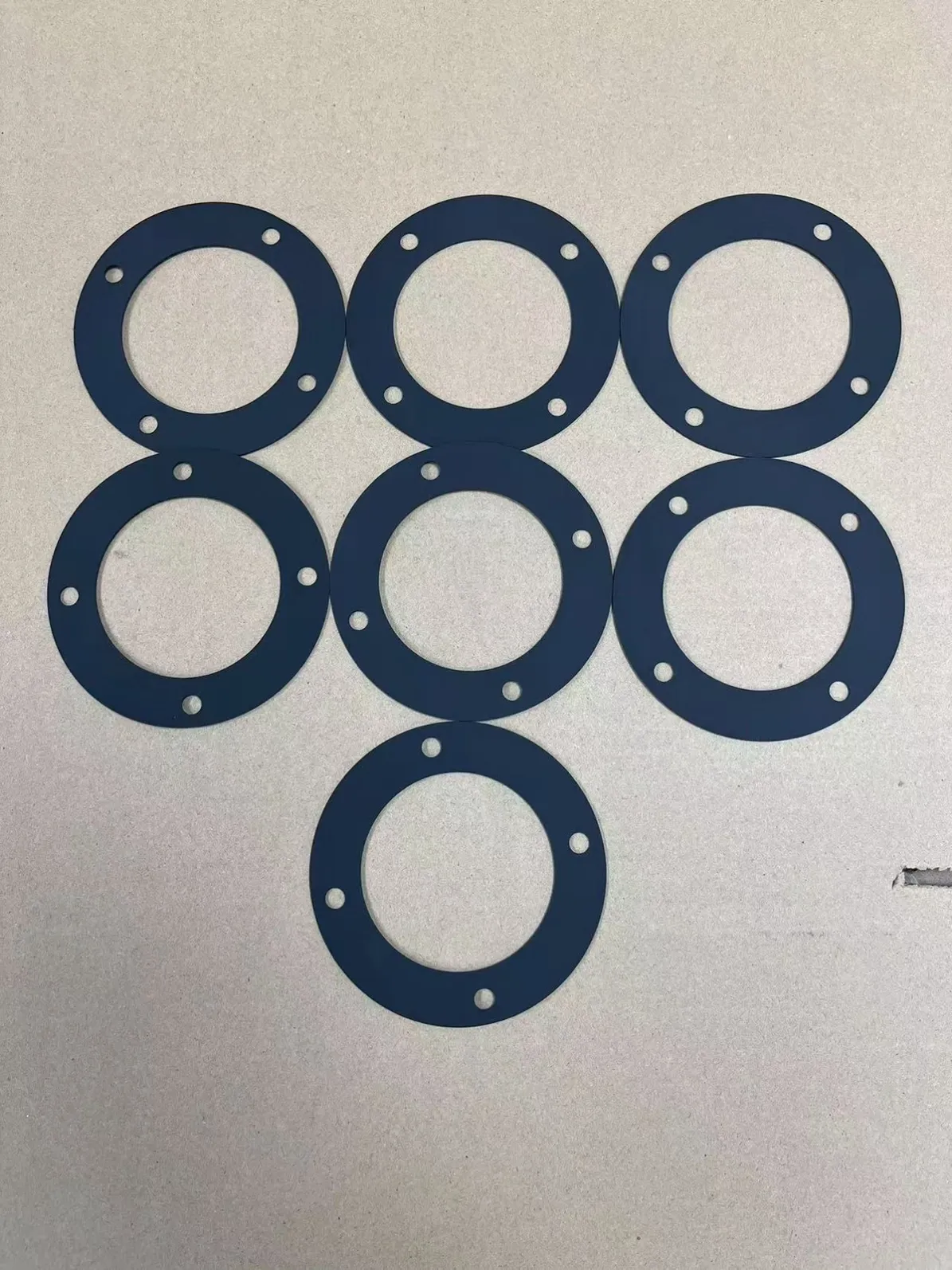
- On the ring flange, turned faces and drilled holes take the same texture; the blast reaches the transitions between diameters where a polishing wheel would leave a different finish on each level.
- On the notched cover, edges soften microscopically under the blast — no burr survives it — and the black reads as one part instead of a set of surfaces.
One property worth knowing for assemblies: we machine with the anodize build-up in mind, so precision bores and threads finish in tolerance after coating, and masking is available on request — for example on grounding or electrical contact surfaces — which is why a flanged, drilled part like the ring can go through whole. The specification behind the black is our standard MIL-PRF-8625 Type II, Class 2; the anodizing specs guide explains what the classes mean.
Holding the same black across batches
Matte black is a repeat order's hardest test: batch two must match batch one on a customer's shelf. The controls are boring and effective — same blast media and pressure, same anodize and dye routine, parts racked so the solution reaches every face. What cannot be controlled away is the alloy: different aluminum grades dye slightly differently, so a matched set should stay on one grade, and a change of grade mid-program is the moment to expect a shade conversation. Keep the grade constant and the black stays constant.
If your parts need this finish, send them through our surface finishing team with the machining — blast and anodize are planned with the part, not bolted on afterwards.
FAQ
Is the black on these parts dyed, or is it a coating? Dyed. The anodize layer is grown from the aluminum itself and the black is a dye sealed inside it — there is no paint film to chip or peel, which is why edges and holes keep their dimensions and their color.
Why bead blast first instead of anodizing straight off the machine? Because black anodize prints the surface it is given. Machining marks and mixed textures show through as sheen variations. Blasting gives every face one uniform texture, so the black is uniform — across a part, and across shapes in the same order.
Will the matte black match between repeat batches? Yes, with the process held constant and the aluminum grade unchanged. Grade changes are the usual cause of shade differences, so a matched product line should stay on one alloy.
Do holes and threads need masking before black anodizing? We machine with the coating build-up in mind, so precision bores and threads finish in tolerance after anodizing. Where a surface must stay bare — a grounding or electrical contact face, for example — masking is available on request.
Can any aluminum part get this matte black finish? Any machinable aluminum grade can be bead blasted and black anodized, but cosmetic results are best on the grades that anodize well — 6061 is the benchmark. High-silicon or copper-rich alloys dye less evenly; tell us the grade and we will tell you honestly what the black will look like.
What specification should I put on the drawing? "Bead blast, black anodize, MIL-PRF-8625 Type II Class 2" covers the route in one line. If the part mixes cosmetic and non-cosmetic faces, mark which faces the finish is judged on.