Counterbores, Countersinks, Spotfaces
A counterbore hides a bolt head, a countersink seats a flat-head screw, a spotface gives a bolt a flat seat. What each feature is, and how to call it out.
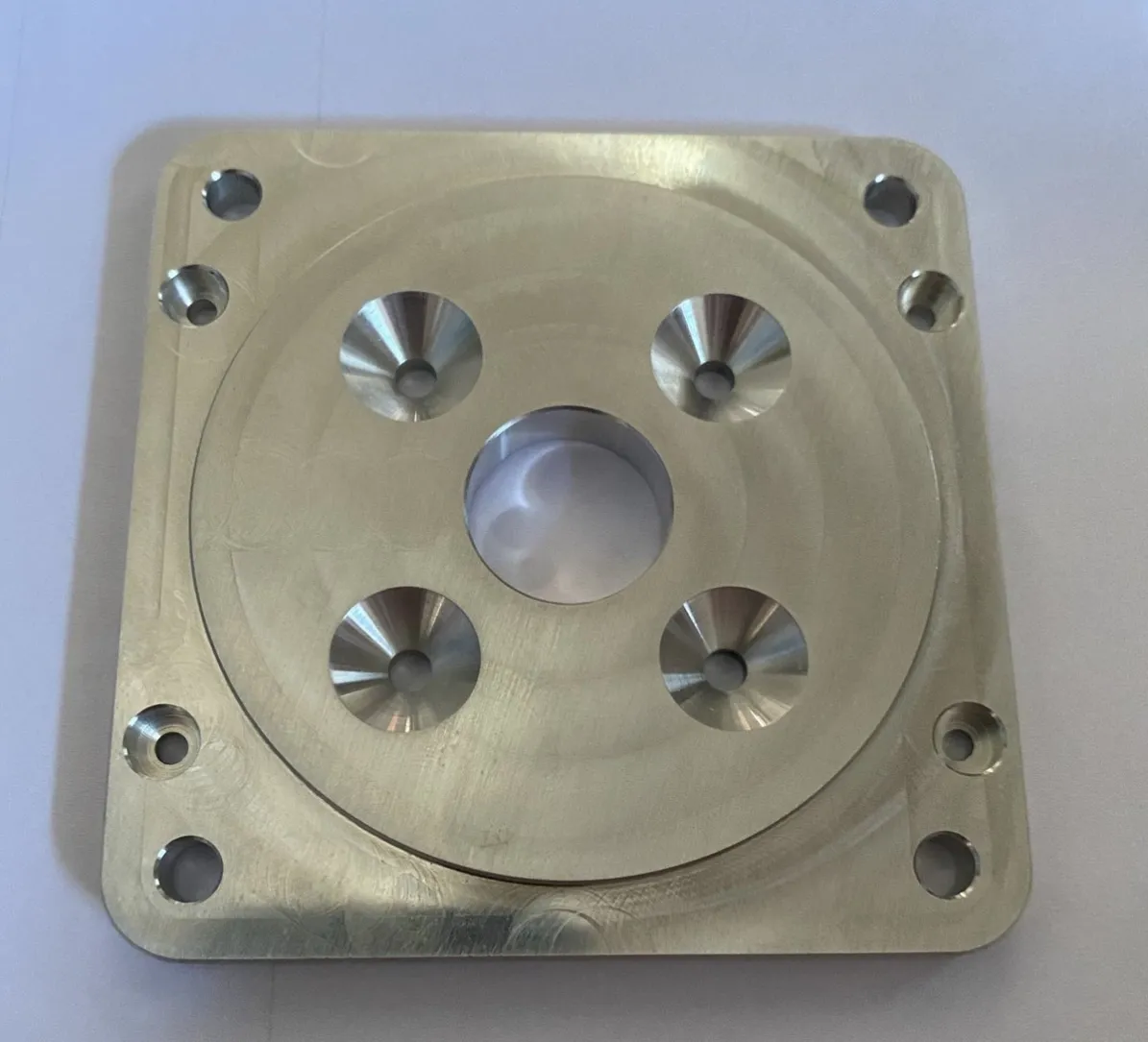
Three holes can look almost identical on a drawing and do three different jobs. A counterbore hides a bolt head below the surface. A countersink seats a flat-head screw flush. A spotface gives a bolt or nut a flat, square seat on a rough or curved surface. Mix them up and the fastener will not sit right, the head will stand proud, or the bolt will load on one edge and work loose. The differences are simple once you see what each feature is for.
What a counterbore is
A counterbore is a flat-bottomed enlargement of a hole, usually a straight cylinder cut coaxial with the through hole. A socket-head cap screw drops into it, and the head sits below the surface of the part. The counterbore has two dimensions that matter: its diameter, which clears the bolt head, and its depth, which sets how far below the surface the head sits.
Counterbores are used where a fastener must not stick out — a cover plate that another part slides over, a mounting face that sits against a machine table, or any surface where a protruding bolt head would interfere.
What a countersink is
A countersink is a cone cut into the top of a hole, most often at 82 degrees or 90 degrees, to match the cone under a flat-head screw. The screw head wedges into the cone and ends up flush with the surface.
Countersinks are for flat-head screws, and only for flat-head screws. Put a socket-head screw in a countersink and it will not seat; put a flat-head screw in a counterbore and the head will rattle in the oversize pocket. The 82-degree angle is the common standard for inch fasteners, while 90 degrees is common for metric fasteners, so the angle belongs on the drawing, not left to the shop to assume.

What a spotface is
A spotface is a shallow, flat-bottomed circular cut, just deep enough to clean up a surface. It does not hide a fastener and it does not seat a screw head — it creates a flat, square landing for a bolt head, nut or washer on a surface that is rough, as-cast, curved or otherwise not flat enough to bear on.
The spotface cuts a small flat pad, just deep enough to clean up the surface, and the bolt head bears evenly on it. The drawing shows a spotface with its diameter and a note that it is a spotface — the depth is left as "spotface to clean up" or a shallow depth, since the point is a flat seat, not a precise depth.
How to call them out on a drawing
Each feature has a standard symbol and a standard way of writing the dimensions:
- Counterbore: the counterbore symbol (⌴) followed by the diameter, then the depth symbol (↓) and the depth. For example: ⌴ Ø18, ↓ 8 mm (Ø0.71", ↓ 0.31"). The through hole diameter is called out separately.
- Countersink: the countersink symbol (⌵) followed by the diameter at the surface and the included angle. For example: ⌵ Ø16, 90°. The through hole diameter is called out separately.
- Spotface: the spotface symbol (⌵ with a flat top, or written out as "SPOTFACE") followed by the diameter. Depth is usually given as a minimum cleanup, not a tight dimension.
Two habits prevent most mistakes. First, always give the through hole size separately from the counterbore or countersink size — a single diameter on a hole with a counterbore is ambiguous. Second, give the angle on every countersink.
For threaded holes the same discipline applies — see tapped holes: through, blind and inserts. And where these features sit on a flange or a bolted face, the position of the hole pattern matters as much as the hole itself — see reading GD&T: flatness, position, profile.
Machining notes that affect the design
Counterbores are usually cut with a counterbore tool or an end mill, and a drilled pilot hole keeps them on center. A counterbore much deeper than the bolt head needs is wasted machining time; depth only needs to clear the head with a little room. Very deep counterbores in thin material can also leave too little material under the head, so the wall thickness under the counterbore floor is worth a check on thin parts.
Countersinks are cut with a countersink tool or a chamfer mill. A countersink in thin sheet metal is a different problem: there may not be enough material for a full cone, and the screw head can pull through. On sheet metal, a dimple or a pressed insert is often the better answer — see machined flanges: types and facings for how bolted faces are handled on flanges.
Spotfaces need a tool that can reach the surface square to the hole. On a flat face that is a spotface cutter; on an angled or curved surface, a small end mill or a spotface tool with a pilot is used.
What to send for a quote
A drawing with each feature called out by symbol, diameter and depth or angle, plus the fastener standard the parts will use — metric or inch — so the shop cuts the angle and the clearance the screws actually need. If you are unsure which of the three features a joint needs, describe the fastener and what the surface has to look like when assembled, and the shop can pick the feature. If you want these features machined, send us your drawing — inquiries are answered within 8 hours and quotes usually within 24 hours.
FAQ
What is the difference between a counterbore and a countersink? A counterbore is a flat-bottomed cylinder that hides a socket-head bolt below the surface; a countersink is a cone that seats a flat-head screw flush. They take different fasteners and are called out differently on a drawing.
What angle should a countersink be? 82 degrees is the common standard for inch flat-head screws and 90 degrees for metric ones. Always put the angle on the drawing rather than leaving the shop to assume it.
How deep should a counterbore be? Deep enough for the bolt head to sit below the surface with a little clearance. More than that is wasted machining time.
What is a spotface used for? To make a flat, square seat for a bolt head or nut on a rough, as-cast or curved surface. It is a shallow cleanup cut, and its depth is not a tight dimension.
Can a counterbore and a countersink be used on the same hole? No — a hole takes one or the other, since they suit different screw heads. A spotface can sit on the opposite face if the assembly needs it.