Machined Plastic Gears, Bushings and Wear Parts
Machined plastic gears, bushings and wear parts in POM, nylon, PTFE and more: when machining beats molding, tolerances and commercial-grade gear accuracy.
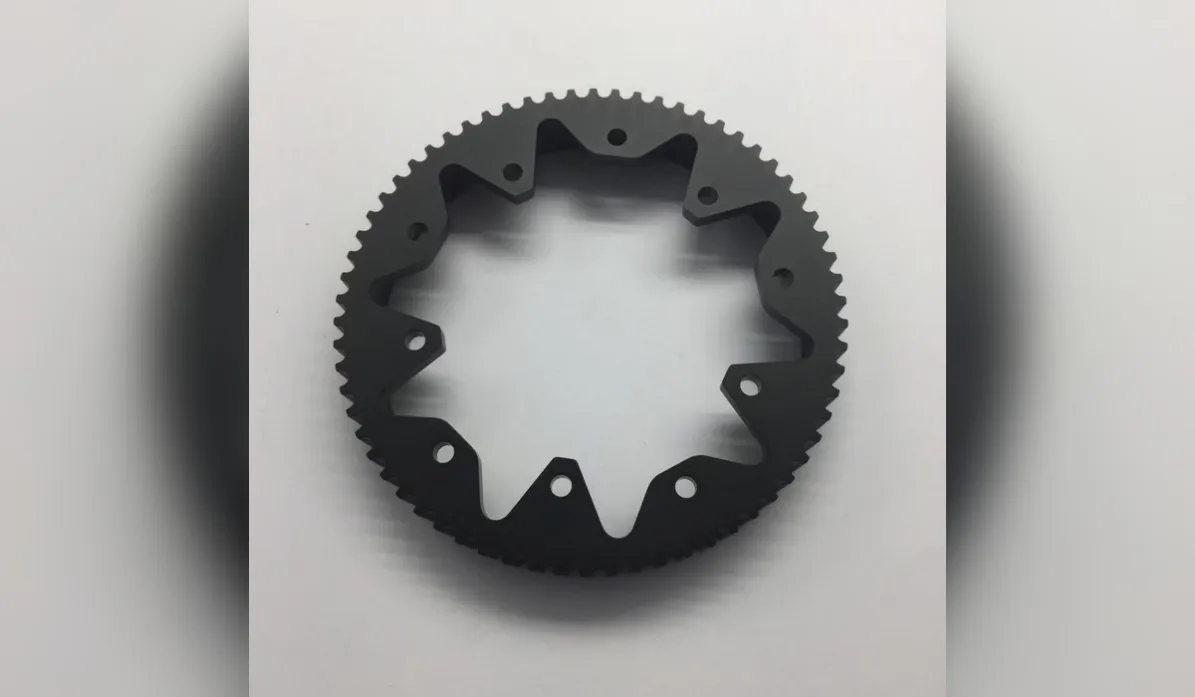
Plastic gears and bushings earn their place quietly: they run without oil, they do not rust, and they are kind to the parts they touch. Machining them from solid stock — rather than molding — makes sense for prototypes, small batches, and any design that is still changing. We cut gears, bushings, sliders and wear pads in POM, nylon, PEEK and PTFE for equipment makers, and this page covers how the materials compare and what actually decides whether the part works.
Typical parts
- Spur and helical gears for instrument drives, small gearboxes and actuator mechanisms
- Bushings and plain bearings for shafts, hinges and pivoting joints
- Sliders, guide blocks and wear pads for linear motion and conveyor equipment
- Wear strips, chain guides and scraper blades
- Timing pulleys, sprockets and ratchets in engineering plastics
Most orders are small: a few pieces to prove a mechanism, then batches of tens or hundreds once the design settles. Because the parts are machined, tooth counts, bore sizes and hub details can change between batches without new tooling.
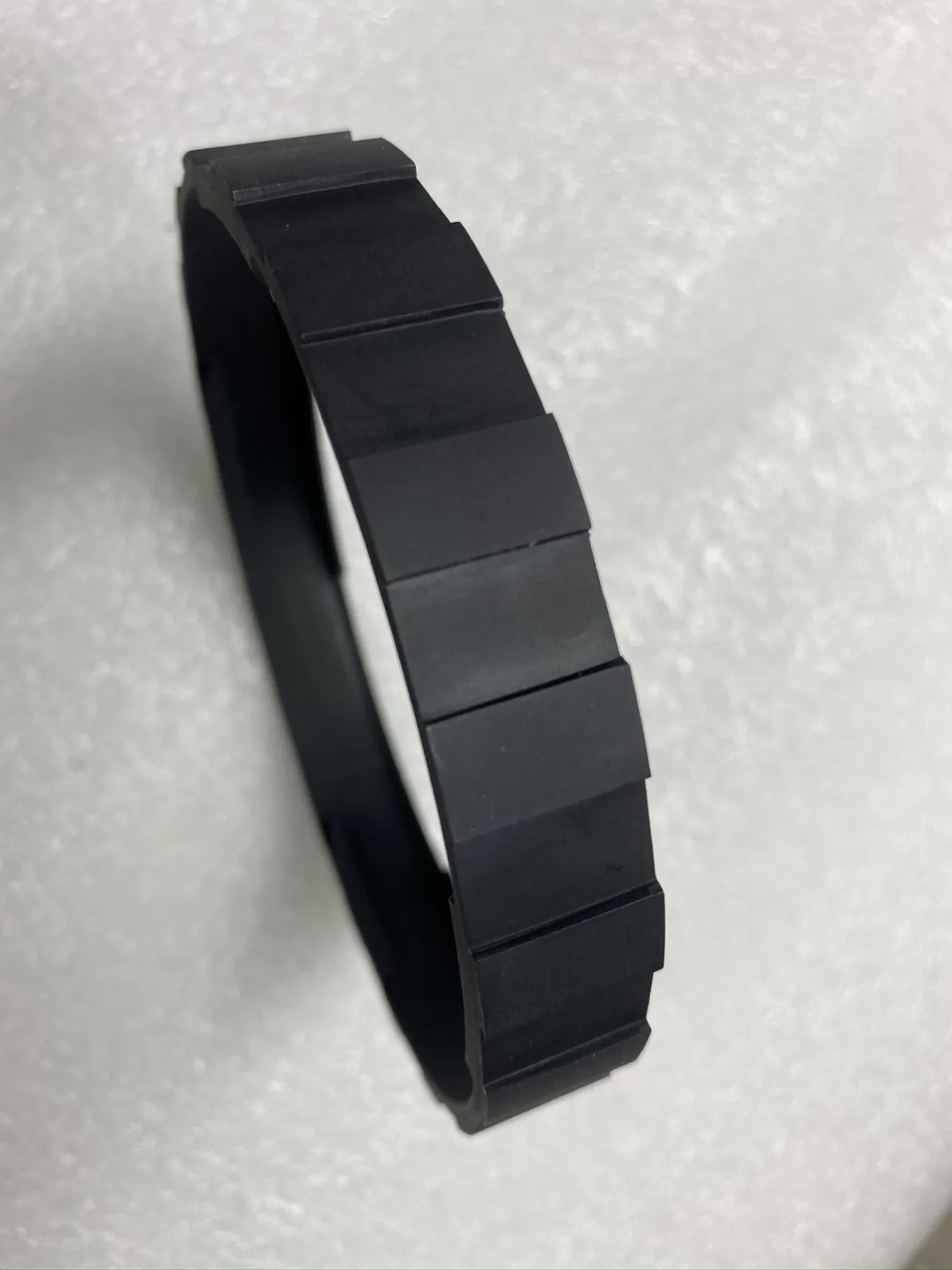
Choosing the material
POM is the default gear material, and for good reason. It has low friction, good fatigue strength, and it holds its dimensions well because it absorbs very little moisture. Teeth cut cleanly, bores stay round, and a POM gear running against a steel pinion is a combination that works in a huge range of instruments and small machines.
Nylon is tougher and more forgiving of shock loads than POM, and it is often chosen for larger gears and bushings. Its weakness is water: nylon absorbs moisture from the air and swells as it does, so a bore that was a close fit in winter can tighten up in a humid summer. If the part runs wet or outdoors, the clearance has to allow for that growth, and we will flag it when we see a tight nylon fit on a drawing.
PEEK is the high-temperature, high-load option. It keeps its strength where POM and nylon soften, shrugs off most chemicals, and suits parts near motors, sterilizers or process heat. The material is expensive, so it is usually reserved for smaller parts where nothing else survives. Our article on machining PEEK, Ultem and PTFE goes further into how these high-performance plastics behave on the machine.
PTFE has the lowest friction of the group and is chemically inert, which makes it excellent for bushings, seals and sliding pads in corrosive or food-adjacent equipment. It is soft and it creeps under sustained load, so it is a poor gear material and a good bushing material only where loads are light and clearances generous.
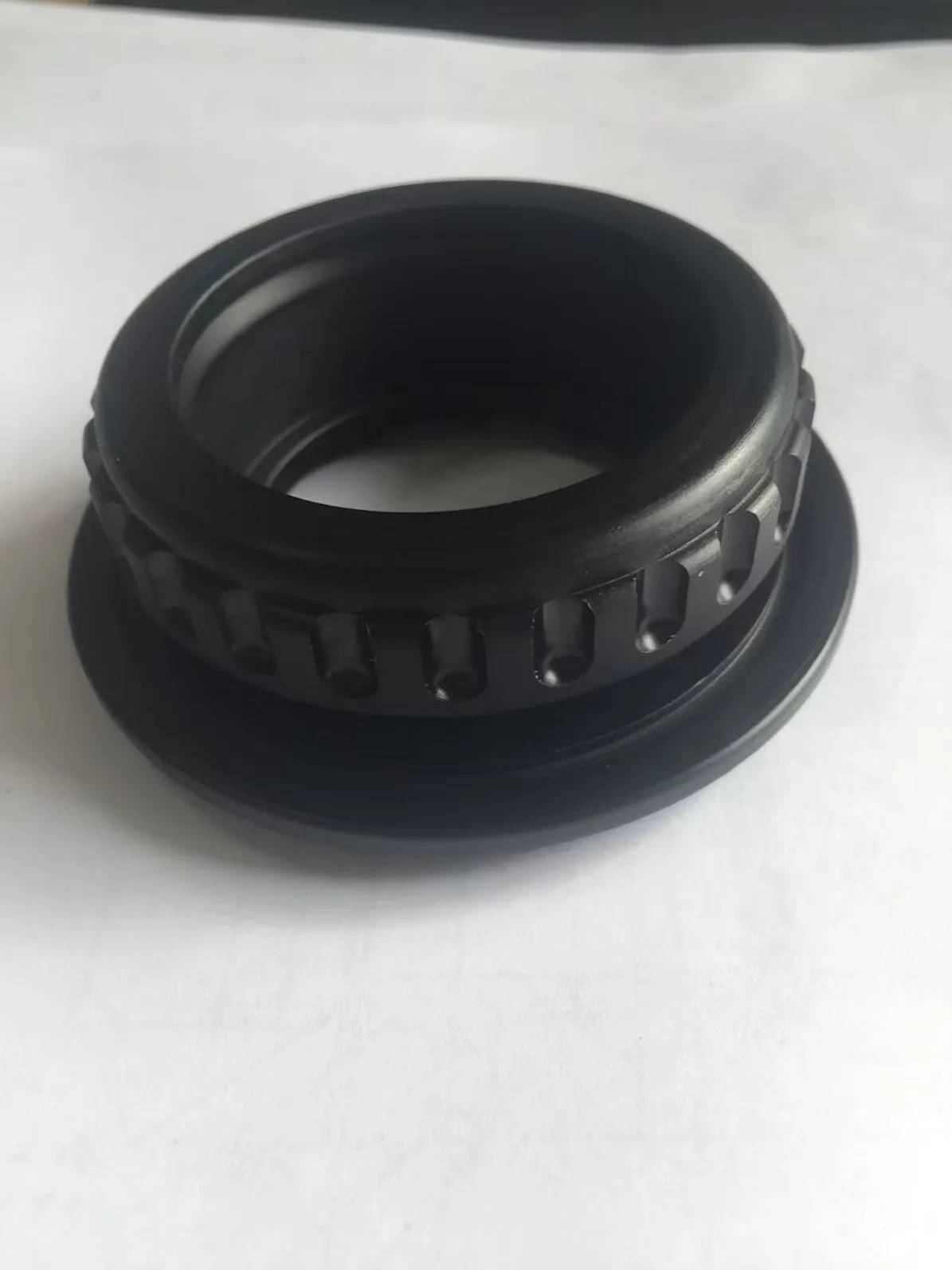
Key requirements
Gear accuracy, stated plainly. Machined plastic gears from us are regular commercial grade — general industrial accuracy, suitable for instrument drives, small mechanisms and similar duties. We do not promise high-precision gear grades, and you should be wary of anyone who does for cut plastic. The exact accuracy class is whatever your drawing specifies; if the drawing names a grade, we will confirm against it before quoting, and if it does not, commercial grade is what you will get. For most applications that is the right call: plastic gears trade a little accuracy for quiet running and zero lubrication.
Dimensional stability. Plastic moves more than metal, and the machining has to respect that. On parts with heavy material removal — a pocketed gear blank, a thin-walled bushing, a large plate with cutouts — internal stress in the stock will make the part bow as it is opened up. Our approach is staged machining: rough out part of the material, let the part go through stress relief (annealing — the same step under its other common name), then continue machining, repeating as needed. It takes longer than cutting in one pass, but the part stays flat and the bore stays round. We describe the same method on pocketed plates in machining pocketed POM plates.
Bores and fits. Plastic parts are machined to ±0.1 mm (±0.004") as standard. For bushing bores, tell us the shaft size and whether the fit should be a running clearance or a press fit into the housing; both numbers matter more than a generic tolerance. Remember that a press fit in plastic relaxes over time, so retaining features — a flange, a circlip groove, a shoulder — are worth designing in.
Deburring. A burr on a gear tooth or a bushing edge is not cosmetic; it changes how the part runs and sheds debris into the mechanism. Teeth and edges are deburred and inspected part by part, and sharp edges on sliding faces are broken lightly so the part does not shave its mating surface.
Lubrication notes
POM and PTFE are self-lubricating in the practical sense: they run dry against steel with low friction and no oil to attract dust. Nylon benefits from an initial grease in heavier-duty applications. If your mechanism already has a lubricant spec, tell us — some greases attack some plastics, and it is cheaper to check before the parts are cut than after they swell.
What to send for a quote
For gears: module or diametral pitch, tooth count, face width, bore and hub details, material, and quantity — or just the drawing or model with those on it. For bushings and wear parts, the drawing plus the mating shaft or housing size is enough. Enquiries are answered within 8 hours, quotes usually within 24 hours. Small batches typically take 3–5 days, and simple bushings and pads can ship in 24–48 hours. Material certificates and FAI are available on request, and we ship worldwide.
FAQ
What accuracy can I expect from a machined plastic gear? Regular commercial grade — general industrial accuracy. That is right for most instrument and mechanism drives. We do not offer high-precision gear grades in plastic; if your drawing specifies an accuracy class, send it and we will confirm honestly whether it is achievable before you order.
POM or nylon for my gear? POM if dimensions matter most: it barely absorbs moisture, so teeth and bores stay the size they were cut. Nylon if the part takes knocks and shock loads — but allow extra clearance for moisture growth, especially in humid or wet service.
Why do some plastic parts take longer to machine? Parts with a lot of material removed need staged machining with stress relief between cuts, otherwise they warp as internal stress is released. The extra steps are what keep a thin or heavily pocketed part flat, so we do not skip them.
Can plastic bushings run without lubrication? In most light and medium duty applications, yes — POM and PTFE run dry against steel shafts. For higher loads or speeds, a compatible grease extends life; tell us what you plan to use and we will check it suits the material.
What tolerance do you hold on plastic parts? ±0.1 mm (±0.004") as standard, with tighter fits on bores held by agreement against the mating part size. Send the shaft or housing dimension with the enquiry and we will work to the fit, not just the number.