Electrical Contacts and Terminals: Stamped and Plated
Custom electrical contacts and terminals in beryllium copper, brass and copper — stamped or turned, plated in gold, silver, nickel or tin to your drawing.
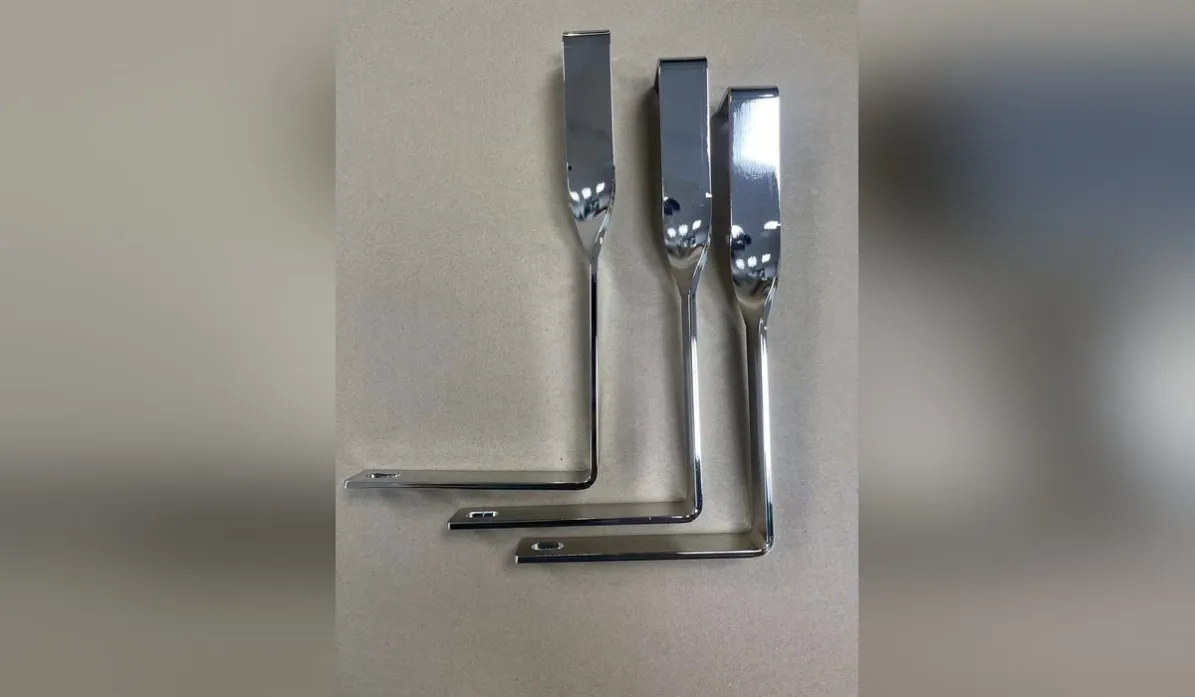
Yes — we make custom electrical contacts and terminals: stamped spring contacts, blades, clips and turned pins and sockets, in beryllium copper, brass and copper, plated in gold, silver, nickel or tin to your drawing. Send the drawing — or the part the contact has to mate with — and we will quote the part, the plating and the quantity you actually need.
The parts we make
- Spring contacts. Fingers, clips and cantilever contacts that press against a mating surface and stay pressed — the contact is also the spring, which is why most of them are beryllium copper.
- Blades and tabs. Flat male contacts, spade terminals and busbar tabs: stamped, formed, and plated on the contact faces.
- Turned pins and sockets. Round contacts machined on the lathe — pins, sockets, threaded terminals — where the geometry is round or the quantity is small.
- Terminal hardware. The in-between parts: lugs, clamps and connector hardware that carry current between a cable, a board and a busbar. The heavy end of that family is covered by our copper busbar piece.
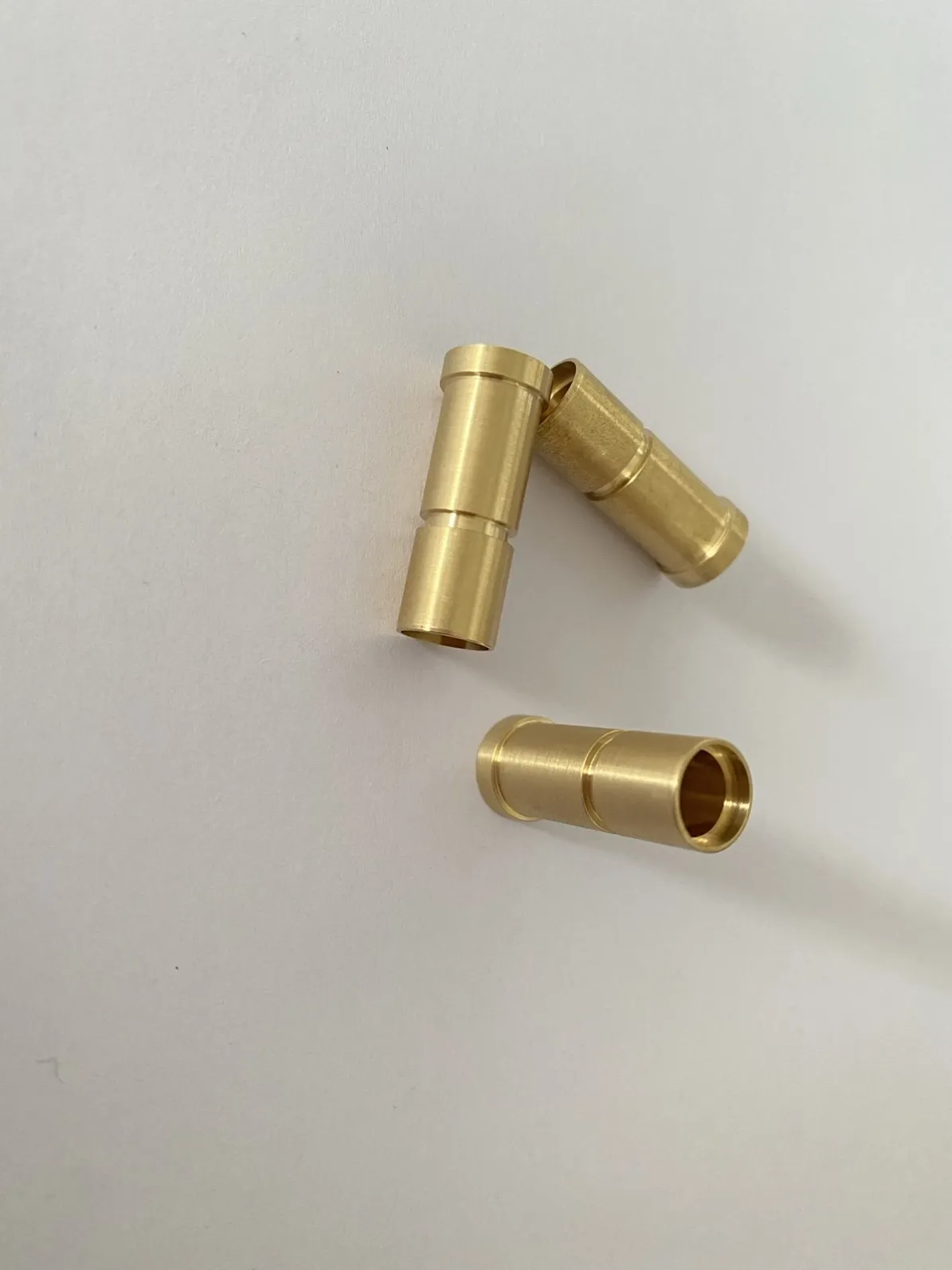
Stamped or turned: how the choice is made
It comes down to shape and quantity. Stamping wins when the part is flat or formed from strip and the quantity justifies a die: the per-part cost drops hard once the tooling exists, and features like spring arms, lances and formed tabs come out of the die in one stroke. Turning wins when the part is round, when the design is still changing, or when the quantity is a few hundred and a die would never pay for itself. Plenty of contact programs start turned — prove the design — and move to stamping when the volume arrives, with the same drawing driving both. Our beryllium copper stampings piece walks through the stamped route in detail: punching, bending, heat treatment and plating, in that order, and why the order matters.
Materials: the contact is a spring that conducts
- C17200 beryllium copper is the default for spring contacts: it conducts well for a spring material, forms in the soft state, and is then age hardened so the spring force the designer calculated is the spring force the part keeps.
- Brass — C36000 for machined parts, C26000 for formed ones — is the economical conductor: easy to machine and stamp, strong enough where the contact force comes from geometry or a mating spring rather than the part itself.
- Copper — T2 (C11000) — is for terminals and tabs where conductivity is the whole job and spring behavior is not needed.
The grades and how they compare are laid out in our copper and brass grades guide. If the drawing names a grade, we machine that grade and the material certificate says so; if it does not, tell us what the contact does and we will propose one with the quote.
Plating: the surface is the contact
Bare copper alloys oxidize, and oxide is a poor conductor — so the working face of a contact is almost always plated. All four of the standard contact finishes are ones we supply:
- Gold — does not oxidize, keeps contact resistance low and stable for years, and costs accordingly. The default for signal contacts and anything that must work first time after long storage.
- Silver — the best electrical conductor of the four, used on power contacts; it tarnishes in air, and the tarnish is far less of a problem on power joints than on signal ones. Choosing between silver and gold is common enough that it decides whole contact designs.
- Nickel — hard, wear-resistant, and often used as the barrier layer under gold or silver so the base metal cannot migrate into the working surface.
- Tin — the economical, solderable finish for terminals that will be soldered or clamped, where the joint is made once and left alone.
Plating thickness is whatever your drawing specifies — it is a design decision (wear life, mating cycles, cost), so we plate to the callout and the plating is part of the quoted price, not an afterthought. Plated faces are protected in packing so they arrive unmarked.
Inspection and packing
Contact parts are small, numerous and easy to damage, so inspection is by the drawing's critical dimensions — spring arm position, hole and slot sizes, plating coverage on the working faces — with counts and packing that keep formed spring arms from being flattened by their own weight in the box. First article report, material certificate and certificate of conformance travel with the shipment on request; before a production run, samples go first for your confirmation.
What to send for a quote
The drawing with the material grade, the plating and its thickness callout, and the quantity — plus the mating part's details if the contact has to fit something that already exists. No drawing yet? A sample of the contact, or the part it mates with, starts the conversation the same way. Send your drawing / sample for a quote via our contact page — enquiries are answered within 8 hours and quotes usually come back within 24 hours.
FAQ
Should my contacts be stamped or turned? Flat or strip-formed parts in quantity: stamped. Round parts, changing designs, or a few hundred pieces: turned. Many programs start turned and move to a die when the volume justifies it — the same drawing drives both routes.
Why beryllium copper for spring contacts? Because a spring contact needs two things at once: spring force that survives years of deflection, and decent conductivity. C17200 beryllium copper, formed soft and age hardened afterwards, is the standard answer to that combination.
Gold or silver plating — how do I choose? Gold for signal contacts and long, maintenance-free life: it never oxidizes. Silver for power contacts where conductivity rules and the joint carries real current. If the drawing is undecided, tell us the current, the mating cycles and the environment, and the quote will recommend one.
Can you plate only the contact faces? Yes — selective plating and masking are arranged where the drawing calls for plating on the working faces only, which is also how gold stays affordable on a high-volume part.
What plating thickness should I specify? That depends on mating cycles, wear and environment, so it belongs on your drawing; if it is not there, we will propose a thickness with the quote based on what the contact does. We plate to the callout — we do not substitute a thinner coating to win the price.
Can you supply the contacts together with our other parts? Yes — contacts and terminals ship alongside the busbars, housings and brackets of the same assembly from one drawing package, checked against each other before they leave.