Copper and Brass Grades Compared
CZ121, C36000, C26000, C10100 and C11000 compared: the free-machining brasses, the forming brass, and the pure coppers — and which parts each belongs in.
"Copper" on a drawing is the beginning of a conversation, not a specification. The copper family splits into materials with almost nothing in common beyond color: brasses that machine like a dream and conduct modestly, a brass that barely machines but forms beautifully, and pure coppers that conduct superbly and fight every cutting tool. We machine all of them — CZ121, C36000, C26000, C10100 and C11000 are all regular work here — and this page is the selection guide: what each grade is, what it does best, and the parts it belongs in. The single-grade deep dive on CZ121 is here; this page is the whole family at once.
The free-machining brasses: CZ121 and C36000
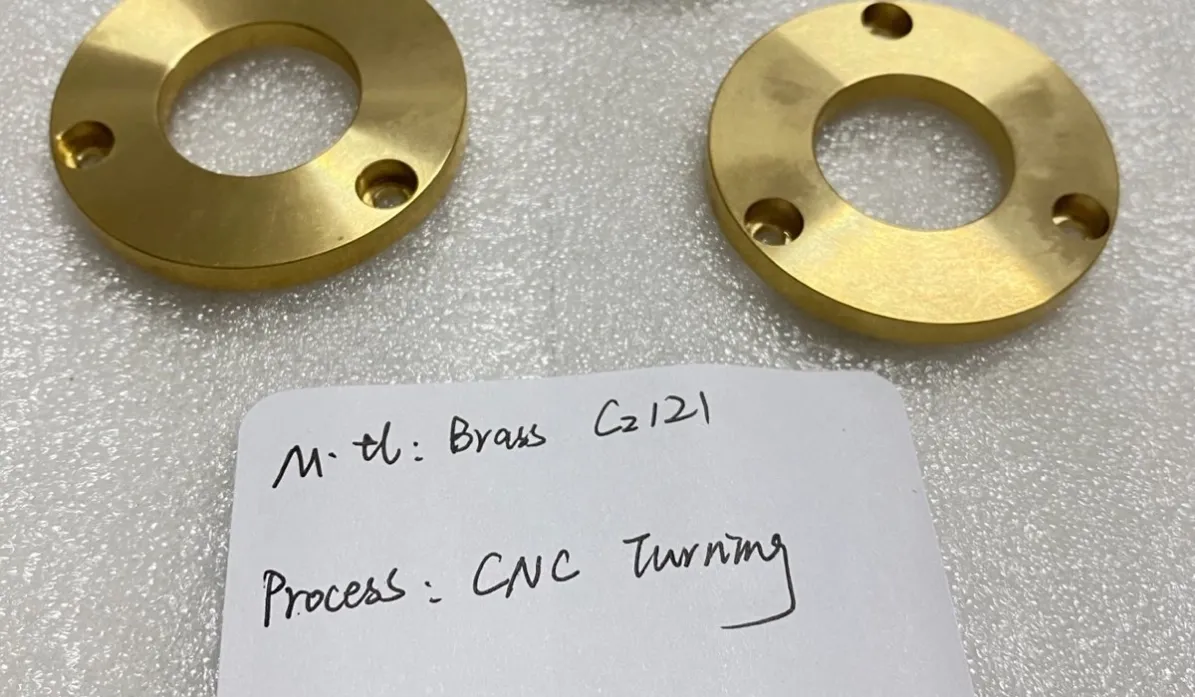
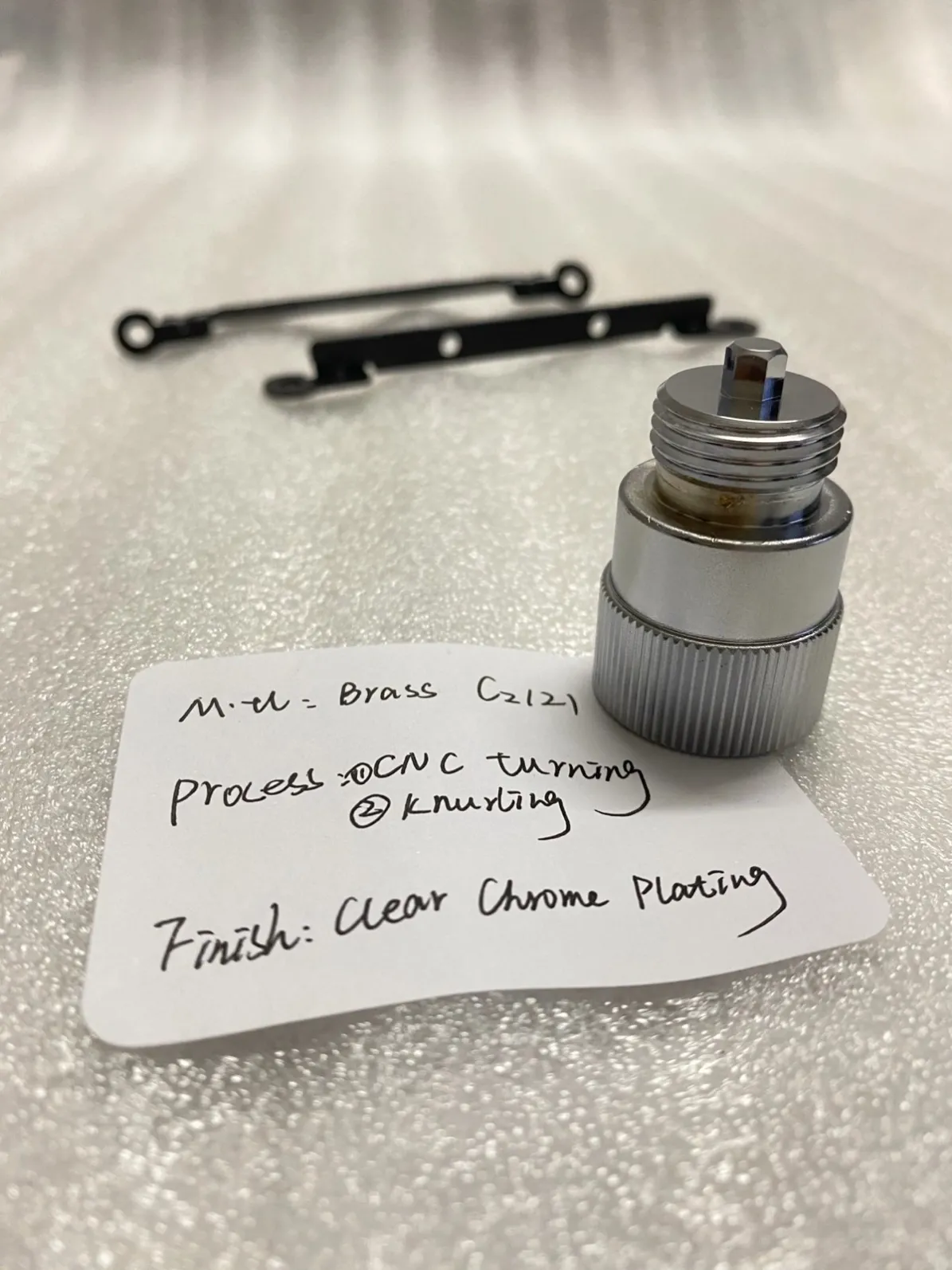
CZ121 (CW614N in European drawings) is CuZn39Pb3; C36000 is the closest US equivalent. Both are leaded free-cutting brasses, one specified through the British/European standards and the other through the American UNS system. Both exist for one reason — the lead makes the chip break, so they machine faster and cleaner than almost any other metal, which is why the machinability index is calibrated against C36000 at 100%. Turned fittings, connectors, flanges and knurled parts are their home ground, and the economics are covered in our piece on C36000 turned parts. Conductivity is the compromise: around a quarter of pure copper's, which is plenty for a connector body and not enough for a serious conductor. When a drawing crosses the Atlantic, the grade name changes but the material family does not — we work to whichever designation your standard writes, and flag it if the two are ever mixed on one drawing.
The forming brass: C26000
C26000 — cartridge brass, 70/30 copper-zinc — trades the lead away and gets ductility in return. It deep-draws, bends and forms better than any other common brass, which is why it makes cups, covers, terminals and spring parts that start as sheet or strip. The same property makes it a mediocre machining alloy: without lead, its chips string and its surfaces tear more readily, so a part that is mostly machined should not be specified in C26000 out of habit, and a part that is mostly formed should not be specified in CZ121. The forming/machining split is the single most useful line in this whole comparison.
The pure coppers: C10100 and C11000
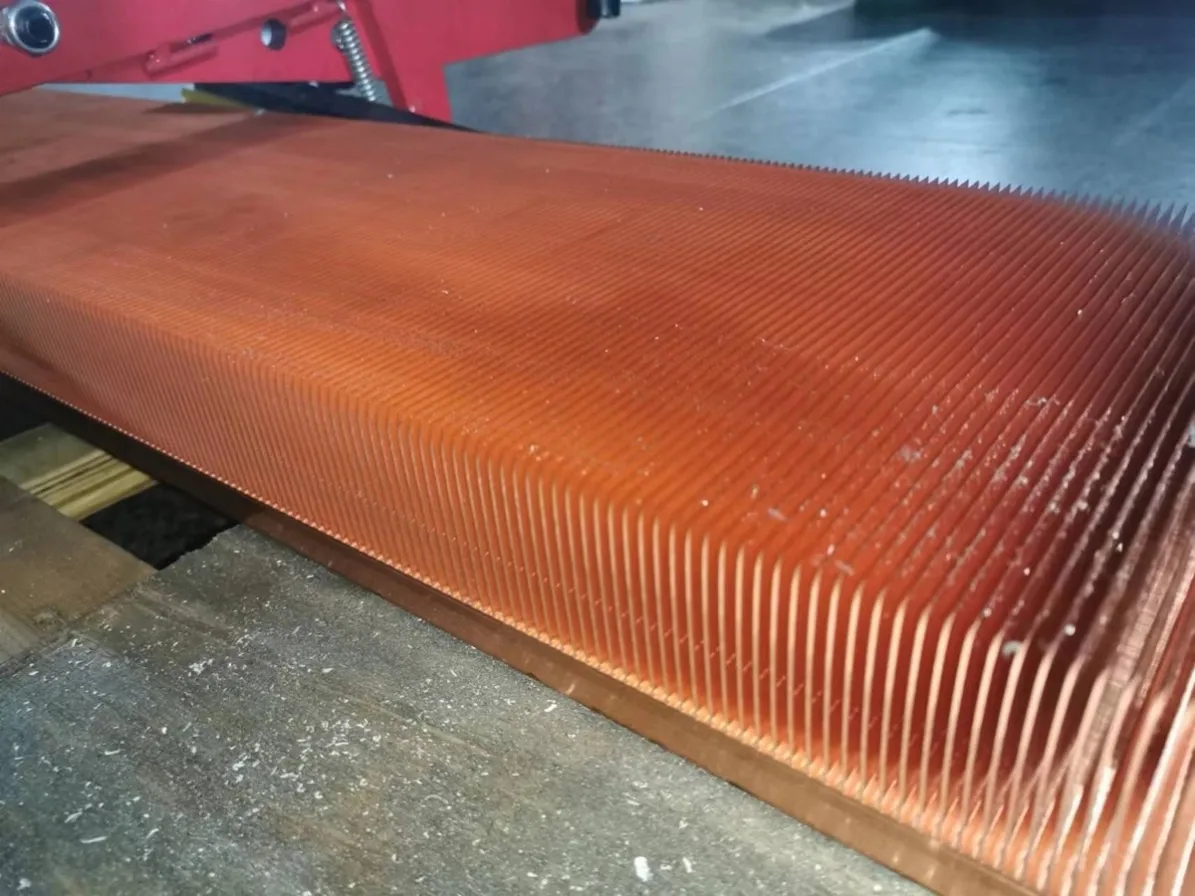
At the top of the conductivity table sit the pure coppers. C11000 (ETP copper — the T2 grade of our skived fin heatsinks and copper busbars) is the working standard: essentially full copper conductivity at the family's most reasonable price, for busbars, terminals and conductors. Its one chemical footnote matters: it contains a trace of oxygen, so it must not be heated in a hydrogen atmosphere — a niche constraint that decides real specifications. C10100 (oxygen-free copper) removes that footnote and adds the last increment of purity: the grade for vacuum equipment, high-end electrodes and applications where outgassing or the hydrogen problem rules ETP out — at a noticeably higher price. Both machine the way pure copper does: soft, gummy, demanding sharp tooling and patience, as the busbar piece describes.
The family in one table
| Grade | Family | Machines | Conductivity (typical) | Belongs in |
|---|---|---|---|---|
| CZ121 / CW614N | Leaded brass (EU/UK) | Excellently | ~26% IACS | Turned fittings, flanges, knurled parts |
| C36000 | Leaded brass (US) | Excellently | ~26% IACS | Turned fittings, connectors |
| C26000 | Cartridge brass 70/30 | Poorly–fairly | ~28% IACS | Drawn, bent and formed parts, terminals |
| C11000 (≈ T2) | ETP pure copper | With difficulty | ~100% IACS | Busbars, conductors, heatsinks |
| C10100 | Oxygen-free copper | With difficulty | ~101% IACS | Vacuum parts, electrodes, premium conductors |
Choosing, in one paragraph
If the part is turned and detailed, it is a leaded brass — CZ121 or C36000 by your standard's flag. If it is formed from sheet or strip, it is C26000. If it carries serious current or heat, it is a pure copper — C11000 unless oxygen is the problem, in which case C10100. Every other choice is a compromise looking for a justification, and if your drawing specifies against this grain (a machined C26000 part, a formed CZ121 one), we will ask why at quote stage — occasionally there is a good reason, and more often the grade is a copy-paste from the last project.
Send the drawing through our contact page with the grade as your standard names it. We respond within 8 hours and normally quote within 24 hours.
FAQ
Are CZ121 and C36000 the same material? Near-relatives, not identical twins: CZ121 (CW614N) is CuZn39Pb3, and C36000 is its closest US equivalent. For most parts they are interchangeable in behavior; we work to the designation on your drawing.
Why is C26000 bad for machined parts? No lead. Cartridge brass is built for ductility — deep drawing and bending — and without lead its chips string and surfaces tear. Form it, don't turn it.
C10100 or C11000 for a conductor? C11000 (ETP) for almost everything: full conductivity at the better price. C10100 (oxygen-free) where the part sees vacuum, hydrogen atmospheres, or the highest purity requirement — the oxygen in ETP is its one real limitation.
Can pure copper really not be machined well? It can — we machine it regularly — but it is soft and gummy, so cycle times are longer and tooling is specialized. That is priced into the quote rather than discovered in it.
My drawing just says "brass". What happens? We ask. The grade decides the process, the price and whether the part works — the quote will propose the grade that fits the part's function, and state the assumption in writing.