Stainless Grades Compared: 303, 304, 316, 416, 17-4 PH, 440C
303, 304, 316, 416, 440C or 17-4 PH stainless steel? How the common stainless grades differ in machinability, corrosion resistance and hardening, and which fits your part.
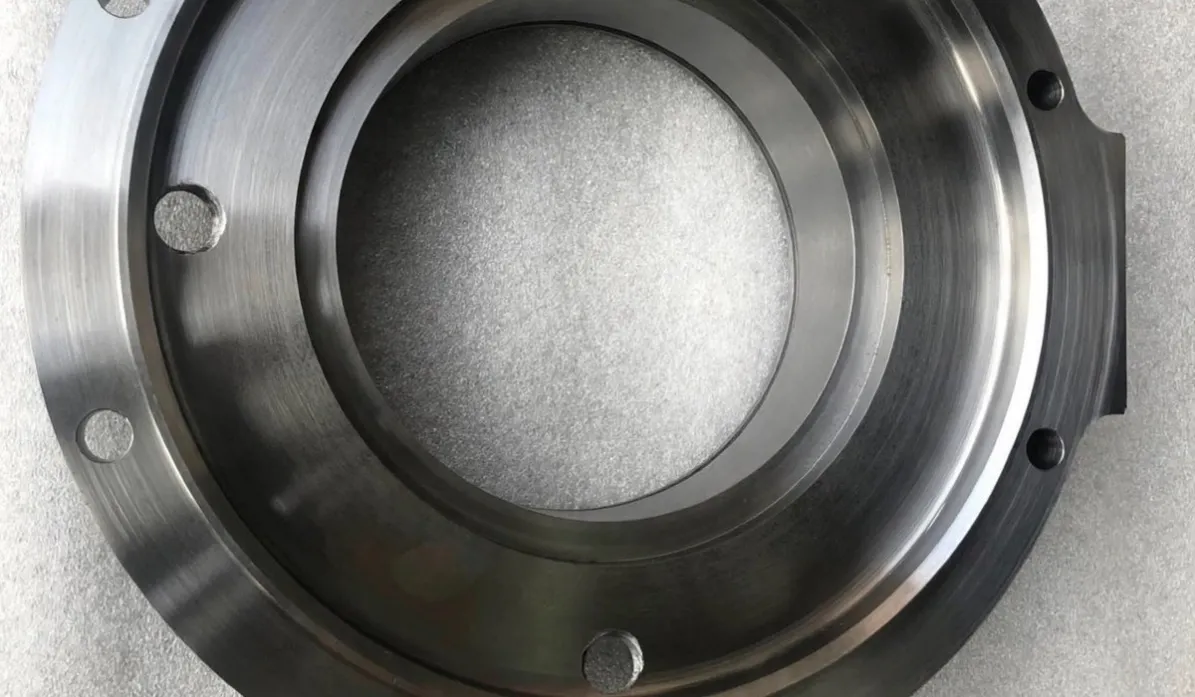
"Stainless steel" on a drawing is not a material yet. The grade behind it decides what the part costs to machine, how it survives its environment, and whether it can be hardened at all. The short version: 304 stainless steel is the safe default for most equipment parts. 316 stainless steel earns its higher price where chlorides, moisture or cleaning chemicals are in play. 303 stainless steel machines faster than both and suits high-volume turned parts in mild environments. And when you need a stainless part that is magnetic or genuinely hard, you leave the 300 series entirely — 416 stainless steel, 17-4 PH and hardened 440C are the grades to look at.
We machine all six of these regularly. Here is how they actually differ.
The six grades at a glance
| Grade | Family | Machinability | Corrosion resistance | Can be hardened? | Typical parts |
|---|---|---|---|---|---|
| 303 stainless steel | Austenitic, free-machining | Excellent | Good, a step below 304 | No | Fittings, shafts, high-volume turned parts |
| 304 stainless steel | Austenitic | Good | Very good | No | Housings, brackets, flanges, general equipment parts |
| 316 stainless steel | Austenitic, with molybdenum | Good, slightly tougher than 304 | Excellent, especially against chlorides | No | Lab and medical equipment, marine and food-industry parts |
| 416 stainless steel | Martensitic, free-machining | Excellent | Moderate, lowest tier of the six | Yes | Valve parts, shafts, fasteners |
| 17-4 PH | Precipitation-hardening | Moderate | Good | Yes, by aging | High-strength shafts and structural parts |
| 440C | Martensitic, high-carbon | Slow, often machined hardened | Moderate, lowest tier of the six | Yes, to about 58 HRC | Wear parts, bearing components, cutting and sliding parts |
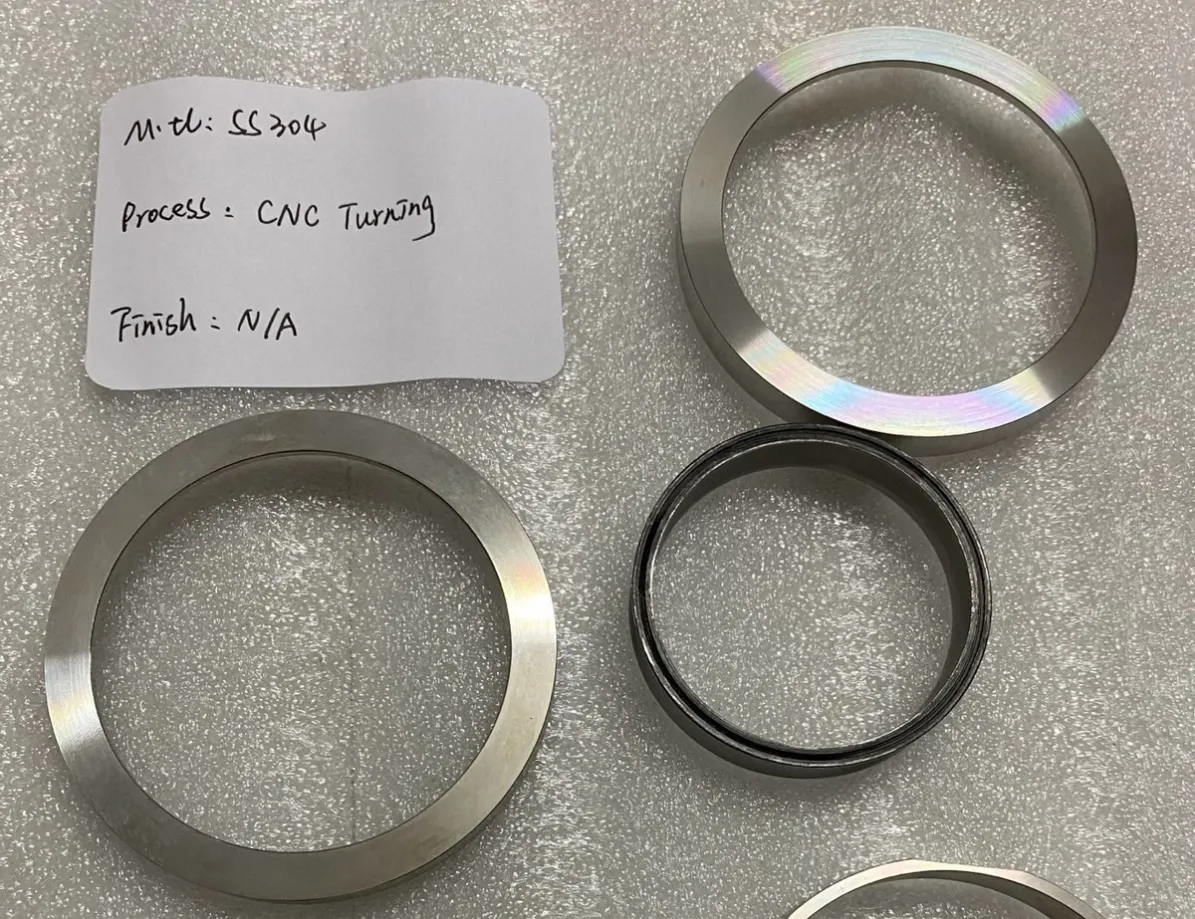
303 stainless steel, 304 stainless steel and 316 stainless steel: the austenitic three
These are the grades most drawings mean by "stainless." They share good corrosion resistance and one shared limit: none of them can be hardened by heat treatment.
303 stainless steel has sulfur added to break chips, which makes it the easiest stainless to turn. Tools last longer, cycle times drop, and surface finish comes off the machine clean. The trade-offs are real, though: corrosion resistance sits a step below 304 stainless steel, and it welds poorly. For turned parts that live indoors in a mild environment — fittings, spacers, shafts made by the hundreds — 303 stainless steel is usually the smart choice.
304 stainless steel is the default for a reason. It resists corrosion well in most indoor and outdoor environments, welds properly, and machines at a predictable cost. If your part has no special exposure and no special strength requirement, start with 304 stainless steel and only move away from it for a specific reason.
316 stainless steel adds 2–3% molybdenum, and that one change is what you are paying for. Molybdenum is what resists pitting and crevice corrosion from chlorides — salt water, coastal air, many cleaning and process chemicals. That is why 316 stainless steel shows up so often on laboratory, medical-testing and food equipment, and on anything near the sea (more in our piece on machining 316 stainless fittings). It machines a little tougher than 304 stainless steel and the material costs more, so on a dry indoor bracket it buys you nothing. In a wet or chemical environment, it is the difference between a part that lasts and one that pits.
When you need it magnetic or hard: 416 stainless steel and 440C
Austenitic grades are essentially non-magnetic and stay relatively soft. If your part needs to respond to a magnet, take a thread under high load, or resist wear, look at the martensitic grades.
416 stainless steel is the free-machining member of that family — it cuts almost as easily as 303 stainless steel and can be heat treated to a useful hardness. The compromise is corrosion resistance, which sits in the lowest tier of the stainless family, alongside 440C. It suits valve components, pump shafts and fasteners that work in mild conditions but need more strength or hardness than 304 stainless steel can offer.
440C is the hardness specialist. With high carbon content it hardens to around 58 HRC, which is why it appears in bearing components, wear plates, blades and other parts that slide, roll or cut. Most 440C parts are supplied hardened, and machining them in that condition is slower work — expect it in the price and the lead time. Corrosion resistance is modest for a stainless grade, so 440C belongs in wear applications, not wet ones. Steel parts like these are also commonly finished with black oxide where a dark, low-glare surface is wanted.
17-4 PH: stainless with alloy-steel strength
17-4 PH plays a different role. It is a precipitation-hardening grade: we machine it in its softer solution-annealed condition, then an aging treatment (H900 is the common one) brings it to a tensile strength around 1,310 MPa — far beyond anything 304 stainless steel or 316 stainless steel can reach — while keeping corrosion resistance roughly in the 304 stainless steel class for many environments.
That combination is why 17-4 PH turns up in high-load shafts, aerospace and medical equipment components, and structural parts that still have to survive moisture. One caution: the properties live in the aging condition, so the drawing has to state it. "17-4 PH" without a condition is an incomplete specification — H900, H1025 and the other conditions are noticeably different materials in service.
How to choose, in order
Ask these questions in this order and the grade usually picks itself:
- Will the part see chlorides, salt spray or aggressive cleaning chemicals? Choose 316 stainless steel.
- Does it need to be hard, wear-resistant or magnetic? Choose 440C for wear and hardness, 416 stainless steel for easier machining with moderate hardening, 17-4 PH for high strength.
- Is it a high-volume turned part in a mild, dry environment? Choose 303 stainless steel and take the machining savings.
- None of the above? 304 stainless steel. It is the default because most parts live unremarkable lives.
If you are between two grades, ask at quote stage — a grade change affects material price, machining time and sometimes the finishing route, and it is much cheaper to settle before metal is cut. Our broader CNC machining materials guide covers how stainless compares with aluminum, carbon steel, brass and titanium if you are still deciding between material families.
Write the full grade on the drawing
"Stainless steel" alone forces your supplier to guess, and different shops guess differently. Write the grade and, where it matters, the condition:
- 304 stainless steel or 316 stainless steel for general parts — the grade alone is enough.
- 17-4 PH with its condition, for example "17-4 PH, H900".
- 440C with its hardness, for example "440C, hardened 56–58 HRC".
That one line removes a round of emails and makes every quote you receive comparable. When you are ready, send the drawing to our CNC machining or CNC turning team and we will flag any grade that looks mismatched to the application before quoting.
FAQ
Is 316 stainless steel always better than 304 stainless steel? No. 316 stainless steel is better only where its corrosion resistance is actually used — chlorides, moisture, chemicals. In a dry indoor application it adds material and machining cost and returns nothing.
Can 304 stainless steel or 316 stainless steel be hardened? Not by heat treatment. Both can only gain a little strength from cold working. If the part needs real hardness, specify a martensitic grade such as 440C or 416 stainless steel, or 17-4 PH for high strength.
Is 303 stainless steel magnetic? No, not in any useful sense — like the other 300-series grades it is essentially non-magnetic. If the design needs a magnetic response, that alone rules out 303 stainless steel, 304 stainless steel and 316 stainless steel.
Which grade should I use for laboratory or medical equipment parts? 316 stainless steel is the common choice where parts meet moisture and cleaning chemicals, and it is what we machine most for testing and lab equipment. Where a component also carries serious load, 17-4 PH is the usual step up.
Does switching from 304 stainless steel to 316 stainless steel change the quote much? Both the material and the machining cost a little more. On prototypes and small batches the difference is usually a modest part of the total; on large runs it is worth comparing both quotes.
Can you machine 440C after it has been hardened? Yes — we machine 440C in the hardened condition. It is slower than machining it soft, so tell us at quote stage which condition you want the part finished in, and we will plan the route (machine-then-harden, or machine hardened) around your tolerances.