Machining 316 Stainless Steel Fittings: Threads, Sealing Faces, and 304 vs 316
A 316 stainless fitting either seals first time or leaks. Threads, sealing faces and hex details that decide it — plus when 304 is the smarter choice.
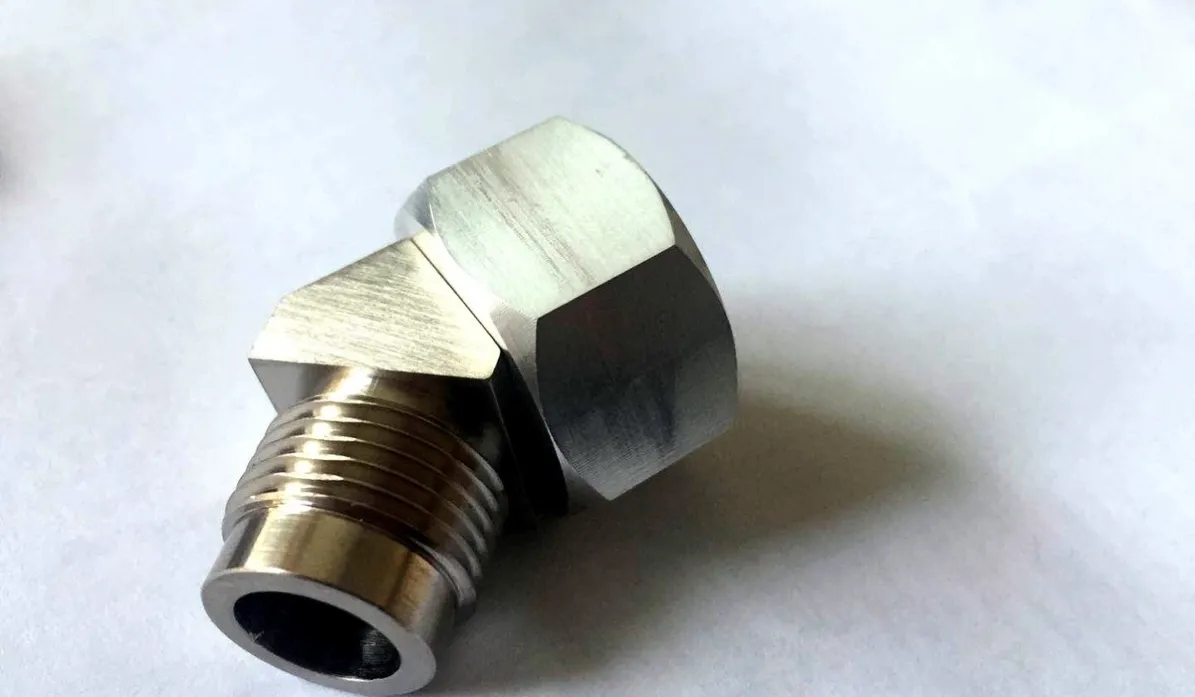
A threaded fitting looks like one of the simplest parts on a lathe — a hex, a couple of threads, a hole through the middle. It is also a part that either seals first time or leaks in front of your customer, and the difference is usually in details that don't show up in a photograph: thread form, the finish on the sealing face, and whether the material grade was the right call.
We turn a lot of stainless steel fittings, in both 304 and 316. Here's what actually matters on them.
Threads Are the Part
On a fitting, the thread isn't a feature — it's the function. A few things we watch:
- Tapered vs parallel threads. NPT and BSPT threads seal on the thread flanks as they wedge together; BSPP and metric parallel threads seal on a face, an O-ring, or a washer. They are not interchangeable, and a drawing that just says "1/2 inch thread" is an RFQ waiting for a follow-up question. Name the standard and we'll cut exactly that.
- Thread fit and gauging. External and internal threads are checked with go/no-go gauges, not eyeballed. On tapered threads, the gauge also confirms the thread starts and seats where it should, so the fitting tightens up at the right engagement — not bottomed out, not hanging on two threads.
- Clean thread roots. Stainless tears rather than chips if the tool or the feed is wrong, and a torn thread root is where leaks and galling start. Sharp tooling, correct speeds, and a proper deburr at the thread entry make assembly smooth instead of crunchy.
The Sealing Face Deserves a Good Finish
Where a fitting seals against a face — a flat, a cone, or an O-ring groove — surface finish matters more than almost anything else on the part. A sealing face with visible turning marks across it gives fluid a spiral path to escape along. We finish sealing faces with a fine, controlled pass and check the roughness; for reference, Ra 1.6 µm or better is a sensible target on faces that have to seal, and tighter is available where a drawing calls for it.
The hex in the middle gets less attention from engineers and more from the people who install the part: clean, consistent flats, sized to the wrench, with edges broken so nobody slices a hand during assembly.
304 vs 316: How to Choose
This is the question we get most often on stainless fittings, and it has a straightforward answer.
304 is the general-purpose grade. It handles fresh water, air, most food and beverage contact, and indoor environments perfectly well, and it costs less. If your fitting lives in a benign environment, 304 is usually the right, economical choice.
316 adds molybdenum, and that one addition changes its behavior around chlorides — salt water, coastal air, brine, many cleaning chemicals, and process fluids in chemical and pharmaceutical plants. Chlorides pit 304 over time; 316 resists that pitting far longer. If the part will see salt spray, chlorinated water, or aggressive washdown chemicals, 316 is worth the modest price difference.
One machining note: 316 is slightly tougher on tools than 304, so it runs a little slower. On small fittings the difference in part price is small — the material itself is usually the bigger part of the gap.
Consistency Across a Batch
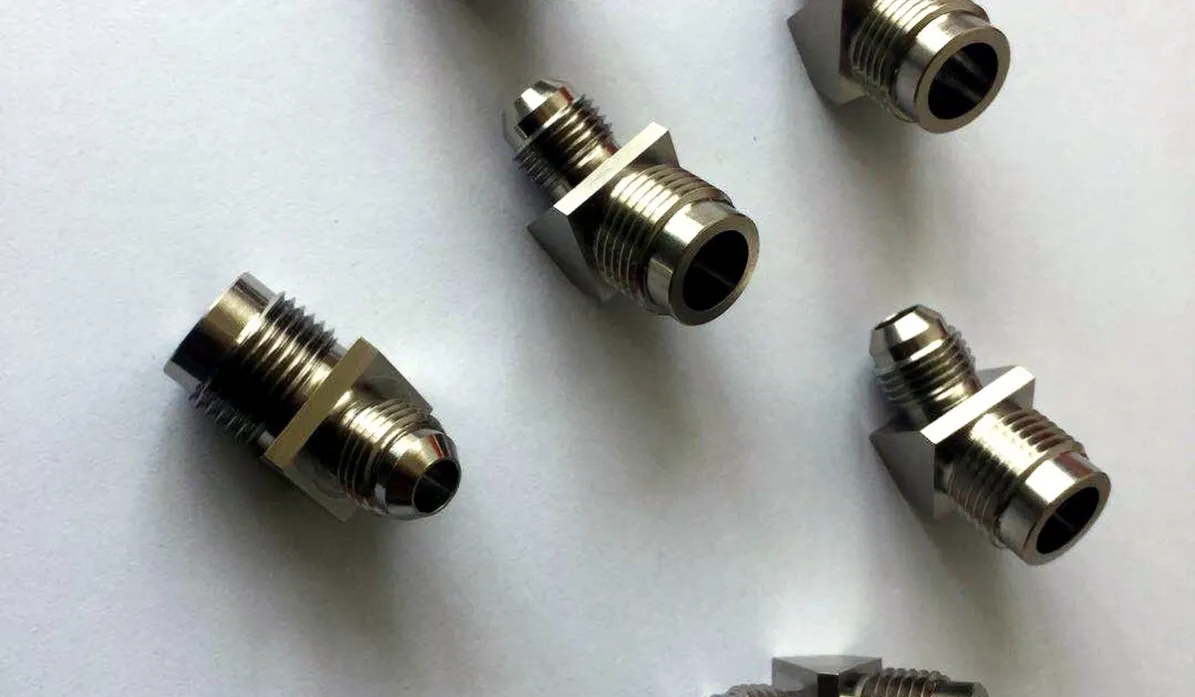
Fittings are rarely ordered one at a time. They come in batches of tens or hundreds, and every one of them has to assemble the same way. That means holding the thread, the hex, and the sealing face to the same numbers from the first part to the last: our standard turning tolerance is ±0.1 mm, with ±0.01 mm held where a drawing calls for it on critical features. After machining, stainless fittings are typically passivated, which restores the corrosion-resistant surface layer that machining disturbs.
If you're sourcing custom machined fittings — elbows, straight connectors, adapters between thread standards — send the drawing to our CNC turning page. Tell us the thread standard, the grade, and what the fitting will carry, and we'll quote within 24 hours. FAI reports, material certificates, and a certificate of conformance are available, and we're happy to sign an NDA before you share a design.