First Article Inspection, Material Certificates and CofC: What You Get With Your Parts
FAI reports, material certificates, certificates of conformance and third-party SGS reports prove different things. What each document is and how to get the ones you need.
A machined part can be measured. The paperwork that travels with it is what lets your incoming inspection, your quality system and your customer audits trust the measurement without repeating it. Four documents come up in almost every serious enquiry we receive — first article inspection reports, material certificates, certificates of conformance, and third-party test reports. They are not interchangeable, and each proves a different thing. Here is what each one is, and how ours work in practice.
The four documents, side by side
| Document | What it proves | When it is produced |
|---|---|---|
| FAI report (first article inspection) | The first parts off the process match the drawing, dimension by dimension | Before or at the start of production, on first articles |
| Material certificate | The metal or plastic used is the grade specified, from the mill that made it | With the material, held on file and supplied with the order |
| Certificate of Conformance (CofC) | We state formally that the parts supplied conform to the drawing and PO requirements | With the shipment |
| SGS third-party report | An independent laboratory verified the material composition or a coating property | On request, arranged before or during production (extra cost) |
First article inspection: measure before you multiply
The cheapest time to find a problem is on the first part, not the five-hundredth. Our routine on production orders reflects that: before a bulk run proceeds, we make and inspect first articles — and on bulk orders we send samples for your approval together with the inspection report, and mass production starts once you have signed the samples off.
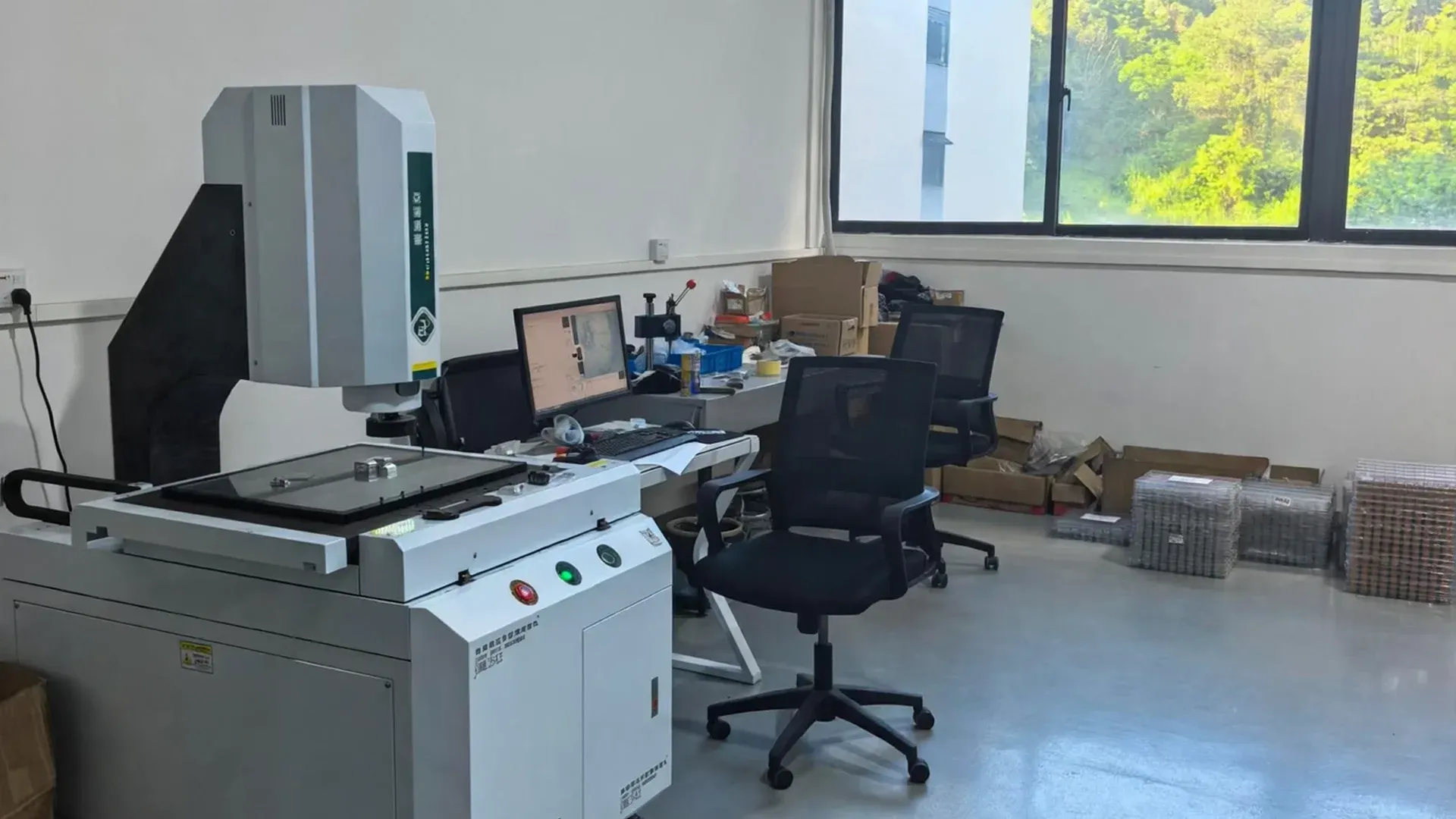
A first article report from us covers the drawing's dimensions as measured on our equipment — CMM, vision measuring system, micrometers, calipers and hardness tester as the features require — with the measured values recorded against the specified tolerances, not just a pass stamp. If a dimension is drifting toward a limit, that is visible in the numbers while there is still time to correct the process.
Material certificates: the grade is a document, not a promise
"6061-T6 aluminum" on a quote is a claim; the material certificate is the evidence. Every job here runs on material sourced against the drawing's specification, and the supplier's material certificate — the mill's own record of grade and properties — is kept on file for the job and can be supplied with your parts. That chain, from mill certificate to finished part, is what traceability means in practice, and it is why we ask for the full grade and condition on the drawing (a habit several of our guides keep repeating, from stainless grades to cobalt alloys).
Certificate of Conformance: the formal statement
The CofC is the short, formal document: it identifies the parts, the drawing and revision, the quantity and the order, and states that the parts conform to the requirements. It is the paper your quality system files. On its own it proves nothing measurable — its weight comes from sitting on top of the inspection records and material certificates behind it, which is why we treat those as the substance and the CofC as the summary.
When you need a third party: SGS reports
Sometimes your customer, your regulator or your own quality plan requires verification by an independent laboratory rather than the manufacturer's own records. For those cases we can send the material — or a finished part, where a coating property such as plating thickness or composition is what needs verifying — to SGS for a third-party test report. This is an additional service at additional cost, and it needs to be agreed at enquiry stage so the samples and timing are planned into the job rather than added after the parts are packed.
How to get the documents you need
None of this works as an afterthought, so the routine is simple:
- Say it at quote stage. List the documents you need — FAI report, material certificate, CofC, SGS report — with the enquiry. They are priced and planned into the job from the start. (Our quote guide lists this among the things that make a quote faster and more accurate.)
- First articles before bulk. On production orders, expect samples plus the inspection report for your approval before the run proceeds.
- Everything ships together. The agreed documents travel with the parts, and our packing keeps the paperwork with the shipment it describes.
We are an ISO 9001 certified shop, and we sign NDAs on request — the certificate is on our About page, and the conversation about your drawings stays between us.
FAQ
What is the difference between an FAI report and a CofC? The FAI report is data: measured values for the drawing's dimensions on the first parts. The CofC is a statement: a formal declaration that the supplied parts conform. Serious quality systems want the data behind the statement — ask for both.
Do you send samples before mass production? Yes. On bulk orders we send samples for your approval together with the inspection report, and the production run proceeds once you have approved them.
Can you provide material certificates for the metal you use? Yes. Material is sourced against your drawing's specification and the supplier's material certificate is held on file for the job; we supply it with the order on request.
Can a coating be independently verified, not just the material? Yes. Where a property of a finished part needs independent verification — coating composition or thickness, for example — we can send a part to SGS for a third-party test report, at additional cost. Agree it at enquiry stage so it is planned into the job.
What measuring equipment do you inspect with? CMM and a vision measuring system for geometry, plus micrometers, calipers and hardness testing for the features that call for them. The instrument follows the tolerance: a ±0.01 mm feature is not signed off with a general-purpose gauge.
Does requesting documents slow the order down? Requested at quote stage, no — the inspections and paperwork are scheduled with production. Requested after the parts are finished and packed, an independent test can add days, which is why the enquiry is the right moment.