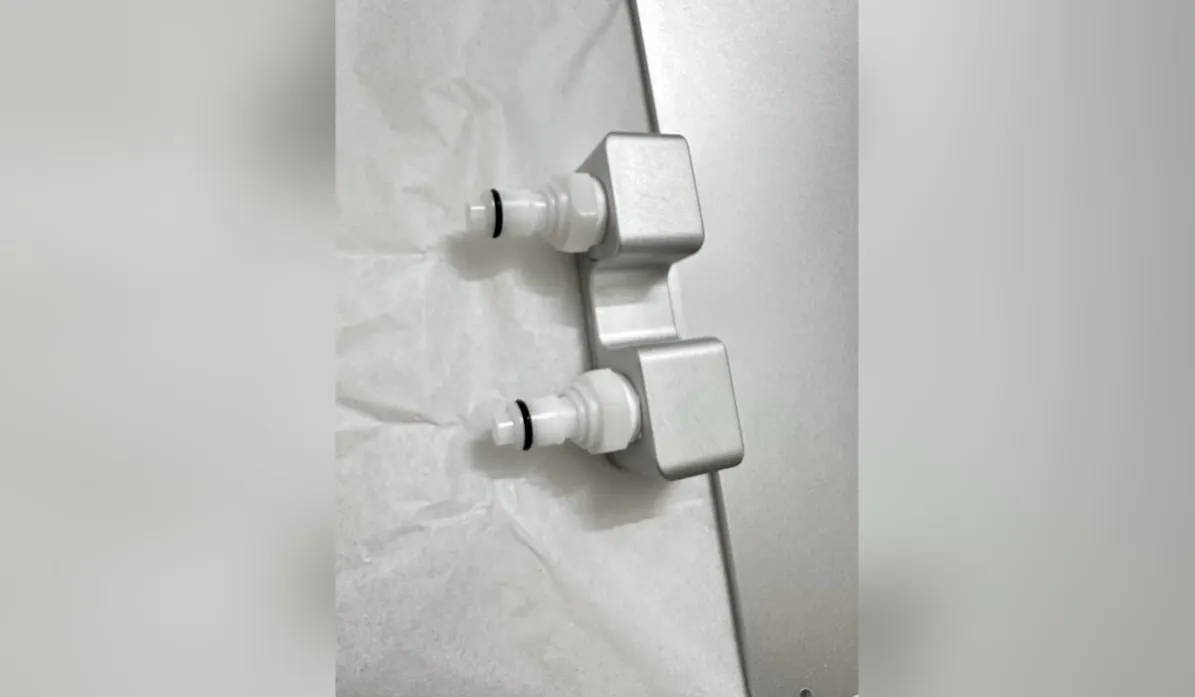
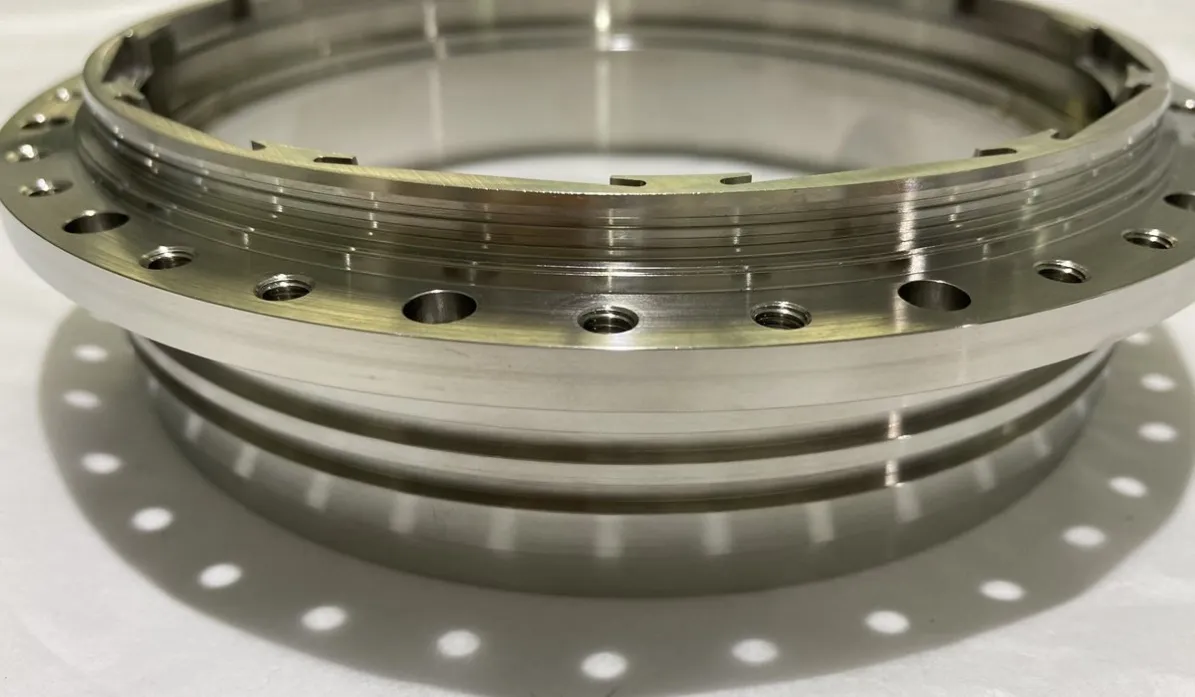
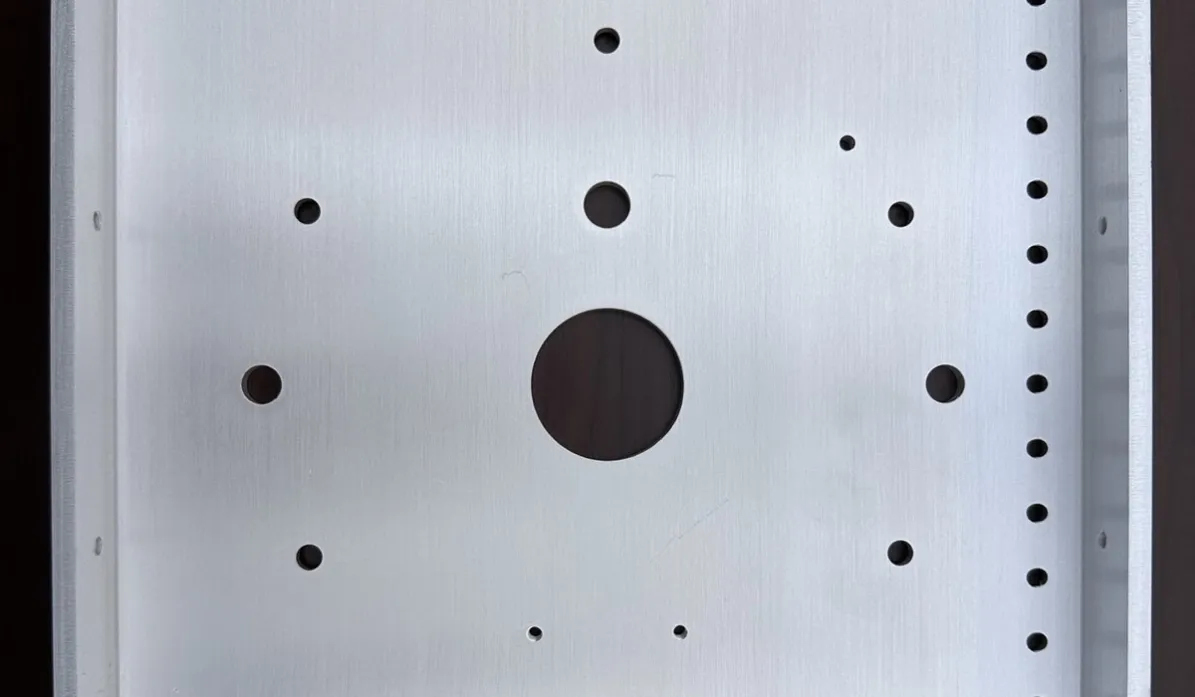
Gas Manifold Blocks and Fluid Path Parts
Custom gas manifold blocks and fluid path parts in aluminum and stainless steel: drilled galleries, threaded ports, flat sealing faces and clean bores.
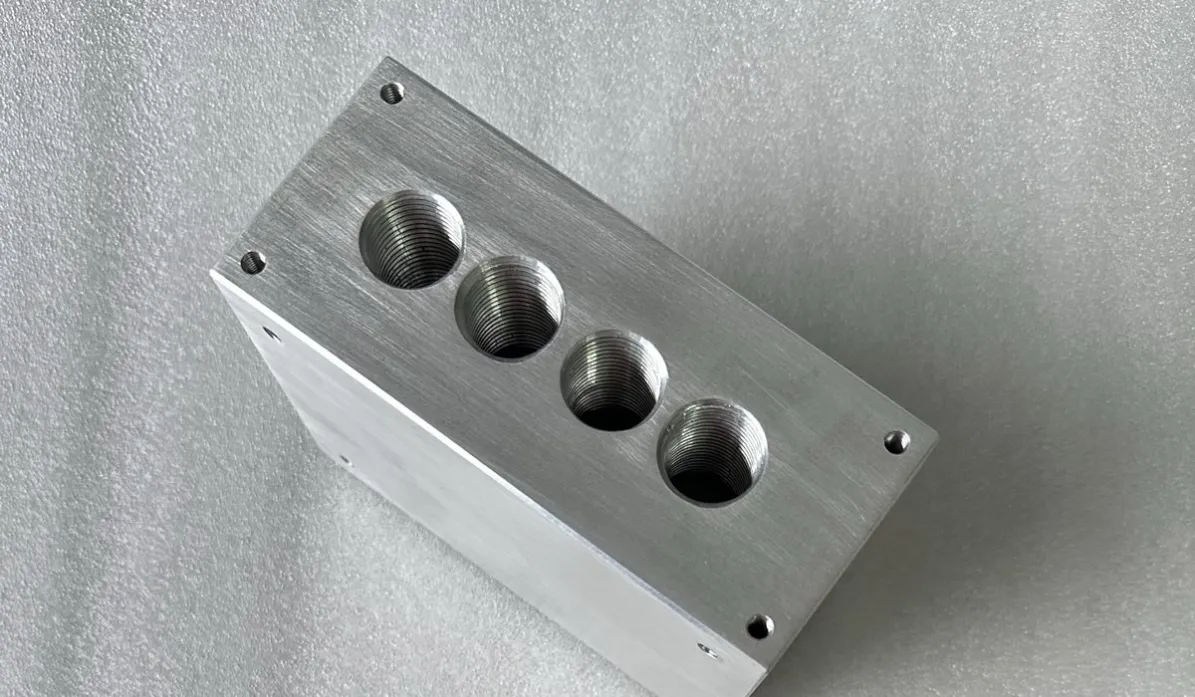
Yes — we machine gas manifold blocks and fluid path parts, in 316L stainless steel and aluminum. A manifold is a simple-looking block that lives or dies on what you cannot see: the cross-drilled passages inside it, the burrs where those passages meet, and the faces the fittings seal against. Send the drawing or model and we will quote the block as drawn — drilling pattern, port threads, sealing faces and finish included.
The parts we make
- Gas manifold blocks. Blocks that split one inlet into several outlets, or combine lines, with drilled and cross-drilled passages and threaded ports on several faces.
- Fluid distribution blocks. Coolant, water and process-fluid blocks with galleries, plugs and sensor ports.
- Valve and fitting interface blocks. The mounting blocks that sit between valves, regulators and pipework, where port position and sealing faces have to match the hardware bolted to them.
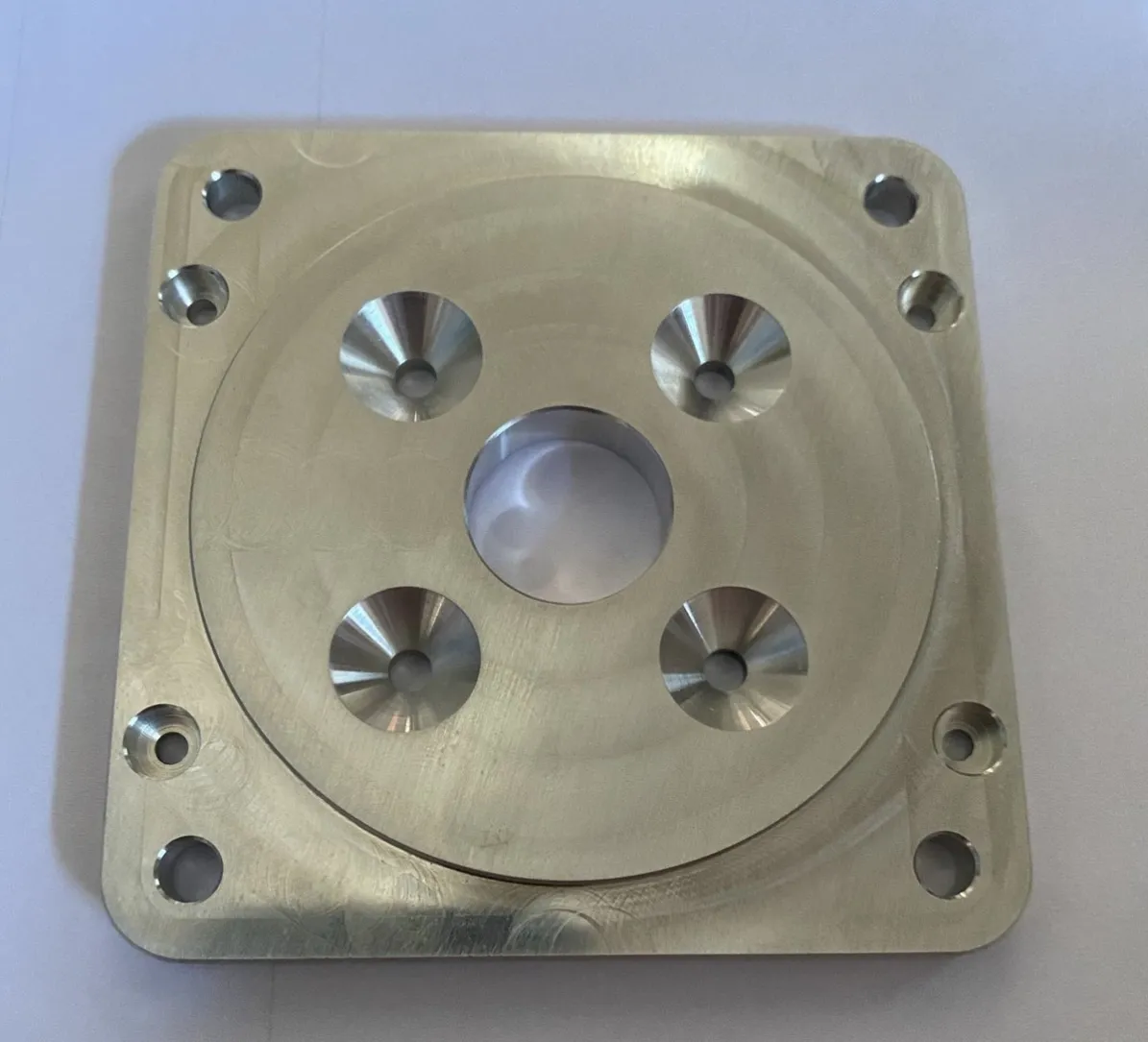
- Plates with drilled galleries. Flatter parts with internal passages formed by drilled holes and plugged entries, where a cast or moulded body is not an option at your quantities.
The fittings that screw into these blocks are a part family of their own — our 316 stainless fittings article covers the threaded side of the same work.
Materials and finishes
Most gas and corrosive-fluid manifolds are 316L stainless steel — the low-carbon grade welds cleanly if ports or stubs are welded on, and it resists the media these blocks usually carry. The grade choices are compared in our stainless steel grades guide. Blocks for air and light-duty fluids are often 6061-T6 aluminum, anodized on the outside where the drawing calls for it.
Finishes for stainless blocks are about the inside as much as the outside:
- Passivation to ASTM A967 after machining, restoring the corrosion-resistant surface that cutting disturbs.
- Electropolishing to ASTM B912 where the drawing calls for it — it smooths the surface, including the mouths of passages, and leaves the block easier to clean and keep clean.
- As-machined for blocks that live inside an assembly and see no corrosive exposure, where the money is better spent on the passages and faces.
Where manifolds succeed or fail
- Burrs at intersections. Every cross-drilling leaves a burr where it breaks into the next passage, inside the block where no tool reaches easily. A loose burr in a gas line ends up in a valve or a regulator. Intersections are deburred as part of the process, and blocks are flushed and cleaned so what leaves us is metal, not machining debris.
- Passage cleanliness. Drilling a long passage is the easy half; getting the chips out of it is the other half. Passages are cleaned through every port, and the block is ultrasonically cleaned before packing.
- Sealing faces. Ports that seal on a face — face-seal fittings, O-ring ports, flat faces against a gasket — are machined flat with a finish the seal can work against, and checked as sealing features. This is the same discipline as the sealing faces on the vacuum chamber components we machine.
- Plugged entries. Cross-drillings are made from outside the block and the entries are plugged. Plug threads and seats are machined to the drawing so the plug seals and stays put.
- Thread quality. Port threads are cut or milled to the callout — NPT, BSP or metric — and checked, because a manifold with a bad port thread is scrap no matter how good the passages are.
One honest boundary: the testing of the assembled system — flow, pressure and leak behaviour of the complete circuit — is done by our customers on their own rigs, as it should be: it depends on the fittings, seals and pipework fitted to the block, not on the block alone. Our side of that bargain is a block whose passages are clean, whose faces seal, and whose dimensions are recorded.
Inspection and packing
Port positions, thread fits, passage entries and sealing faces are checked against the drawing, and critical dimensions are recorded. Blocks are ultrasonically cleaned after inspection and packed with ports protected, so nothing knocks a sealing face in transit. First article reports, material certificates and a certificate of conformance are available on request.
What to send for a quote
The drawing or model, the material, the port thread callouts, the finish — passivated or electropolished — and the quantity. If some passages are safety- or flow-critical, mark them; it changes how they are inspected, and it costs nothing to tell us at quote stage. Send your drawing / sample for a quote via our contact page — enquiries are answered within 8 hours and quotes usually come back within 24 hours.
FAQ
Can you drill deep, intersecting passages in stainless steel? Yes — deep-hole drilling and cross-drilling are the core of this work. The drawing decides the pattern; our job is the pattern plus the part nobody sees, the deburred, clean intersections inside.
How do you make sure no chips or burrs are left inside? Intersections are deburred as part of the machining process, passages are flushed through every port, and the finished block is ultrasonically cleaned and inspected before packing. A block that sheds debris into a gas line is a failed block, and it is treated that way.
Do you pressure test or flow test finished manifolds? No — that testing belongs to the assembled system, with the customer's fittings, seals and pipework in place, and our customers run it on their own rigs. What we guarantee is the part itself: dimensions, threads, sealing faces and clean passages, recorded against the drawing.
Passivation or electropolishing — which does a block need? Passivation is the standard finishing step for stainless and is included in the routine for these parts. Electropolishing goes further — smoother, easier to clean — and is worth it where cleanliness or corrosion exposure is demanding. If the drawing does not specify, we will propose one with the quote and say why.
What materials do you machine manifolds in? 316L stainless steel and 6061-T6 aluminum cover most of what we are asked for. Other grades from the stainless and aluminum families are quoted against the drawing — ask with the enquiry.
What tolerance do the port positions hold? Standard work is ±0.1 mm (±0.004"), with ±0.01 mm (±0.0004") achievable on features that genuinely need it. On a manifold, the positions that matter are the ones the fittings and seals land on — mark the critical ones and they are inspected and recorded individually.