Vacuum Chamber Components Machining
Vacuum flanges, chamber covers, viewport seats and internal brackets, machined in 304L, 316L and 6061-T6. Sealing faces with a circular lay, vented blind holes, clean packing.
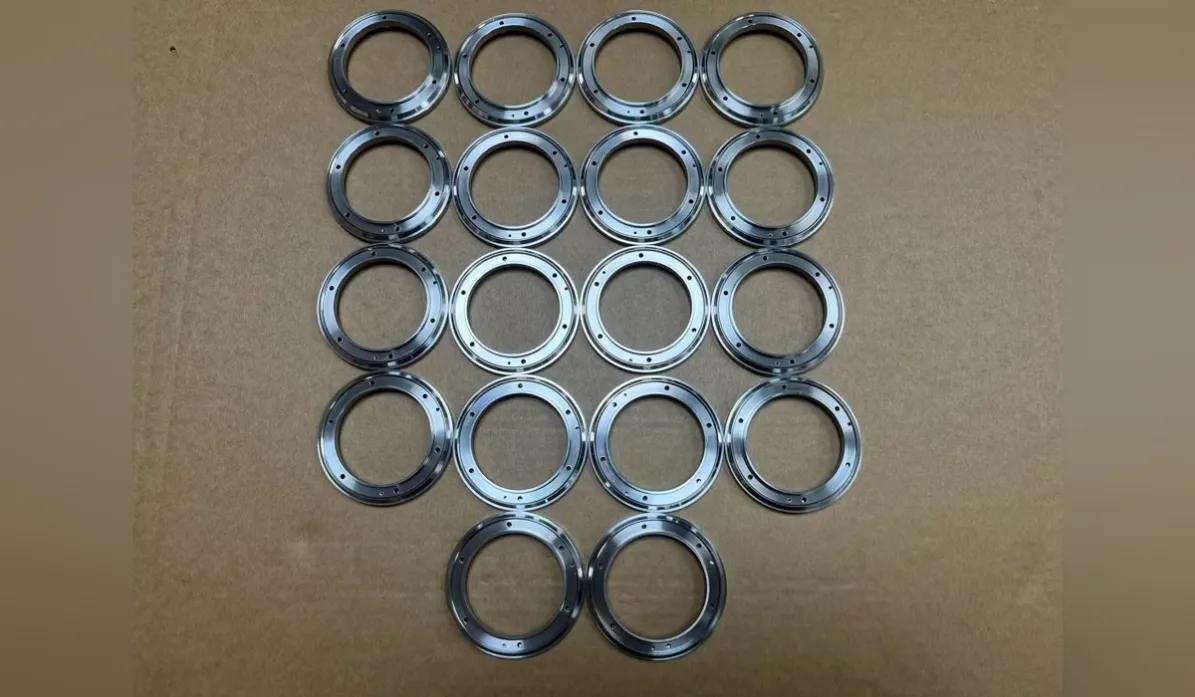
Yes — we machine vacuum chamber components: custom flanges, chamber covers and lids, viewport seats and internal brackets, in stainless steel and aluminum. Send the drawing or the 3D model and we will quote the parts as drawn, sealing faces and all. If a feature raises a vacuum question — an unvented blind hole, a sealing face with no finish callout — we raise it with the quote, before anything is cut.
The parts we make
- Flanges. Custom and blank flanges machined to KF (ISO-KF), ISO and CF interface dimensions, to your drawing — including knife-edge CF flanges, bolted and clamp styles, and flanges with non-standard bolt patterns or added ports.
- Chamber covers and lids. Flat and stepped covers with O-ring grooves, including dovetail grooves that keep the ring captive when the cover is lifted.
- Viewport seats. Mounts and seats for viewports and windows, where the sealing face and the window seat both have to be right in the same setup.
- Internal brackets and mounting plates. Brackets, shelves and fixtures that live inside the chamber, where trapped volumes and cleanliness matter as much as dimensions.
Materials: what vacuum work usually calls for
Most vacuum-side stainless work is 304L or 316L stainless steel — the low-carbon grades weld cleanly and are the usual specification for chambers and flanges. 303 stainless steel is generally not used on the vacuum side: it is a free-machining grade with added sulfur, which is exactly what a vacuum system does not want. Aluminum parts — covers, brackets, smaller chambers — are usually 6061-T6 aluminum, chosen for weight. The grade comparison is covered in our stainless steel grades guide.
Surface finish: the vacuum side is not the show side
This is where vacuum parts differ from ordinary machined parts. On vacuum-side surfaces our default is a plain machined finish, or electropolishing where the drawing calls for it. We do not bead blast or anodize vacuum-side faces unless your drawing says otherwise: blasting increases surface area and can leave media embedded in the surface, and an anodized layer is porous — both work against you on outgassing. Bead blasting and anodizing belong on the atmosphere side, where they are cosmetic. If your drawing is not clear about which faces are vacuum-side, tell us with the enquiry and we will finish each face accordingly.
The details that decide whether it seals
- Sealing faces. An O-ring face is only as good as its lay. Sealing faces are finished with a circular lay — concentric turning marks, no radial scratches — because a radial scratch crosses the seal line and becomes a leak path. Typical O-ring faces are held to Ra 1.6 µm (63 µin) or better; tell us the finish on the drawing and it is inspected as such.
- O-ring grooves. Groove dimensions follow the ring you are using, and dovetail grooves are machined where the ring must stay in place during assembly.
- Virtual leaks. A blind tapped hole traps gas and bleeds it back slowly — a virtual leak that looks exactly like a real one on a leak detector. Where the drawing shows vented screws, vent holes or vent slots in blind holes, we machine them as drawn. Where a blind hole has no vent shown, we flag it at quote stage rather than leaving the trap in the part.
- Flatness on covers. A cover seals around its whole perimeter, so flatness of the sealing land is machined and checked as a sealing feature, not a general dimension.
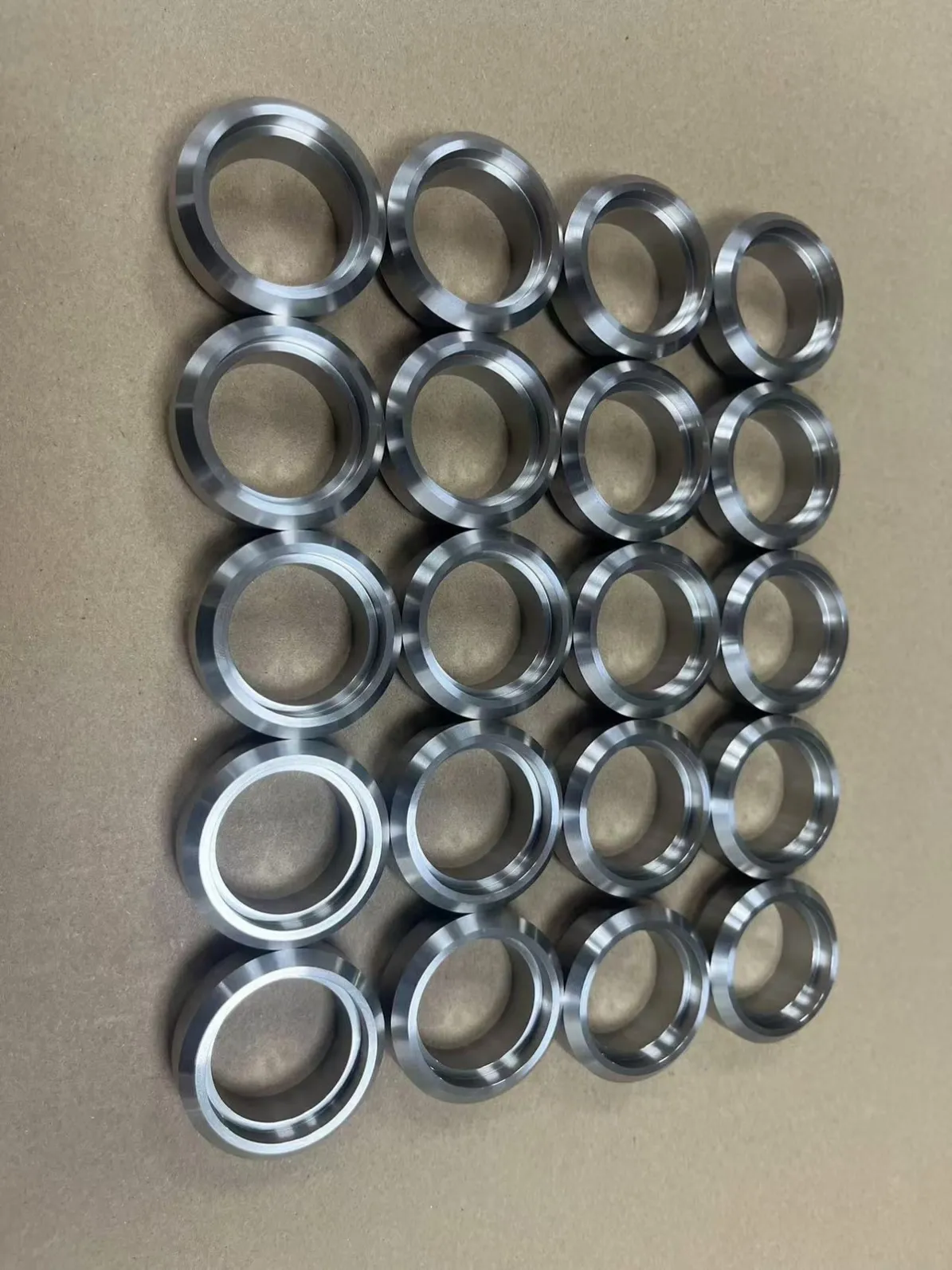
Inspection and packing
Critical dimensions are recorded against the drawing, and sealing faces are inspected individually — finish and lay, not just size. Parts are ultrasonically cleaned and handled with gloves from that point on, then packed double-bagged, with vacuum sealing available — the same routine described in our packing guide. Vacuum parts sit alongside the semiconductor equipment parts we machine, and the inspection paperwork — first article report, material certificate, certificate of conformance — can travel with the shipment on request.
What to send for a quote
The drawing or model, the material grade, which faces are vacuum-side and which are sealing faces, and the quantity. A finish callout for the sealing faces helps; if it is missing we will propose one with the quote. Send your drawing / sample for a quote via our contact page — enquiries are answered within 8 hours and quotes usually come back within 24 hours.
FAQ
Do you machine KF, ISO and CF flanges? Yes. Flanges are machined to KF (ISO-KF), ISO and CF interface dimensions to your drawing, including knife-edge CF flanges and non-standard patterns with added ports or features.
Do you helium leak test vacuum parts? No — leak testing is not something we do ourselves, and most vacuum customers run their own leak check once the system is assembled. If you need a certified leak rate before assembly, third-party testing can be arranged at additional cost; our focus is the parts themselves.
What finish do sealing faces get? A circular lay with no radial scratches, typically Ra 1.6 µm (63 µin) or better for O-ring faces, or as your drawing specifies. Vacuum-side faces are left as machined or electropolished — not bead blasted or anodized, unless the drawing requires it.
Can you machine a cover larger than your standard travel? Usually, yes. Oversize covers are confirmed against the drawing before quoting — send the model and we will confirm how it will be held and machined.
Why not 303 stainless for a vacuum flange? 303 is a free-machining grade with added sulfur, and sulfur-bearing inclusions are unwelcome on the vacuum side. 304L and 316L are the standard vacuum grades and machine without surprises.
How are vacuum parts packed? Ultrasonically cleaned, handled with gloves, double-bagged, and vacuum sealed on request, so the parts arrive ready to go into a clean assembly area.