Machining Cobalt Alloys: Small Parts, Hard Material
Cobalt alloys keep their hardness at red heat and resist wear like nothing else — and machine like it, too. Why they are slow, and how small cobalt parts are made well.
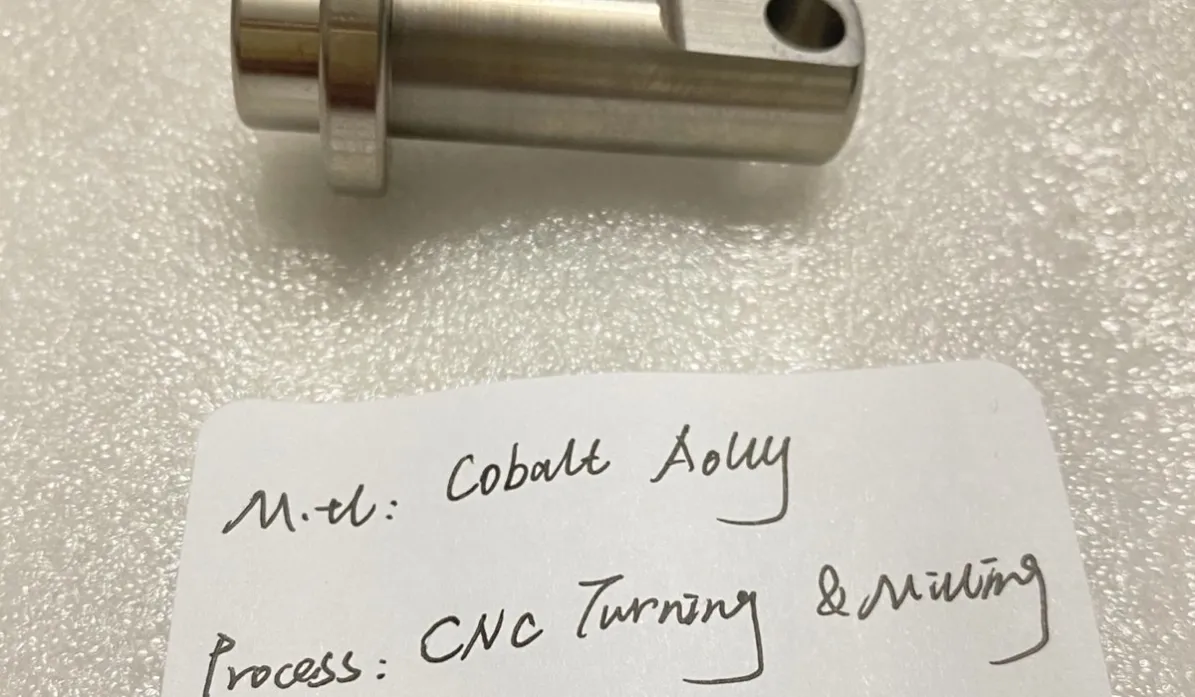
Some parts are specified in cobalt alloy because nothing else survives the job: the alloy keeps its hardness at temperatures that soften steel, shrugs off abrasive wear, and resists corrosion in environments that attack stainless. Those same properties are exactly what make it one of the most demanding materials on a machine tool. Cobalt alloy parts are usually small — pins, bushings, valve and wear components — but small does not mean quick.
The flanged pin in our photo is typical of the work: cobalt alloy, turned and milled in one setup, with a cross-hole through the flange end. Here is why material like this behaves the way it does, and what it takes to machine it well.
Why engineers specify cobalt alloys
The cobalt family — cobalt-chromium and related alloys, in cast and wrought forms — earns its place on a short list of properties:
- Hot hardness. Cobalt alloys hold strength and hardness at red-heat temperatures where tool steels and stainless grades have long given up. That is why they appear in hot-section and high-temperature wear applications.
- Wear and galling resistance. The hard carbides in the alloy's structure resist abrasive and sliding wear, and cobalt alloys are notably resistant to galling against themselves — valuable in valves, guides and sliding pairs.
- Corrosion resistance. The chromium content gives corrosion performance in the stainless league, in media that are hard on ordinary steels.
When a drawing calls for cobalt alloy, it is almost never a casual choice — something in the service conditions eliminated the cheaper materials first.
Why it machines hard
Every property above has a machining price:
- It work-hardens. Take too light a cut, or let a tool dwell and rub, and the surface hardens ahead of the next pass. Each subsequent cut gets harder — literally. Cuts have to be positive and committed: get under the hardened layer, every time.
- It is abrasive. The same carbides that resist wear in service eat cutting edges in the shop. Tool life is short and has to be planned, not discovered mid-batch.
- Heat stays in the cut. Low thermal conductivity means cutting heat concentrates at the tool edge instead of leaving with the chip, which shortens tool life further and punishes hesitation.
- It stays strong at cutting temperature. Where other alloys soften in front of the tool and shear more easily, cobalt alloys keep their strength in the cut zone. Cutting forces stay high from first pass to last.
None of this makes cobalt unmachinable. It makes it unforgiving: rigid workholding, sharp tools changed on schedule rather than on failure, controlled speeds and feeds, and no rubbing, ever.
Small parts, one setup
Cobalt alloy components tend to be small and precise — which suits them to turn-mill machining. The pin in our photo carries a flange, a turned body and a cross-hole: features that would need two machines and two setups done conventionally, finished in one clamping on a turn-mill center. For hard materials that matters twice over. Every re-setup is another chance to lose a datum on a part with no material to spare, and every extra handling is time on a part whose machining time is already long.
Batch thinking applies too. On small cobalt parts the material itself is a serious cost line and tool wear is a real one, so the honest quote prices both — a cheap quote on cobalt alloy usually means someone has not machined it before.
The hard-material family: cobalt, titanium, tungsten carbide
Cobalt alloys sit in a family of materials we machine that all punish shortcuts, each for a different reason. Titanium is springy, gummy and conducts heat poorly, so it pushes tools away and grabs them (see machining titanium). Tungsten carbide barely cuts at all — it is ground and EDM-machined, which is why carbide parts take 20–30 days and live on their own product page. Cobalt alloys cut, but they harden, abrade and hold their strength while doing it.
The shared lesson for buyers: on these materials, lead time and price are set by physics, not by how busy the shop is. A realistic schedule quoted up front beats an optimistic one revised twice.
Put the exact grade on the drawing
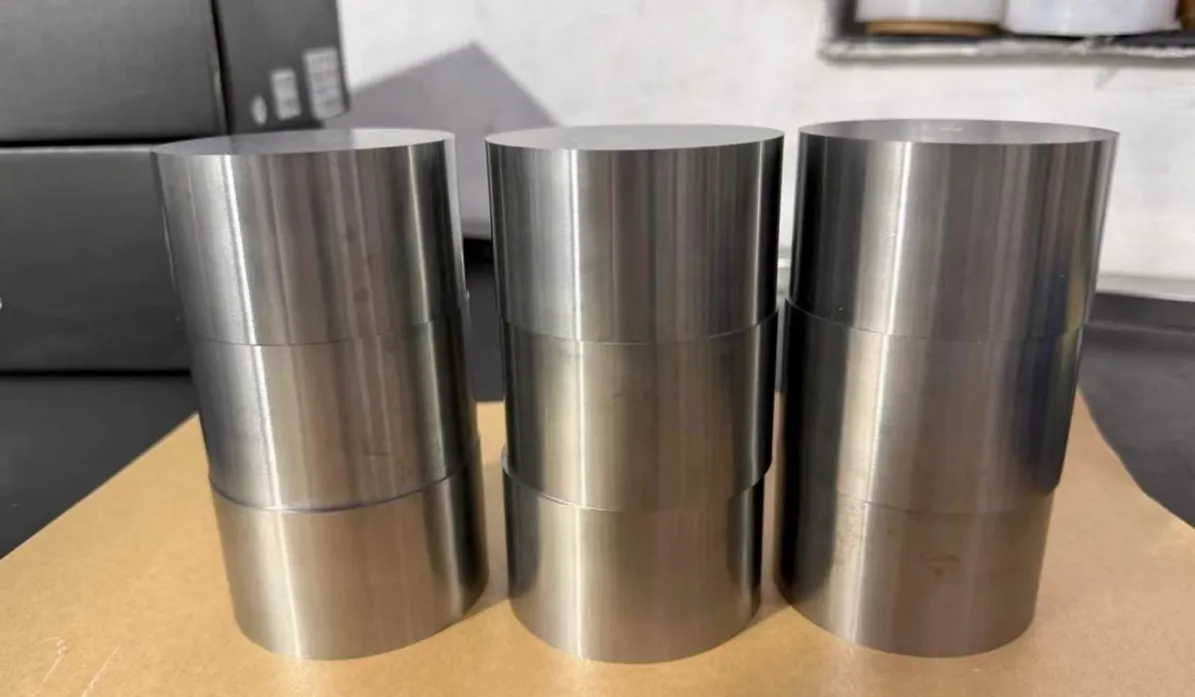
"Cobalt alloy" is a family, not a specification. Cast and wrought grades behave differently in the machine and in service, and grades within the family differ in hardness and carbide content. Write the full grade and condition your design assumes, and we will quote the route that suits it — send the drawing to our CNC machining team and, if the grade is still open, we will flag the options before quoting rather than after.
FAQ
Why is cobalt alloy so much slower to machine than stainless steel? Three compounding reasons: it work-hardens under a rubbing tool, its carbides abrade cutting edges, and it keeps its strength at cutting temperature instead of softening ahead of the tool. Stainless has none of these to the same degree.
Can cobalt alloy parts be held to tight tolerances? Yes — small cobalt parts are routinely finished to the same tolerance classes as precision steel parts. It takes rigid setups, disciplined tool changes and usually a single-setup route, all of which belong in the plan from the first operation.
Is cobalt alloy magnetic? Most cobalt alloys are slightly to moderately magnetic depending on composition and condition — unlike the austenitic stainless grades. If magnetic behavior matters to your application, name the exact grade and we will confirm its properties rather than generalize.
Why do quotes for cobalt parts vary so much between shops? Because the cost drivers — tool consumption, cutting time, scrap risk on expensive material — are only visible to shops that have run the material. A quote far below the field usually means the material's behavior is not in it yet.
What batch sizes suit cobalt alloy parts? Prototypes and small batches are the norm; the parts are typically low-volume, high-value components. Material is ordered against the job, so tell us the quantity range early and we will plan stock and tooling around it.
How can I be sure the material is the grade on my drawing? Every job runs on material we source against your specification, with the supplier's material certificate on file. If you need independent verification, we can send the material — or a finished part, to check a coating — to SGS for a third-party test report, at additional cost. Just ask when you enquire.