Fluidic Manifolds in Clear Acrylic and PC
Clear acrylic and PC fluidic manifolds with drilled channels, polished flow paths and threaded ports — leak tested part by part before they ship.
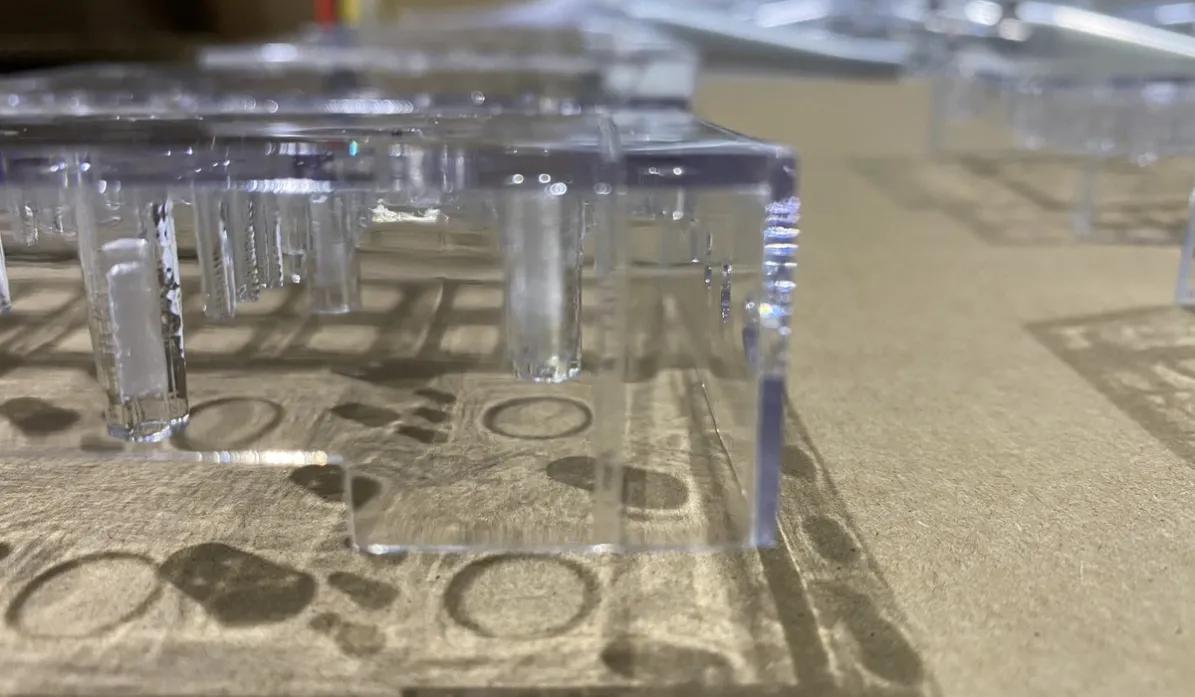
Yes — we machine fluidic manifolds (fluidic plates) in clear acrylic and polycarbonate (PC), with PEEK as the option when the chemistry or temperature rules clear plastic out. Channels, ports and valve seats are machined to your drawing, the flow paths are polished clear so you can see the fluid, and every manifold is leak tested before it is packed. Send the drawing or the 3D model and we will quote it as drawn.
The parts we make
- Single-layer manifolds. A plate with drilled and milled channels, threaded ports and sealing faces — the simple form, machined from one piece of clear stock.
- Bonded multi-layer manifolds. Where the channel layout cannot be drilled from outside, the plate is machined in layers and bonded together, so channels can turn corners and cross without a forest of plugged drill holes.
- Valve and fitting plates. Manifolds that carry valves, sensors and standard fluid fittings, with the port threads and O-ring grooves machined in the same setup as the channels they serve.
- PEEK manifolds. The same part family in opaque PEEK, for fluids or temperatures that acrylic and PC should not see.
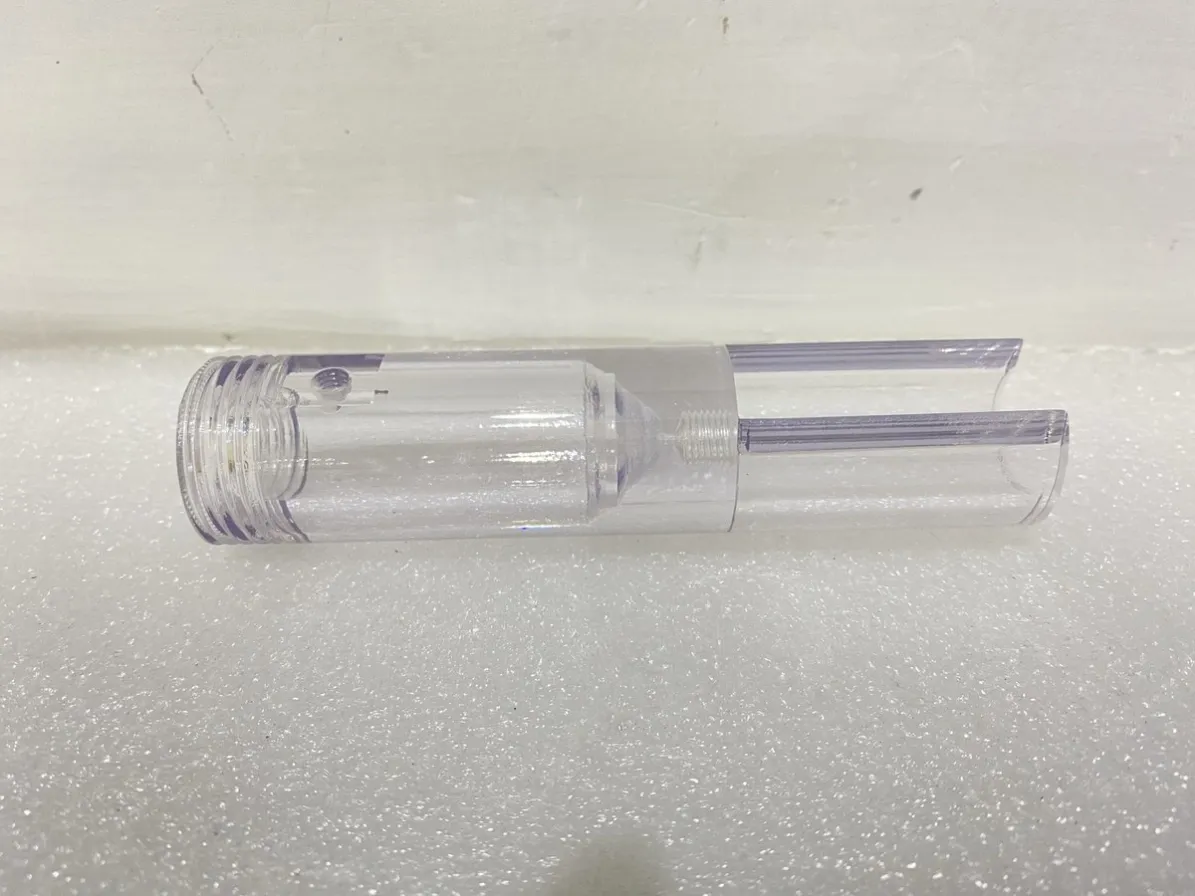
These parts turn up most often in laboratory and diagnostic instruments, alongside the medical device parts we machine — anywhere a set of tubes and fittings has grown into a plate that does the plumbing in one piece.
Materials: acrylic, PC, or PEEK
Acrylic (PMMA) is the clearest of the three and the usual choice when seeing the fluid is the point — a polished acrylic channel is genuinely transparent, so bubbles, blockages and flow are visible in service. Polycarbonate (PC) gives up a little clarity for a lot of toughness: it is the pick where the plate will be handled roughly, dropped, or bolted down hard. PEEK is not clear at all, and that is fine — it is chosen when the fluid is aggressive or hot, and the manifold's job is survival rather than visibility. All three are plastics we machine every week; standard tolerance is ±0.1 mm (±0.004").
Clear is a machining result, not a material property
Clear stock arrives clear; machined channels do not. Drilling and milling leave the channel walls frosted, and a frosted channel hides exactly what the clear plate was bought to show. The flow paths are therefore polished after machining — vapor polishing is the standard route for internal channels that a polishing wheel cannot reach, and it brings the walls back to transparent without rounding the channel geometry away. Our piece on machining transparent plastic parts and vapor polishing goes through that process in detail. Two honest limits: vapor polishing is a surface treatment, not stress relief — we do not anneal transparent parts as part of it — and bonded seams stay faintly visible even after polishing, which is normal and does not affect the seal.
The details that decide whether it leaks
- Burrs at channel junctions. Where a cross-drilling meets a channel, a burr becomes a particle trap and a flow disturbance. Junctions are deburred and the channels flushed and inspected before any bonding or test.
- Port threads. Threaded ports in plastic are cut, not forced, and checked with the fitting type they will carry — a cracked port boss is the most common way a plastic manifold dies, and it usually starts as an over-tightened or badly cut thread.
- Sealing faces. Faces that seal against a gasket or O-ring are machined flat and kept scratch-free; on a clear part, a scratch across a sealing face is visible, which at least makes it easy to catch.
- The leak test. Every finished manifold is leak tested as a part — channels pressurized and checked — before it is cleaned and packed. A manifold that leaks in your instrument costs a teardown; a manifold that leaks on our bench costs a remake, and only one of those is our problem to have.
Inspection and packing
Port threads are gauged, sealing faces checked, and the leak test result goes with the part. Clear parts scratch if you look at them wrong, so they are cleaned, handled with gloves, and packed separated and protected — the routine in our packing guide applies, with extra separation for polished faces. First article report, material certificate and certificate of conformance are available on request.
What to send for a quote
The drawing or model, the material (acrylic, PC or PEEK), the fitting types and thread sizes for the ports, and the quantity. If the manifold will be bonded from layers, the layer split on your drawing — or a note that you want us to propose it — saves a round of questions. Send your drawing / sample for a quote via our contact page — enquiries are answered within 8 hours and quotes usually come back within 24 hours.
FAQ
Acrylic or PC — which should I choose? Acrylic if seeing the fluid clearly is the point: it polishes back to full transparency. PC if the plate will take knocks, clamping loads or rough handling — slightly less clear, much harder to break. If the fluid or temperature is beyond both, the answer is PEEK, and the part stops being clear.
Can channels cross inside the plate? Yes — that is what bonded multi-layer construction is for. Channels are machined into layer faces and the layers are bonded, so paths can turn and cross without plugged cross-drillings. Single-layer plates are drilled and milled from one piece where the layout allows it.
Do you leak test the manifolds? Yes, every finished manifold is leak tested as a part before packing — channels checked under pressure so a leaking plate is caught here, not in your instrument.
Will the channels be fully transparent? The flow paths are vapor polished after machining, which brings drilled and milled channel walls back to transparent. Bonded seams remain faintly visible; that is normal for a bonded plate and does not affect sealing.
What tolerance do the channels and ports hold? Our standard for plastic parts is ±0.1 mm (±0.004"). Port threads are machined and gauged against the fitting type you specify — tell us the fittings on the drawing and the threads are cut to suit them.
Can you machine the manifold and the parts around it? Yes — manifolds alongside the housings, brackets and fittings of the same instrument, metal and plastic together, in one shipment.