Enclosure Ventilation: Louvers and Holes
Louvers, perforated holes and fan cutouts move air through an enclosure — and keep dust and fingers out. How each opening works and where it belongs.
Equipment inside an enclosure makes heat, and heat that cannot get out will shorten the life of everything in the box. Ventilation openings are how the heat leaves — but an opening is also a way in, for dust, for water, and for fingers. The job is to move enough air while keeping the enclosure closed to everything it should be closed to. Louvers, perforated holes and fan cutouts each do that job differently, and the choice between them is a matter of how much air, how much protection, and how the enclosure is made.
Louvers: air in, weather out
A louver is a slat pressed or formed into the sheet, angled so air can pass through while rain and direct spray are deflected. The slats overlap, so there is no straight line of sight into the enclosure, and a louvered vent can be left open in weather that would soak a plain hole.
Louvers are a sheet metal forming operation: the slat is punched and formed in one press stroke, or pressed in a brake. They suit enclosures that live outdoors or in washdown areas, and they are usually placed low for intake, with an outlet higher up so warm air rises out. The trade-off is airflow: a louver passes less air than an open hole of the same size, so a louvered vent needs more area for the same airflow.
Perforations: the balanced opening
Perforations are a pattern of small holes punched or laser cut into the panel. They pass air freely, they are cheap to make in quantity, and they can be put anywhere on the panel. The hole size sets the balance: smaller holes keep more dust and fingers out, larger holes pass more air.
A perforated area is also a structural question. A panel that is mostly holes is a weaker panel, so a large perforated area usually has a border of solid material, or a stiffening fold, to keep the panel flat. And the holes need deburring: a punched hole leaves a burr on one side, and the burr should face inward, away from hands and cables.
Fan cutouts: forced air where it is needed
Where natural convection is not enough, a fan moves the air. A fan cutout is a round opening sized for the fan, with mounting holes for the fan frame and, usually, a finger guard on the outside. The cutout is placed so the fan pulls cool air in at one end and pushes hot air out at the other.
A fan cutout is a machined or laser-cut feature, and it needs to be round and true — a fan that does not sit flat vibrates, and vibration works the mounting screws loose. Where a fan is used, the enclosure should also have an intake — a fan with nowhere to draw air from only recirculates the hot air already inside.
How much opening is enough
There is no fixed percentage of open area that suits every enclosure. The airflow needed depends on the heat the equipment makes and the temperature it can tolerate. A small enclosure with a low-power device may need only a few louvered slots; a large enclosure with power electronics may need a fan and a large perforated area.
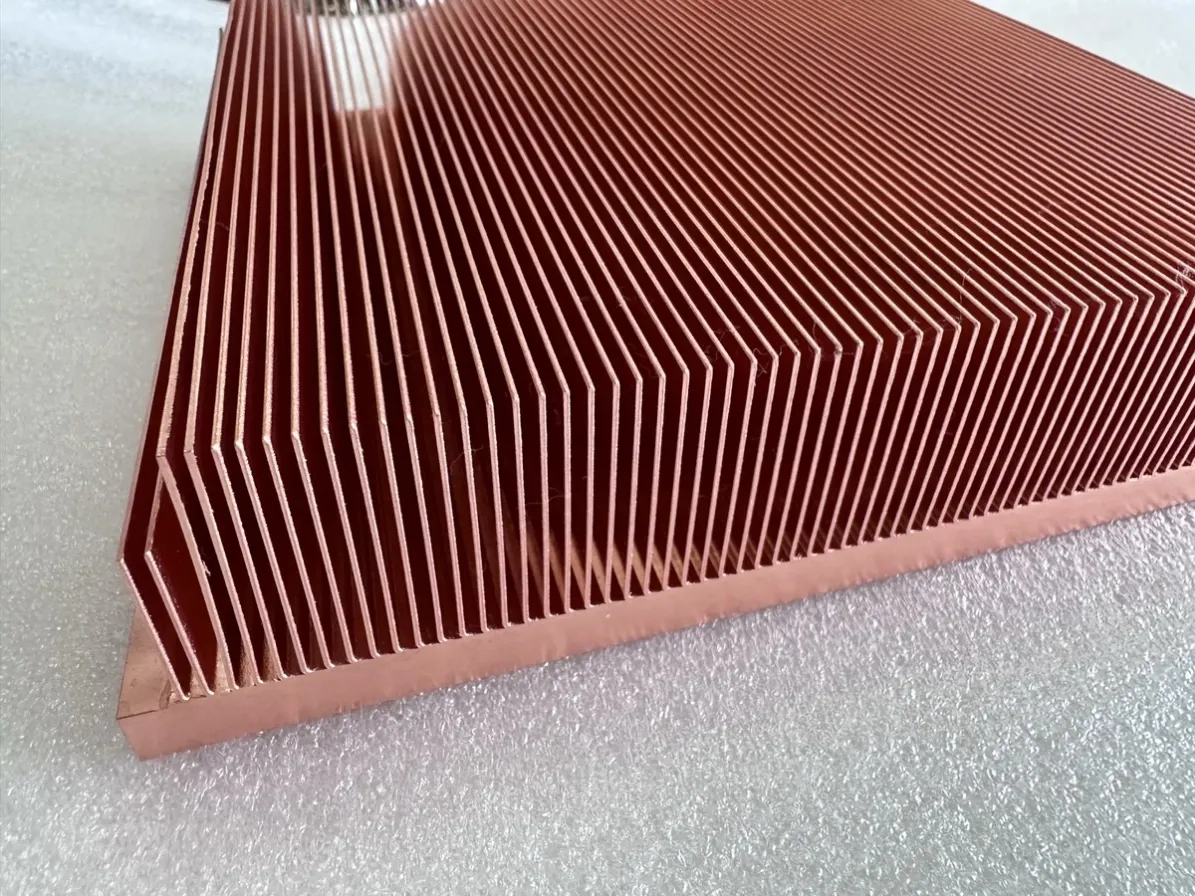
The intake and the outlet should be separated — low and high, or at opposite ends — so air flows across the equipment rather than short-circuiting from intake to outlet. And the openings should be placed where the air actually reaches the hot components: a vent at the top of a tall enclosure does little for a component sitting at the bottom. The heat path inside the enclosure matters as much as the openings — see heatsink housings for power electronics and copper skived fin heatsinks.
Protection: dust, water and fingers
Every opening trades airflow against protection. A louver keeps rain out but passes less air; a perforation passes air but lets fine dust in; a fan cutout with a guard keeps fingers out but needs a filter if dust is a problem. The enclosure rating, where one is specified, is set by the smallest opening and the weakest point — a fully sealed door means nothing if the vent is an open hole.
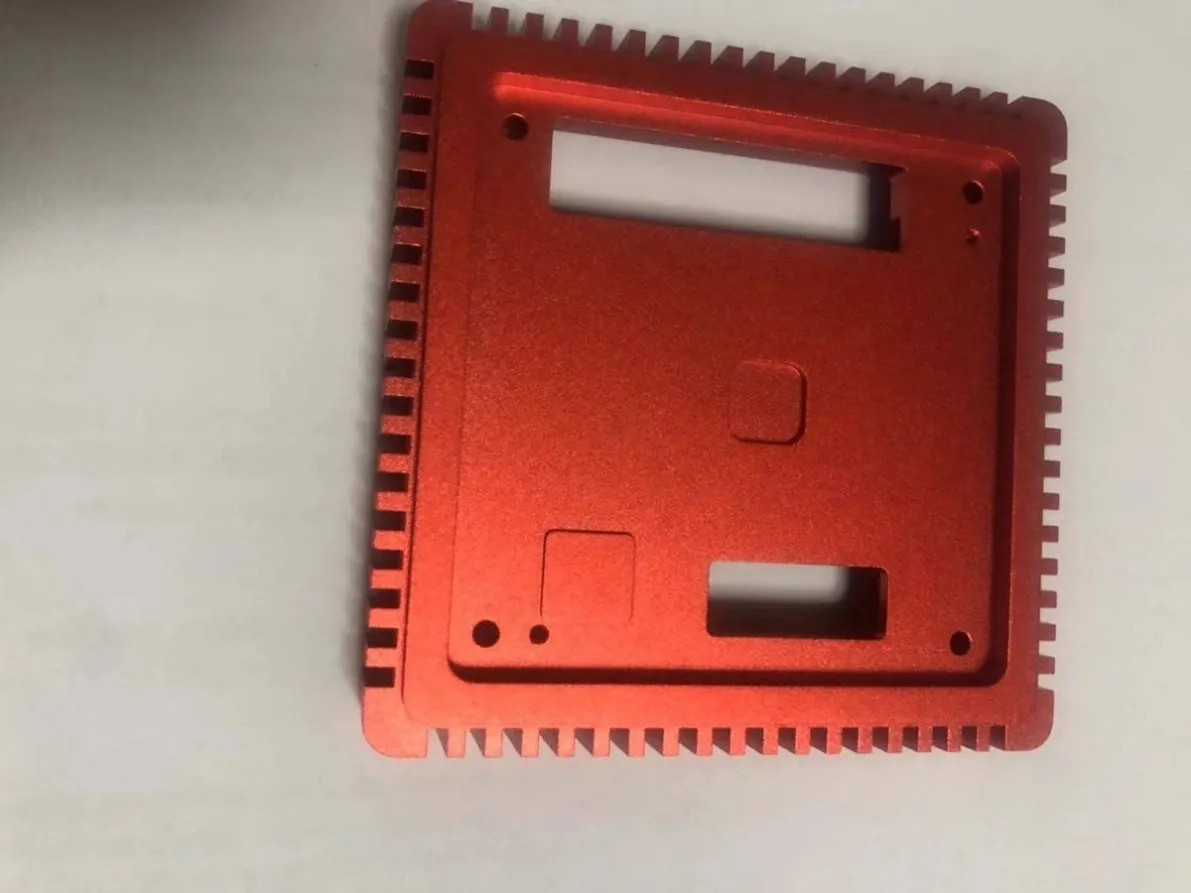
Filters are the usual answer where dust matters: a foam or mesh filter over the intake, held in a frame that can be removed and cleaned. The filter cuts the airflow, so the vent area has to be larger to compensate, and the filter has to be accessible — a filter that cannot be reached will not be cleaned. For enclosures that carry their heat through the wall, see machining aluminum heatsink enclosures with color anodizing.
Making the openings: punching, laser and forming
Louvers are formed in a press; perforations are punched on a turret punch or laser cut; fan cutouts are laser cut or milled. The process should match the quantity and the panel: punching is fast in quantity, laser cutting is flexible for small batches and for patterns that change, and forming a louver needs the right tooling. All three leave edges that need attention — punched edges are deburred, laser-cut edges are cleaned, and formed louvers are checked for cracks at the bend.
What to send for a quote
A drawing with the ventilation openings shown — louver size and direction, perforation pattern and hole size, fan cutout diameter and mounting holes — plus the enclosure material and finish, and any protection requirement the openings must meet. If you want an enclosure with ventilation quoted, send us your drawing — inquiries are answered within 8 hours and quotes usually within 24 hours.
FAQ
What is the difference between a louver and a perforation? A louver is an angled slat formed in the sheet that lets air through while deflecting rain; a perforation is a pattern of small holes that passes air freely. Louvers protect better against weather; perforations pass more air for the same area.
Where should ventilation openings go on an enclosure? Intake low and outlet high, or at opposite ends, so air flows across the equipment. Openings should sit where the air reaches the hot components, not just where they are convenient to cut.
Does a fan need an intake as well as an outlet? Yes. A fan with nowhere to draw air from only recirculates the hot air already inside. The intake is usually a louvered or perforated area at the opposite end.
Do perforations weaken a panel? A large perforated area does make a panel weaker, so it usually has a solid border or a stiffening fold to keep it flat. The holes should also be deburred, with the burr facing inward.
Should a ventilation opening have a filter? Where dust is a problem, yes — a foam or mesh filter over the intake, in a frame that can be removed and cleaned.