CZ121 Brass: Free-Cutting Fittings and Knurled Parts
CZ121 (CW614N) is the free-cutting brass that machines cleaner and faster than any other copper alloy. Where it fits, how it finishes, and how to specify it.
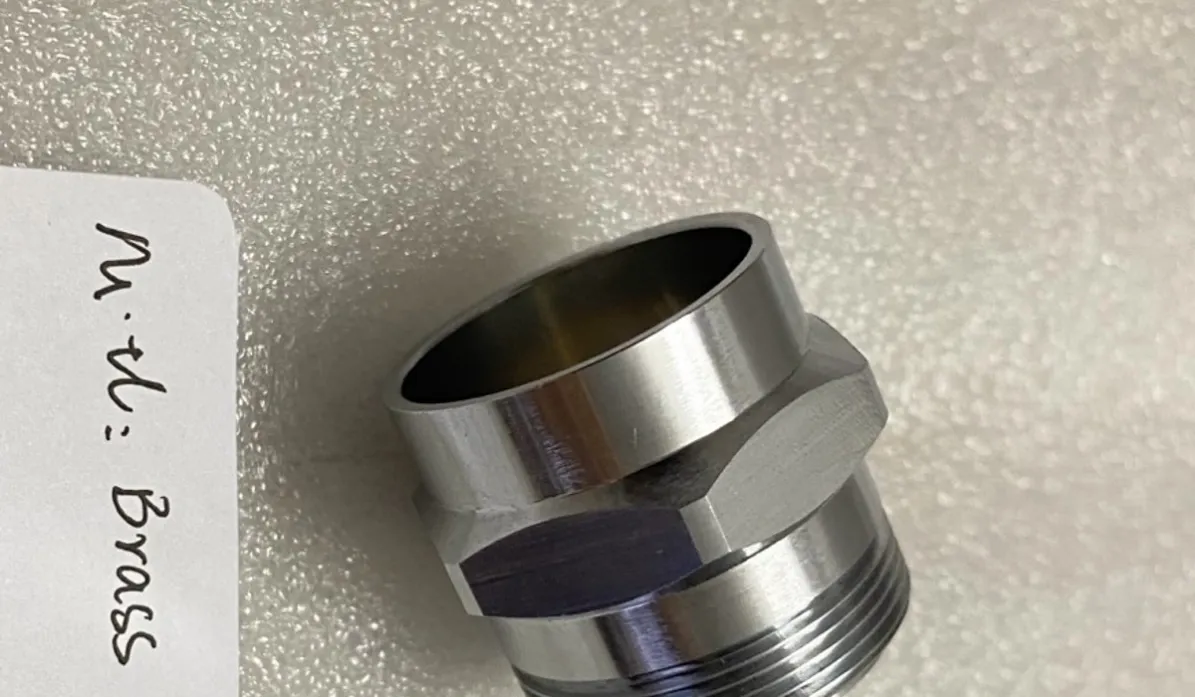
If a brass part is turned, threaded or knurled, there is a good chance it is CZ121. This is the free-cutting grade — CZ121 in British designation, CW614N in the European EN system, CuZn39Pb3 by composition — and it is the alloy against which the machinability of every other copper alloy is measured. Parts come off the lathe with clean threads, sharp knurling and bright surfaces, at cycle times no other brass can match.
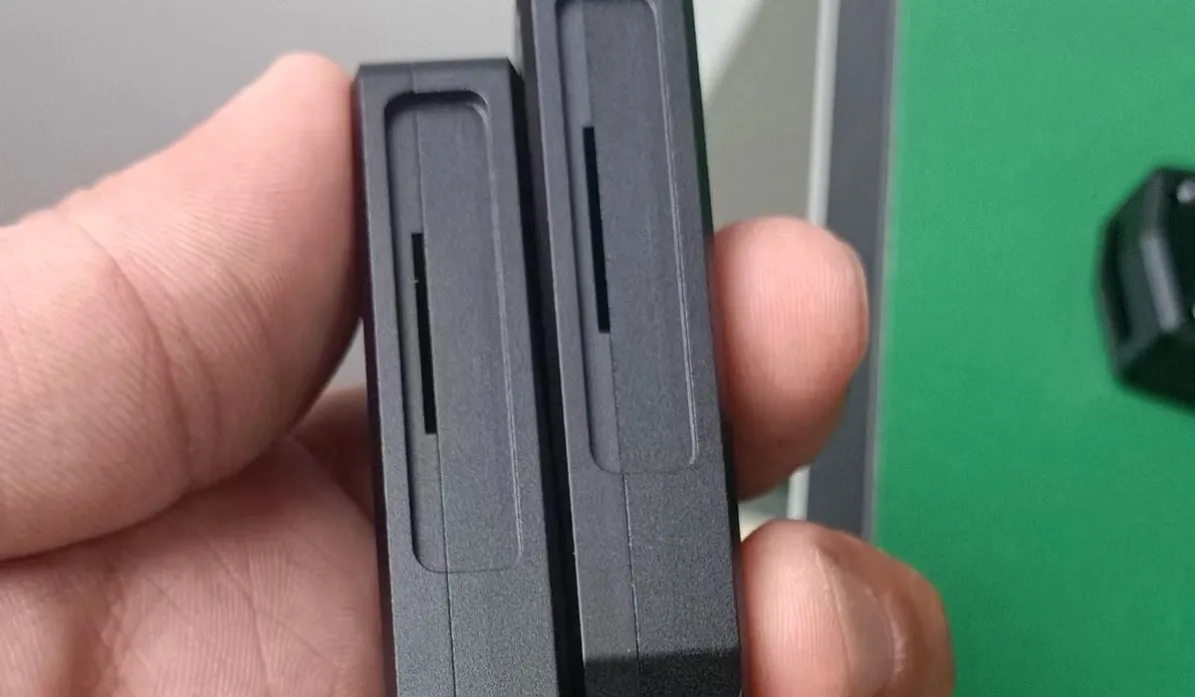
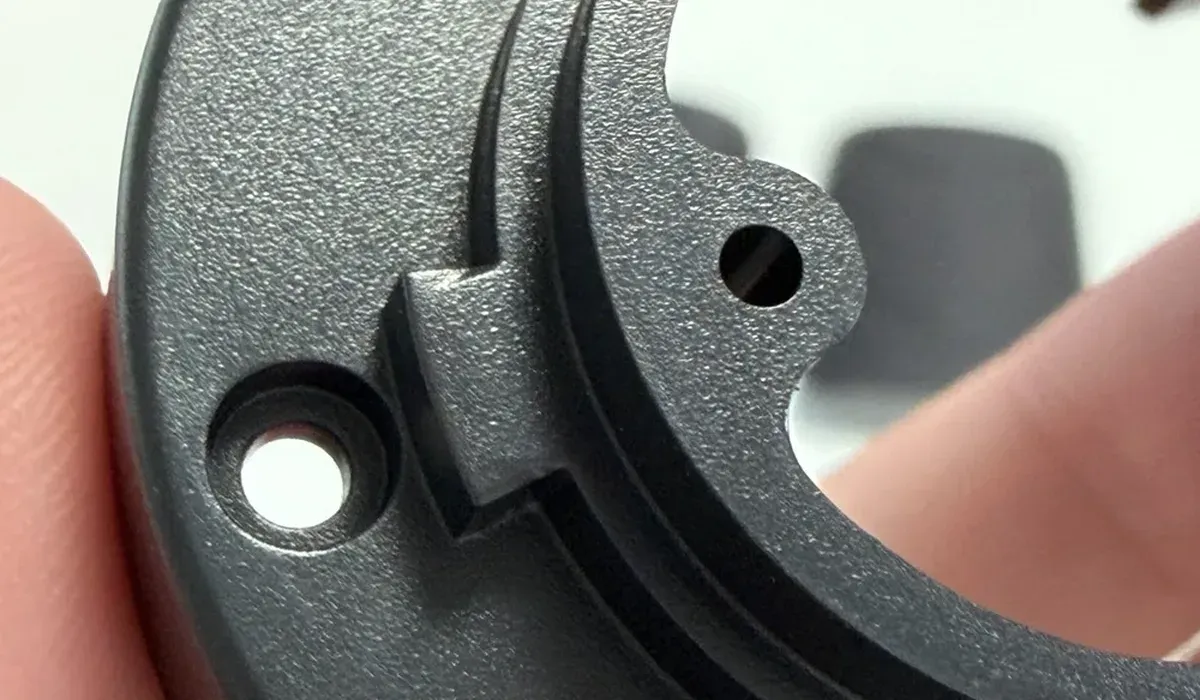
We machine CZ121 constantly: fittings, flanges, connectors and knurled components, many of them chrome plated afterwards. Here is what to know before you specify it.
What CZ121 is
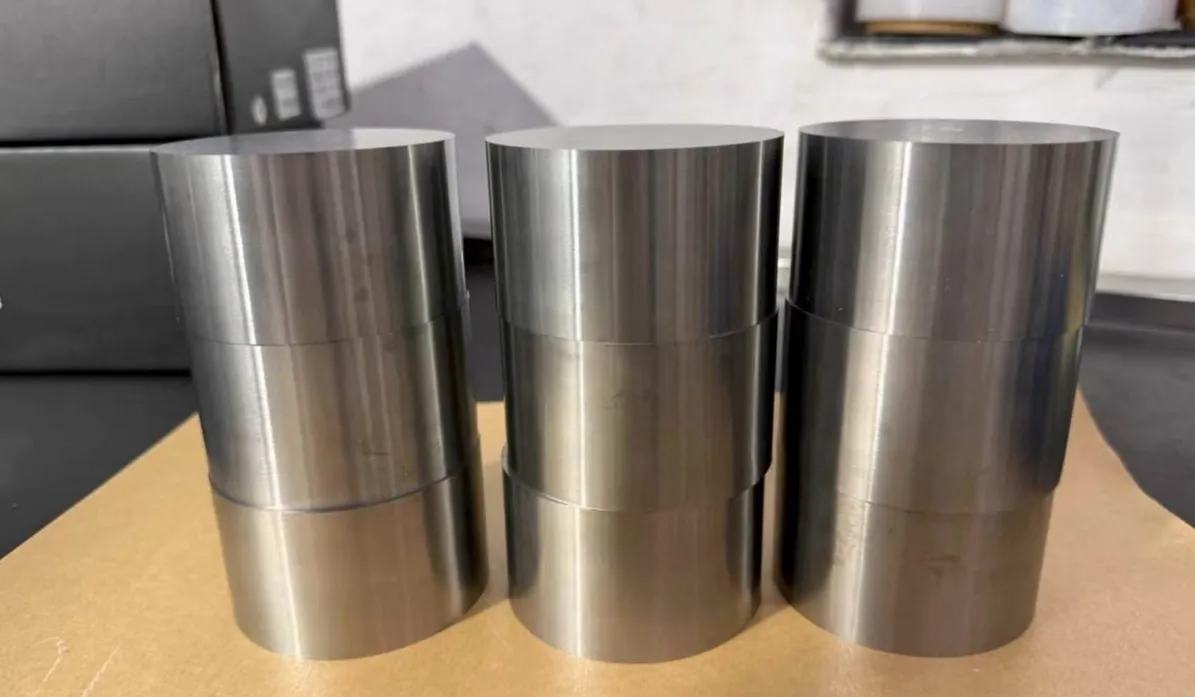
CZ121 is a leaded brass: roughly 58% copper, 39% zinc and about 3% lead, in rod and bar form optimized for machining. The same alloy appears on drawings under several names, and they are worth recognizing because they all mean the same material family:
- CZ121 — British (BS) designation, common on UK and Commonwealth drawings
- CW614N / CuZn39Pb3 — European EN designation
- C36000 — the American UNS free-cutting brass; not a perfect twin, but the near-equivalent US buyers usually mean
If your drawing says any of these, tell us which standard you are working to and we will source to it — for machined parts the practical difference between them is negligible.
Why it machines better than anything else
The lead in CZ121 is not there for strength. It acts as a built-in chip breaker and lubricant: chips snap short instead of wrapping around the tool, cutting forces stay low, and the tool edge lasts. In practice that means:
- Threads cut cleanly, without the tearing you get on gummy alloys
- Knurling comes out sharp and consistent, part after part
- Fine turned finishes come straight off the machine, often with no polishing step
- Small cross-holes, thin walls and fine features hold tolerance without drama
This is why CZ121 is the default for parts that are mostly lathe work — and why switching a fitting from a non-leaded brass to CZ121 usually reduces the quote rather than raising it.
The parts it is made for
CZ121 earns its keep on parts that combine turning with threads, seals or grip:
- Fittings and connectors — threaded both ends, hex in the middle, made by the hundred
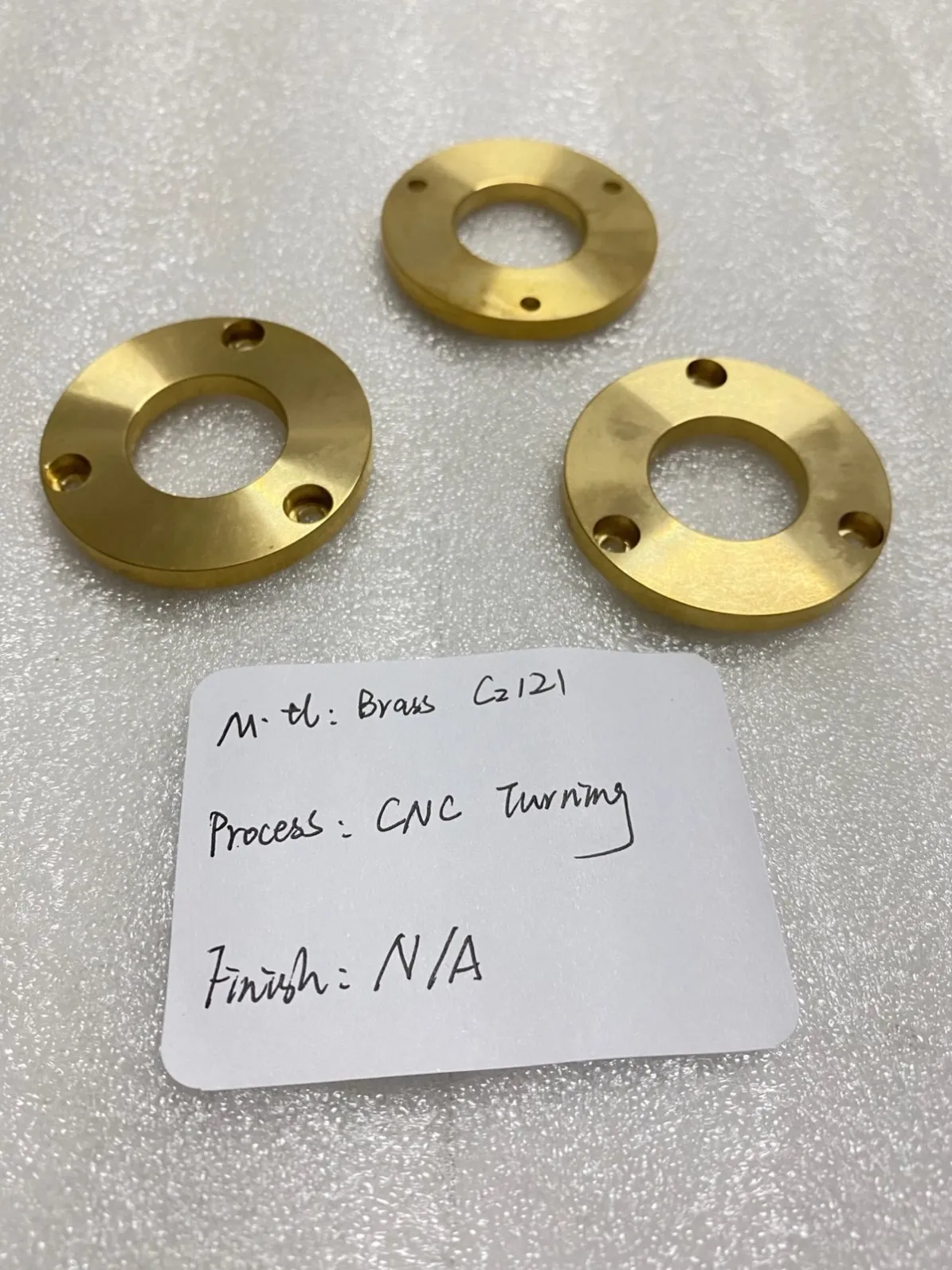
- Flanges — flat, faced and drilled, often as part of a plumbing or instrument assembly
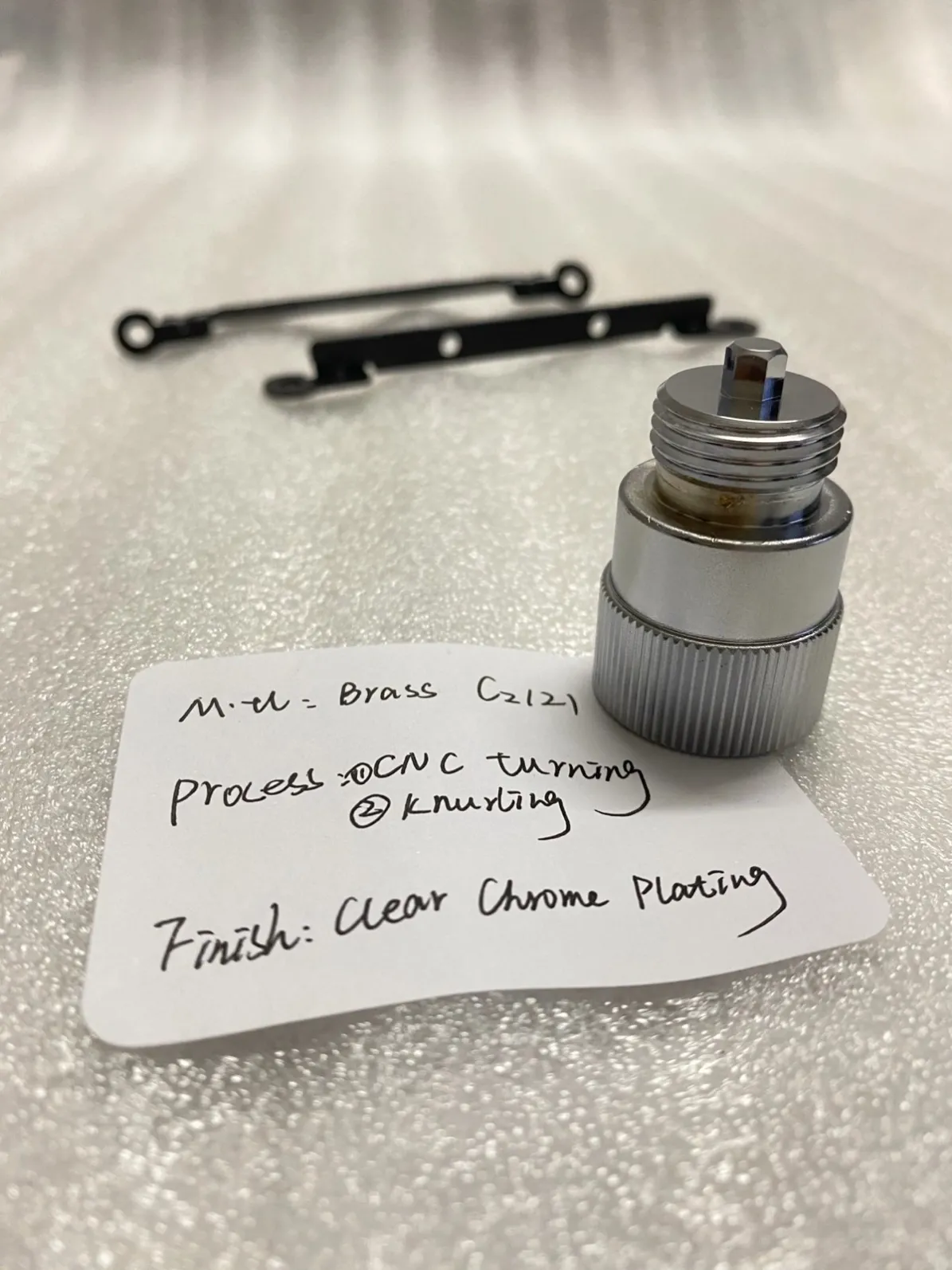
- Knurled parts — knobs, caps and thumb nuts where the grip pattern has to be crisp
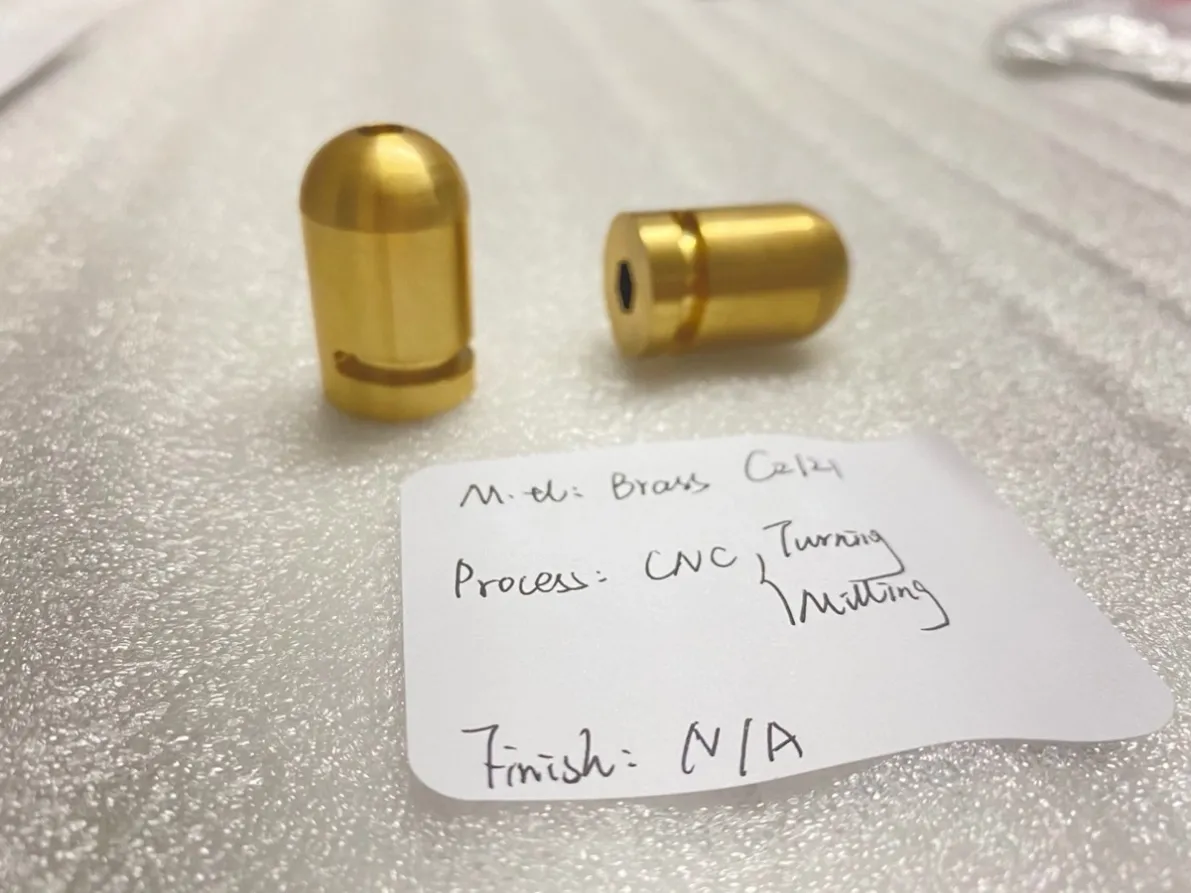
- Valve and instrument components — small, precise, and frequently plated
Parts like these are exactly what our CNC turning shop runs daily, in batches from prototypes to production quantities.
Finishes: chrome is the regular partner
CZ121 can be left as machined, but brass tarnishes — an unprotected part will dull and darken with handling and humidity. The usual routes:
- Chrome plating — the finish on many of our CZ121 fittings: bright, hard, corrosion-proof, and it keeps the machined detail underneath crisp (more on plating in surface finishing)
- Nickel plating — similar protection with a slightly warmer tone
- Clear lacquer — keeps the gold brass look on decorative parts
- As machined — fine for internal parts nobody sees
If the part will be plated, say so at quote stage: plating adds a small thickness that belongs in the tolerance plan for threads and press fits.
CZ121 vs pure copper vs H62
Three copper alloys that are often confused, and should not be:
| CZ121 | Pure copper (e.g. C11000) | H62 brass | |
|---|---|---|---|
| Type | Leaded free-cutting brass | Nearly pure copper | Plain copper-zinc brass, no lead |
| Machinability | Excellent — the benchmark | Poor, gummy and tears | Moderate |
| Conductivity | Moderate | Highest — the reason to choose it | Moderate |
| Best for | Turned, threaded, knurled parts | Conductors, electrodes, heatsinks | Formed, bent and drawn parts |
Pure copper is chosen for electrical or thermal duty, never for easy machining — our copper heatsink article covers that end of the family. H62 and its relatives form and bend better than CZ121 but give back the machining advantage. If the part is machined from bar, CZ121 is almost always the right brass.
One thing to flag: lead content
CZ121 machines so well because of its lead, and that lead matters in one regulated case. If your part will contact drinking water in the US, federal and California rules cap lead content on wetted surfaces, and CZ121 does not qualify. Low-lead and lead-free brasses exist for exactly that application — tell us the part is for potable water when you enquire, and we will quote a compliant alloy instead. For the great majority of industrial, instrument and equipment parts, this does not arise.
How to specify it
Write the grade the way your drawing office means it:
- UK/EU drawings: "CZ121" or "CW614N (CuZn39Pb3)"
- US drawings: "C36000 free-cutting brass" is the working equivalent
- Add the finish on the same line: "CZ121, chrome plated" saves a round of questions
FAQ
Is CZ121 the same as CW614N? Yes — same alloy, different designation systems. CZ121 is the British name, CW614N the European EN name, CuZn39Pb3 the composition name. The American C36000 is the close equivalent most US drawings use.
Why do CZ121 parts come out cheaper than other brass parts? Machining time. The alloy cuts fast, tools last, and threads and knurls usually need no secondary work. On turned parts, cycle time is most of the price, so the easiest-cutting alloy usually wins the quote.
Can CZ121 be chrome plated? Yes, and it is one of the most common combinations we run — the plating is bright and durable, and the sharp machined detail survives underneath. Mention plating at quote stage so thread and fit tolerances allow for the coating.
Is CZ121 suitable for drinking-water fittings? Not for the US market. Its lead content exceeds the limits for wetted surfaces in US federal and California rules. Ask us for a low-lead alternative if the part is for potable water; for other applications CZ121 is unrestricted.
CZ121 or H62 for a bent part? H62. CZ121's lead makes it less ductile, and it can crack on tight bends. CZ121 is a machining alloy; if the part is formed from sheet or strip rather than machined from bar, choose a forming brass.
What batch sizes suit CZ121 turning? Anything from a handful of prototypes to production runs. The alloy's consistency is precisely why it is used for repeat turned parts — part one and part one thousand come off the machine the same.
If a brass part is turned, threaded or knurled, there is a good chance it is CZ121. This is the free-cutting grade — CZ121 in British designation, CW614N in the European EN system, CuZn39Pb3 by composition — and it is the alloy against which the machinability of every other copper alloy is measured. Parts come off the lathe with clean threads, sharp knurling and bright surfaces, at cycle times no other brass can match.
We machine CZ121 constantly: fittings, flanges, connectors and knurled components, many of them chrome plated afterwards. Here is what to know before you specify it.
What CZ121 is
CZ121 is a leaded brass: roughly 58% copper, 39% zinc and about 3% lead, in rod and bar form optimized for machining. The same alloy appears on drawings under several names, and they are worth recognizing because they all mean the same material family:
- CZ121 — British (BS) designation, common on UK and Commonwealth drawings
- CW614N / CuZn39Pb3 — European EN designation
- C36000 — the American UNS free-cutting brass; not a perfect twin, but the near-equivalent US buyers usually mean
If your drawing says any of these, tell us which standard you are working to and we will source to it — for machined parts the practical difference between them is negligible.
Why it machines better than anything else
The lead in CZ121 is not there for strength. It acts as a built-in chip breaker and lubricant: chips snap short instead of wrapping around the tool, cutting forces stay low, and the tool edge lasts. In practice that means:
- Threads cut cleanly, without the tearing you get on gummy alloys
- Knurling comes out sharp and consistent, part after part
- Fine turned finishes come straight off the machine, often with no polishing step
- Small cross-holes, thin walls and fine features hold tolerance without drama
This is why CZ121 is the default for parts that are mostly lathe work — and why switching a fitting from a non-leaded brass to CZ121 usually reduces the quote rather than raising it.
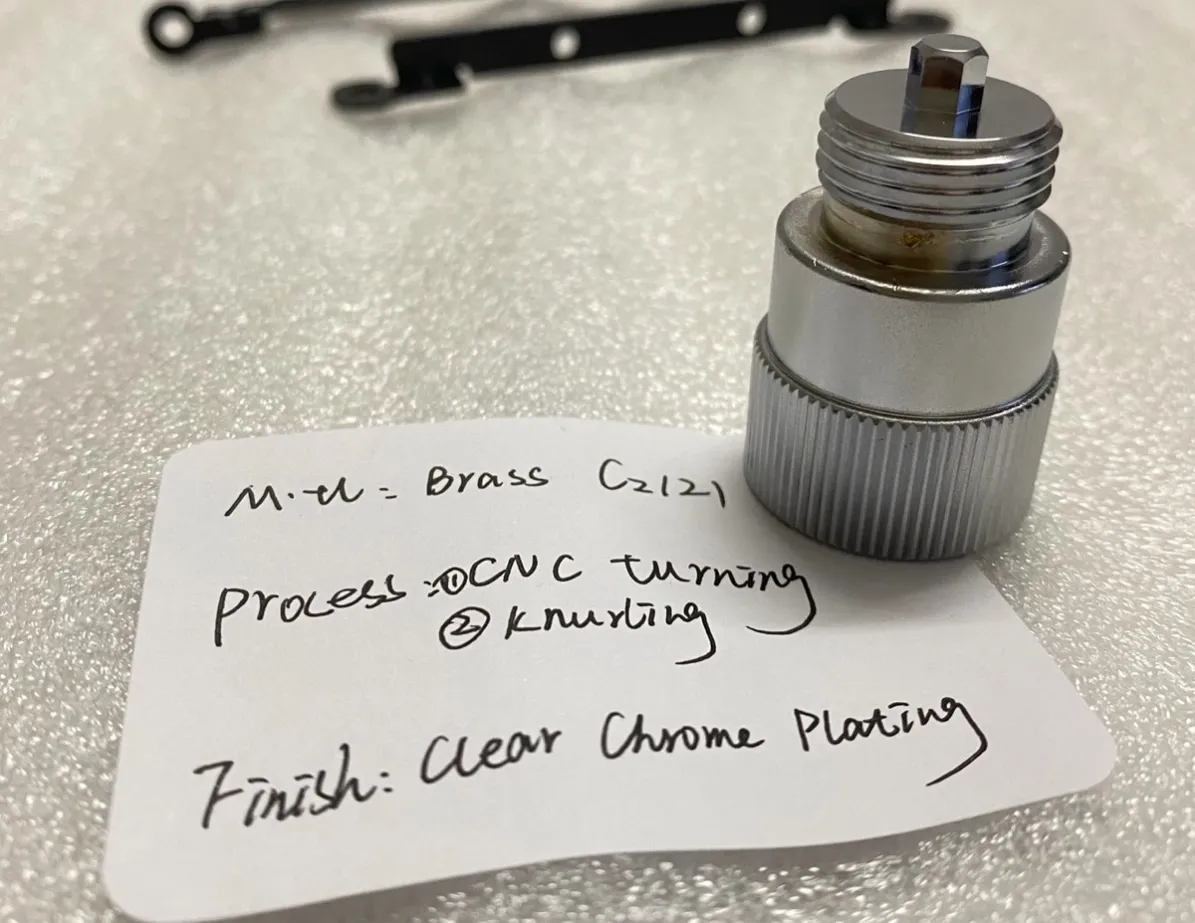
The parts it is made for
CZ121 earns its keep on parts that combine turning with threads, seals or grip:
- Fittings and connectors — threaded both ends, hex in the middle, made by the hundred
- Flanges — flat, faced and drilled, often as part of a plumbing or instrument assembly
- Knurled parts — knobs, caps and thumb nuts where the grip pattern has to be crisp
- Valve and instrument components — small, precise, and frequently plated
Parts like these are exactly what our CNC turning shop runs daily, in batches from prototypes to production quantities.
Finishes: chrome is the regular partner
CZ121 can be left as machined, but brass tarnishes — an unprotected part will dull and darken with handling and humidity. The usual routes:
- Chrome plating — the finish on many of our CZ121 fittings: bright, hard, corrosion-proof, and it keeps the machined detail underneath crisp (more on plating in surface finishing)
- Nickel plating — similar protection with a slightly warmer tone
- Clear lacquer — keeps the gold brass look on decorative parts
- As machined — fine for internal parts nobody sees
If the part will be plated, say so at quote stage: plating adds a small thickness that belongs in the tolerance plan for threads and press fits.
CZ121 vs pure copper vs H62
Three copper alloys that are often confused, and should not be:
| CZ121 | Pure copper (e.g. C11000) | H62 brass | |
|---|---|---|---|
| Type | Leaded free-cutting brass | Nearly pure copper | Plain copper-zinc brass, no lead |
| Machinability | Excellent — the benchmark | Poor, gummy and tears | Moderate |
| Conductivity | Moderate | Highest — the reason to choose it | Moderate |
| Best for | Turned, threaded, knurled parts | Conductors, electrodes, heatsinks | Formed, bent and drawn parts |
Pure copper is chosen for electrical or thermal duty, never for easy machining — our copper heatsink article covers that end of the family. H62 and its relatives form and bend better than CZ121 but give back the machining advantage. If the part is machined from bar, CZ121 is almost always the right brass.
One thing to flag: lead content
CZ121 machines so well because of its lead, and that lead matters in one regulated case. If your part will contact drinking water in the US, federal and California rules cap lead content on wetted surfaces, and CZ121 does not qualify. Low-lead and lead-free brasses exist for exactly that application — tell us the part is for potable water when you enquire, and we will quote a compliant alloy instead. For the great majority of industrial, instrument and equipment parts, this does not arise.
How to specify it
Write the grade the way your drawing office means it:
- UK/EU drawings: "CZ121" or "CW614N (CuZn39Pb3)"
- US drawings: "C36000 free-cutting brass" is the working equivalent
- Add the finish on the same line: "CZ121, chrome plated" saves a round of questions
FAQ
Is CZ121 the same as CW614N? Yes — same alloy, different designation systems. CZ121 is the British name, CW614N the European EN name, CuZn39Pb3 the composition name. The American C36000 is the close equivalent most US drawings use.
Why do CZ121 parts come out cheaper than other brass parts? Machining time. The alloy cuts fast, tools last, and threads and knurls usually need no secondary work. On turned parts, cycle time is most of the price, so the easiest-cutting alloy usually wins the quote.
Can CZ121 be chrome plated? Yes, and it is one of the most common combinations we run — the plating is bright and durable, and the sharp machined detail survives underneath. Mention plating at quote stage so thread and fit tolerances allow for the coating.
Is CZ121 suitable for drinking-water fittings? Not for the US market. Its lead content exceeds the limits for wetted surfaces in US federal and California rules. Ask us for a low-lead alternative if the part is for potable water; for other applications CZ121 is unrestricted.
CZ121 or H62 for a bent part? H62. CZ121's lead makes it less ductile, and it can crack on tight bends. CZ121 is a machining alloy; if the part is formed from sheet or strip rather than machined from bar, choose a forming brass.
What batch sizes suit CZ121 turning? Anything from a handful of prototypes to production runs. The alloy's consistency is precisely why it is used for repeat turned parts — part one and part one thousand come off the machine the same.