Clear Plastic Housings and Rings: Machined PC, Polished Clear
Turned and milled clear housings in polycarbonate: how machining marks are removed by vapor polishing, and what makes a machined clear part stay clear in service.
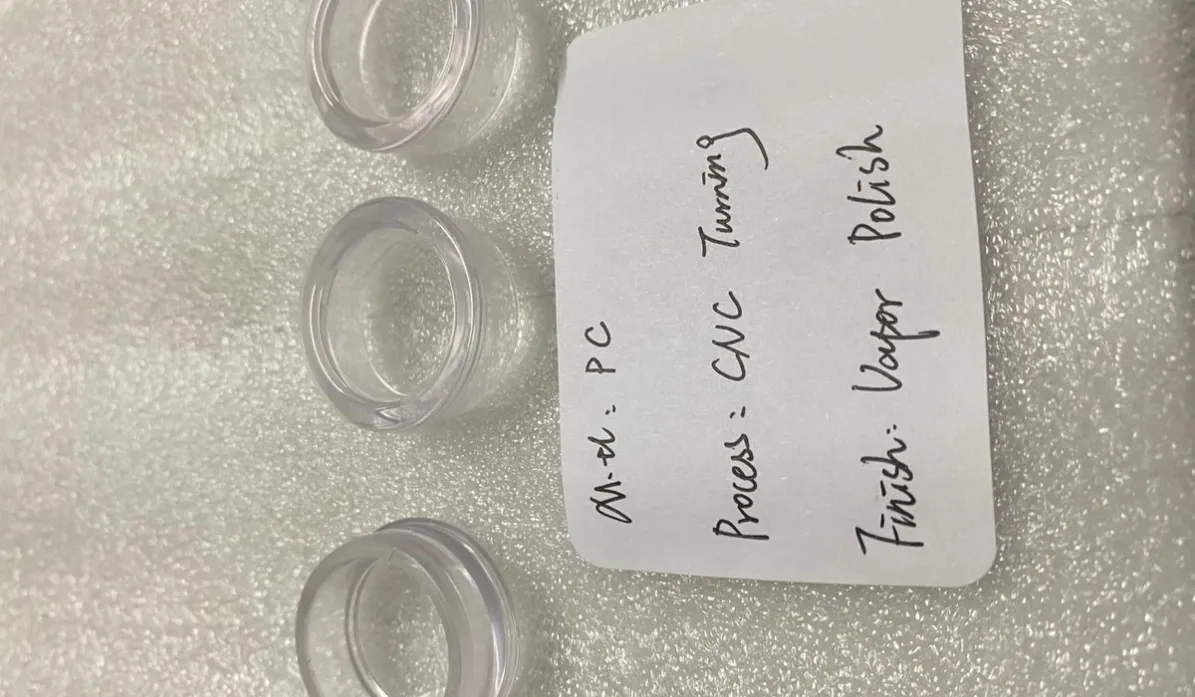
A clear housing is two parts in one: a mechanical part that must fit, seal and hold its screws, and an optical surface that shows every flaw the machining left behind. The rings in our photo are the turned version of the problem — polycarbonate, machined on a lathe, then vapor polished until the tool marks disappear and the wall reads as one clear surface. This piece covers the housing-specific side of clear machining; the polishing process itself is covered in depth in our guide to transparent plastic parts and vapor polishing.
Why housings are machined, not molded, at this stage
Clear parts are unforgiving of shortcuts, and at prototype and low volumes machining is how they get made: no mold cost, no waiting for a tool, and the geometry can change between batches. Rings, covers and windowed housings in PC and acrylic come off our CNC turning and milling setups with the fits and sealing faces held to the same tolerances as any machined part — the clarity is added afterwards, by finishing, without touching the dimensions that matter.
Turning clear rings: the wall is the window
A turned ring like the ones pictured is mostly wall — and the wall is what you look through. Three machining facts decide how clear it can become:
- Tool marks are the enemy, and they start at the cut. Fine finishing passes with sharp tools leave a surface that polishing can fully recover. A torn or chattered surface polishes to a haze instead of a window — the clarity is decided on the lathe, not in the polishing step.
- Uniform walls polish evenly. Vapor polish acts on the surface it reaches; a ring with consistent wall thickness comes out consistent. Thin spots and thick spots are a design problem before they are a finishing problem.
- Faces and bores matter too. Sealing faces and bores are machined to their finish before polishing, and the polishing is controlled so those fits stay where the drawing put them.
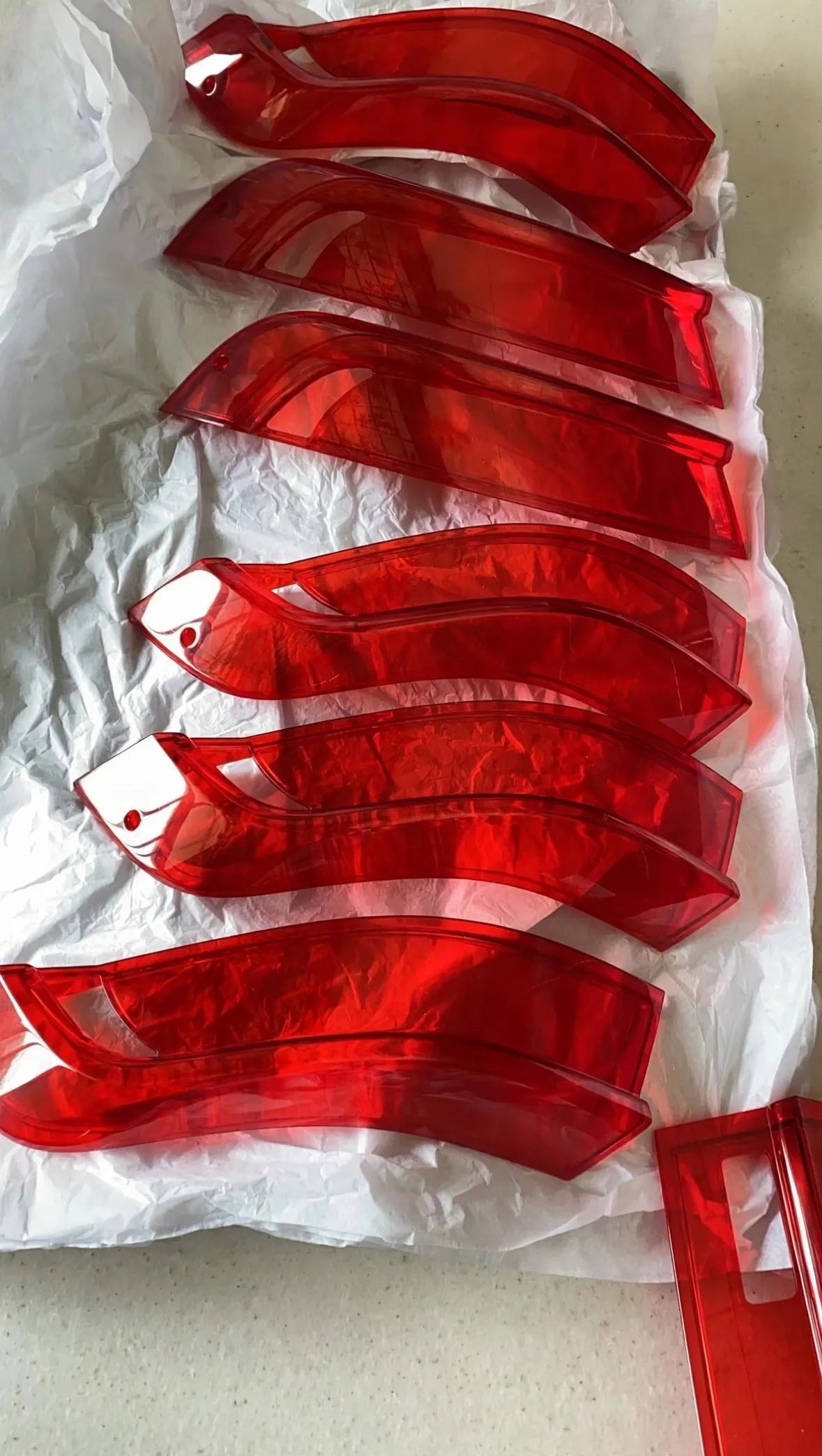
Vapor polishing on housings, briefly
The machined surface is exposed to a solvent vapor that melts the outermost skin of the plastic, which flows smooth and re-solidifies clear. On housings it does two jobs at once: it restores transparency to the machined walls, and it rounds the microscopic sharpness of machining marks so the surface resists the stress cracking that raw machined PC can suffer. Edges that must stay crisp, and faces that must stay flat, are planned around the polish — which surfaces get it and which are protected is part of the route, decided before the first part is cut. The step-by-step, including flame and mechanical alternatives, is in the vapor polishing guide.
Keeping it clear after delivery
More clear parts are ruined by handling than by machining. Machined clear housings leave us protected — filmed or bagged individually, never loose in a box together — and the same discipline should continue at your end: no stacking unprotected, no wiping with dry cloths that drag grit across the surface, and cleaning with mild soap solution rather than solvents, several of which craze PC on contact. If the housing will carry threads that get used repeatedly, that is an insert conversation — see threaded inserts for plastic parts — because a stripped thread in a clear housing cannot be hidden either.
FAQ
PC or acrylic for a clear housing? Both machine and polish well. Polycarbonate is the tougher of the two — impact-resistant and harder to crack at screw bosses and snap features — which is why equipment housings usually choose it. Acrylic polishes to a slightly finer optical finish and suits covers and display parts that take no structural load.
Can a turned clear part be as clear as a molded one? After vapor polishing, a well-machined part is genuinely transparent — you can read through the wall. It will not match a polished mold's optical surface under laboratory scrutiny, but for housings, windows and covers it is the clarity the application needs, without a mold.
Does vapor polishing change the dimensions? It moves the surface by a microscopic amount — enough to matter on a press fit, not on a housing wall or a sealing face with a gasket. Tell us which faces are dimensionally critical and the polishing route is planned around them.
Can clear housings have threaded holes? Yes, but a tapped thread in plastic has a limited life. For covers that will be opened in service, heat-set brass inserts give the housing metal threads — the joint then outlives the product instead of expiring with its threads.
How are clear parts packed for shipping? Individually protected — film or individual bags, separated so surfaces never touch each other in transit. A clear part that arrives scratched has failed its only cosmetic requirement, so the packing treats clarity as a specification, not a hope.