Choosing Sheet Metal Materials: 5052-H32, SPCC, SGCC, SECC and Stainless
5052-H32 aluminum, SPCC, SGCC, SECC or stainless sheet? How the common sheet metals differ on corrosion, forming and finish, and how to pick the right one for your part.
Most sheet metal drawings we quote are in one of six materials, and the choice is rarely arbitrary: it follows from whether the part must not rust, whether it will be painted or left bare, and how tight the bends are. This guide covers the materials we bend, cut and weld every week — 5052-H32 aluminum, SPCC cold-rolled steel, the two galvanized steels SGCC and SECC, and stainless sheet in 304 stainless steel and 316L stainless steel — plus the two we reach for in special cases, hot-rolled plate and copper sheet.
The materials at a glance
| Material | What it is | Corrosion resistance | Forming | Usual finishes | Typical parts |
|---|---|---|---|---|---|
| 5052-H32 aluminum | Aluminum-magnesium sheet | Very good, marine-capable | Excellent, tight bends | Anodize, powder coat, brushed | Enclosures, panels, brackets |
| SPCC | Cold-rolled carbon steel (CRS) | Poor — must be coated | Excellent | Powder coat, paint, plating | Internal brackets, chassis, covers |
| SGCC | Hot-dip galvanized steel | Good, sacrificial zinc | Good | Paint, powder coat, as-is | Outdoor enclosures, ducts, frames |
| SECC | Electro-galvanized steel | Moderate, thin zinc | Excellent, smooth surface | Paint, powder coat | Indoor enclosures, electronics housings |
| 304 stainless steel | Stainless sheet | Very good | Good, more springback | Brushed, polished, as-is | Food/lab equipment, visible panels |
| 316L stainless steel | Stainless sheet, low carbon | Excellent, chlorides | Good, more springback | Brushed, polished, as-is | Marine, medical, chemical equipment |
5052-H32 aluminum: the aluminum that bends
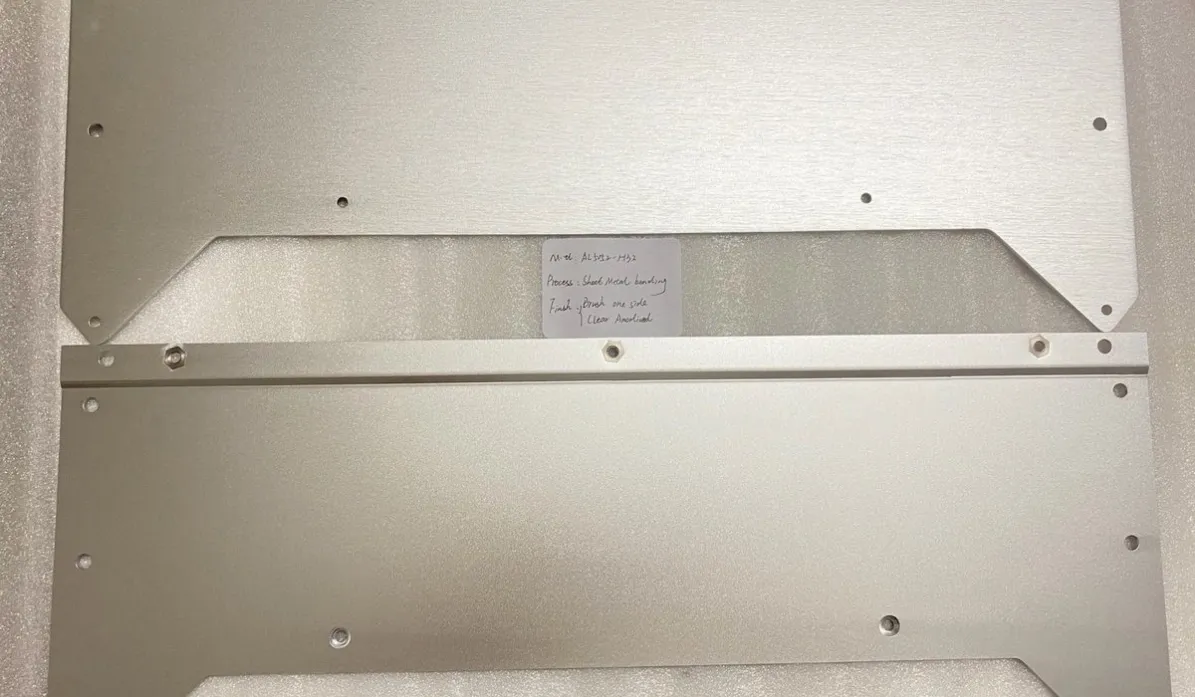
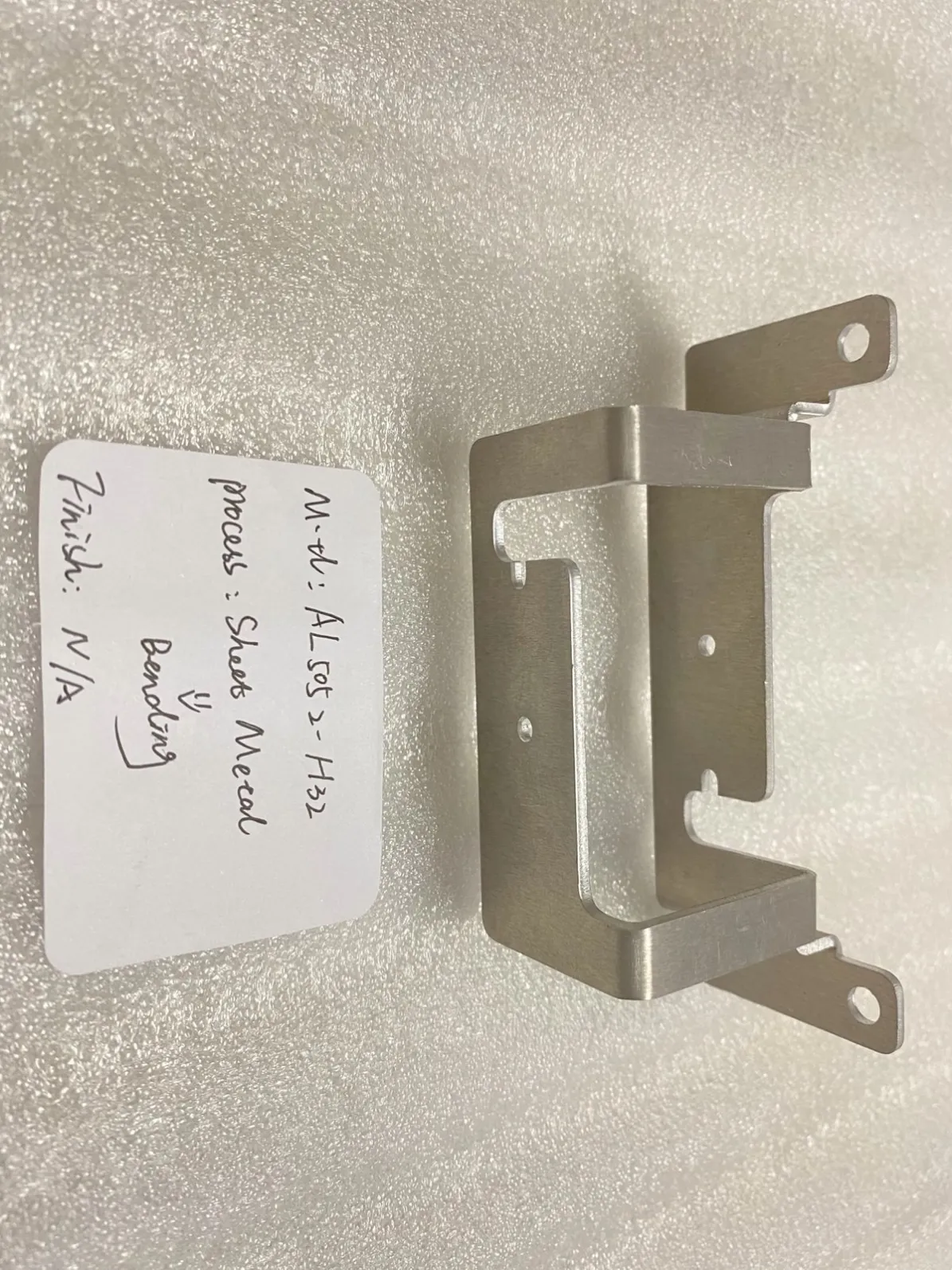
5052 in the H32 temper is the sheet aluminum we specify most, for one reason: it bends without cracking at radii that would split harder tempers, and it still has useful strength afterwards. It resists corrosion well enough for marine environments, anodizes cleanly (the brushed, clear-anodized panel in our photo), and takes powder coat when a color is wanted. For enclosures, covers and brackets that must stay light and rust-free, 5052-H32 aluminum is the default answer — the full story on finishes is in our sheet metal finishes piece.
SPCC (cold-rolled steel): cheap, formable, must be coated
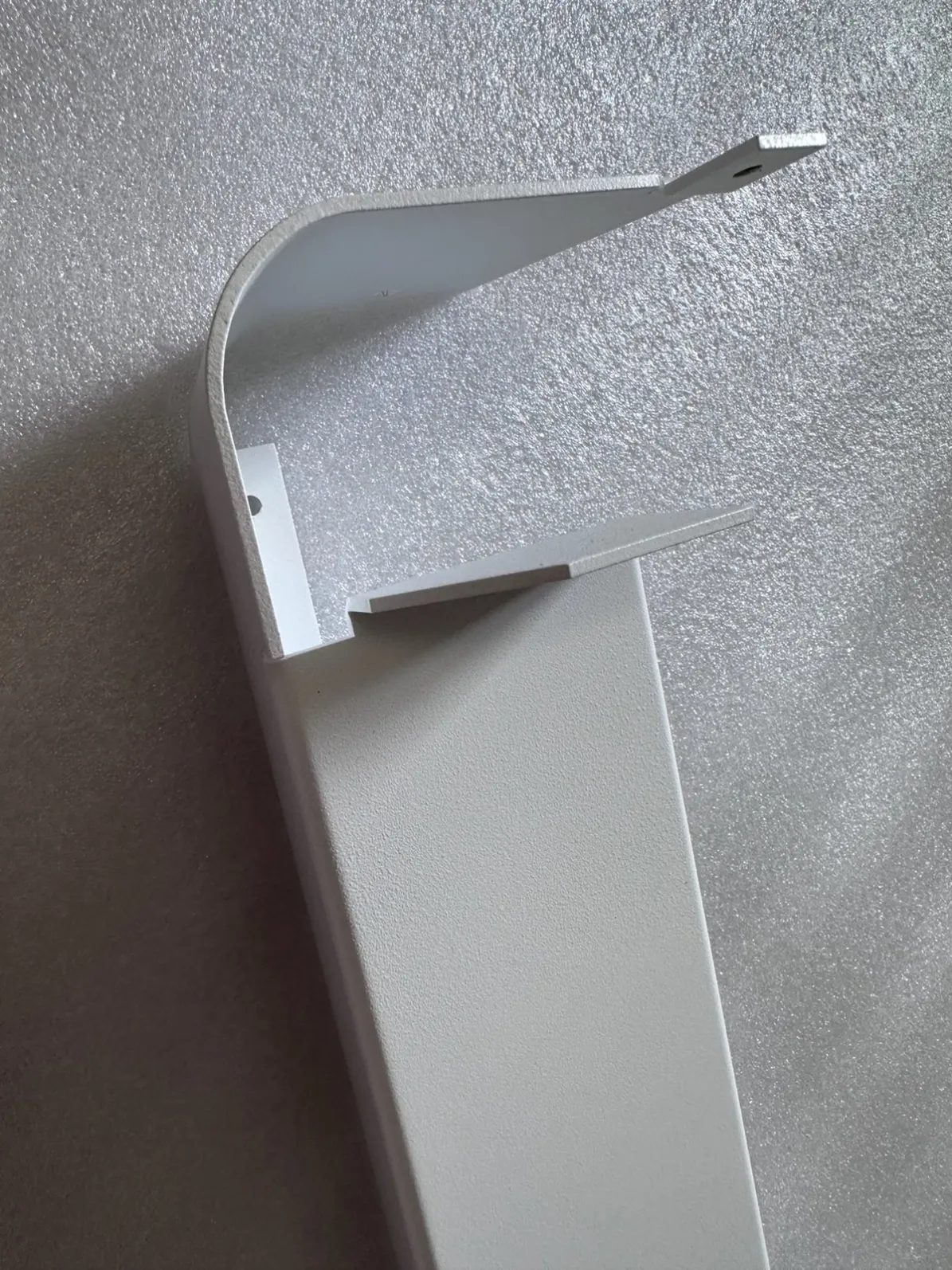
SPCC — cold-rolled carbon steel sheet, the CRS of US drawings — is the economical workhorse: inexpensive, flat, easy to bend and weld, with a smooth surface that paints well. Its one rule is absolute: bare SPCC rusts, so every SPCC part leaves with a finish — powder coat, paint or plating. Inside equipment, where a coated steel part is protected by the enclosure around it, SPCC is usually the smart money. Outside, choose a galvanized or stainless grade instead of asking a coating to do all the work.
SGCC vs SECC: two kinds of galvanized
Both are steel sheet with a zinc layer; they differ in how the zinc got there, and the difference decides the application.
- SGCC (hot-dip galvanized) carries a thicker zinc coating, applied by dipping. The zinc protects sacrificially — scratches and cut edges get a measure of self-protection — which is why SGCC is the outdoor and industrial choice. The surface can show a crystalline spangle pattern and is less smooth, so visible cosmetic parts are usually painted over it or specified differently.
- SECC (electro-galvanized) carries a thin, very even zinc layer. The surface is smooth and paints beautifully, which made it the classic material for electronics enclosures and indoor equipment housings. The trade-off is a thinner zinc reserve: it is an indoor material, not a weather material.
Welding note: both can be welded, but the zinc burns off at the weld and must be touched up or the joint becomes the rust starting point — one reason welded assemblies are often specified in plain steel and coated after fabrication instead.
Stainless sheet: 304 stainless steel and 316L stainless steel
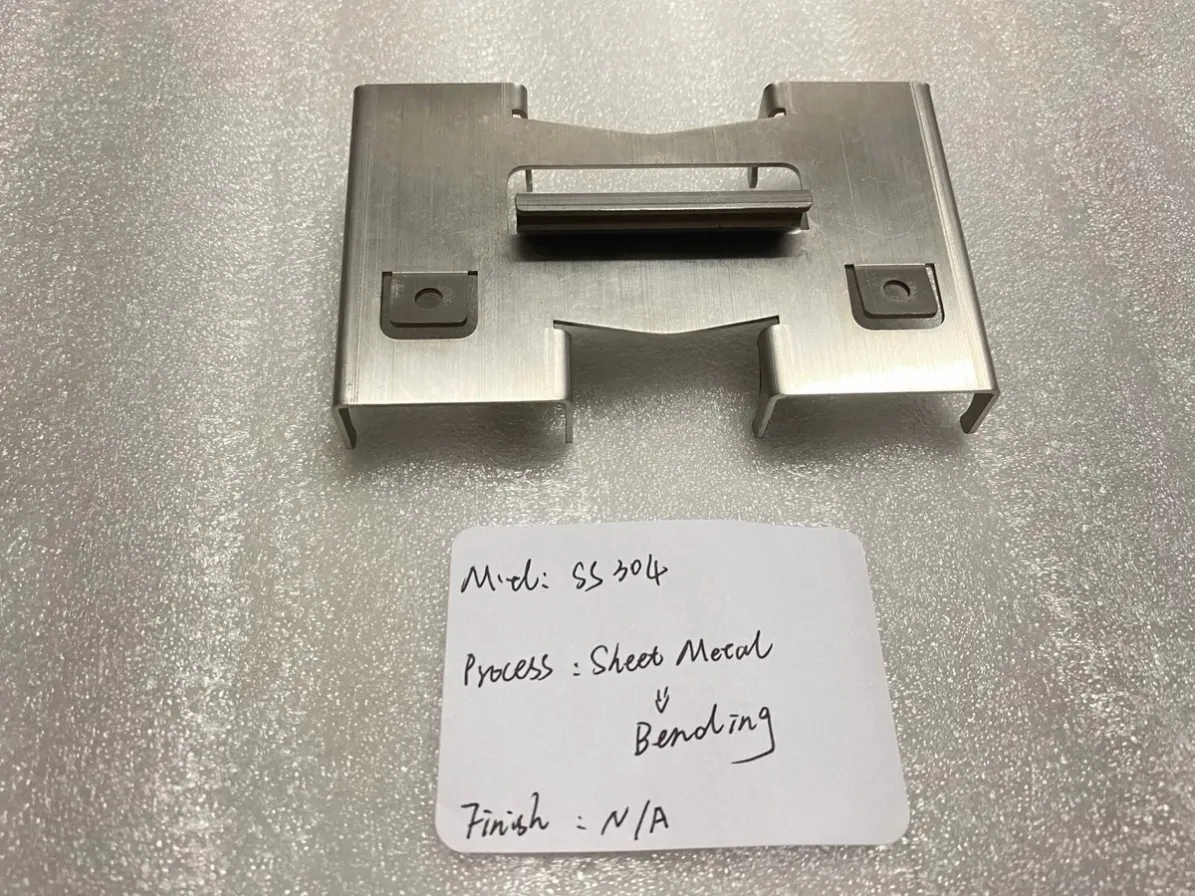
Stainless sheet is chosen when the part must survive its environment bare — no coating to chip, nothing to maintain. 304 stainless steel covers most equipment, food-adjacent and visible architectural work; it is usually supplied with a brushed or mill finish under protective film, and the film stays on through fabrication to protect the face. 316L stainless steel adds molybdenum for chloride environments (marine, chemical, medical) and the low-carbon L grade welds without sensitization worries. Both spring back more than carbon steel on the brake — a forming fact we plan for, covered in our sheet metal design tips.
The special cases: hot-rolled plate and copper sheet
Hot-rolled steel (SPHC and similar) enters at thicker gauges where cold-rolled sheet stops: machine bases, heavy brackets and structural parts that are laser cut and bent from thick plate. Its surface is rougher (mill scale) and tolerances looser than cold-rolled — a structural material, finished by coating. Copper and brass sheet (C11000, C26000) appear for electrical parts — busbars, contacts, shielding — where conductivity is the specification and the sheet is cut and bent like any other, then plated if the contact surface needs it.
Choosing, in one pass
- Light, rust-free, bendable, maybe anodized → 5052-H32 aluminum
- Indoor steel part that will be coated anyway → SPCC
- Outdoor steel, utility finish → SGCC; indoor enclosure with a painted show surface → SECC
- Bare metal that must survive, standard duty → 304 stainless steel; chlorides or medical/marine → 316L stainless steel
- Thick and structural → hot-rolled plate; electrical → copper sheet
Send the drawing to our sheet metal bending or laser cutting team with the environment the part will live in, and if the material is still open we will recommend from this list with the quote.
FAQ
What is the difference between SPCC and CRS? Nothing of substance — SPCC is the JIS grade name for the cold-rolled carbon steel sheet that US drawings call CRS. Same material family, same behavior; we source to whichever standard your drawing uses.
SGCC or SECC for an outdoor enclosure? SGCC. Its hot-dip zinc layer is much thicker and protects cut edges sacrificially. SECC's thin electro-galvanized layer is an indoor specification — outdoors it gives up years earlier.
Can 5052-H32 aluminum be welded? Yes, it welds well (unlike some harder aluminum tempers), and it is one reason 5052 is the default for welded enclosures and tanks in sheet form. Welded corners are usually dressed and then anodized or coated with the rest of the part.
Why does stainless sheet cost more to form? Springback and work hardening. Stainless pushes back harder on the press brake and hardens as it is worked, so bend allowances, tooling and handling all take more care than the same part in carbon steel. The material itself also costs more.
Does galvanized sheet need painting? Not for corrosion alone — the zinc is the protection. Painting or powder coating over galvanized is done for color and appearance, and it needs the right surface preparation to adhere to the zinc.
What thickness range do these materials cover? Between them, from thin enclosure gauges up to plate thicknesses for structural parts. Tell us the thickness on the drawing — availability by gauge differs per material, and we will confirm the exact sheet with the quote.