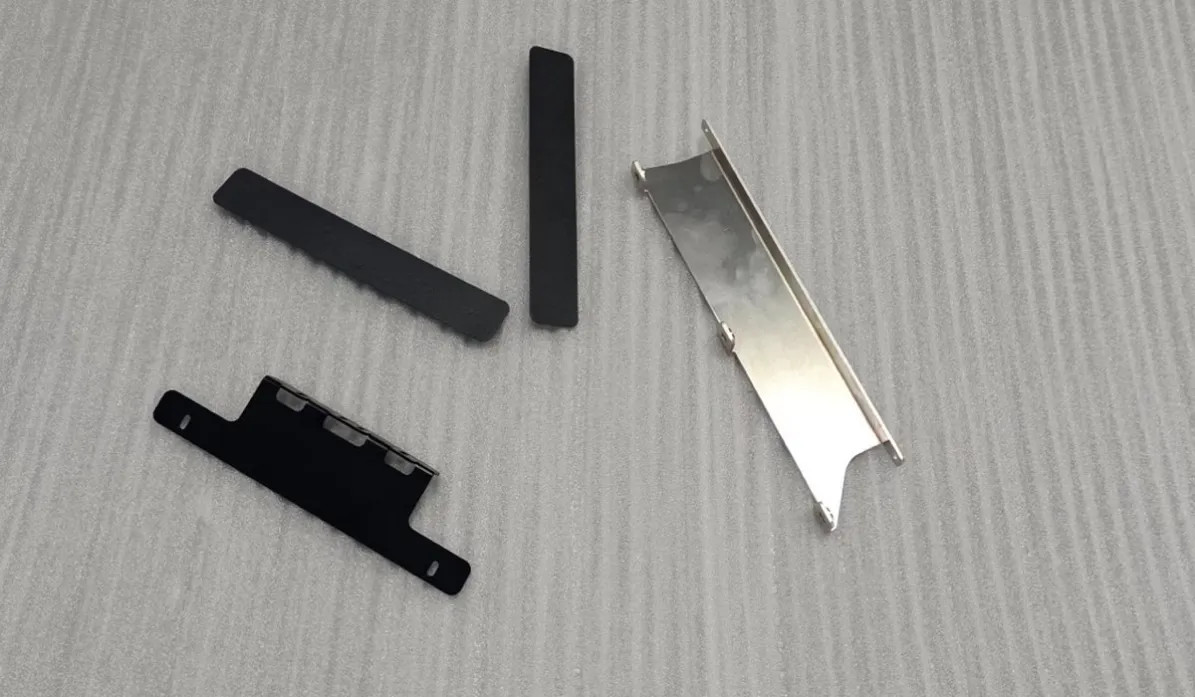
Thick-Plate Brackets: Laser Cutting and Bending 6 mm Steel
At 6 mm, sheet metal stops behaving like sheet. Laser cutting and bending thick SPCC brackets: bend force, radius and springback rules for structural parts.
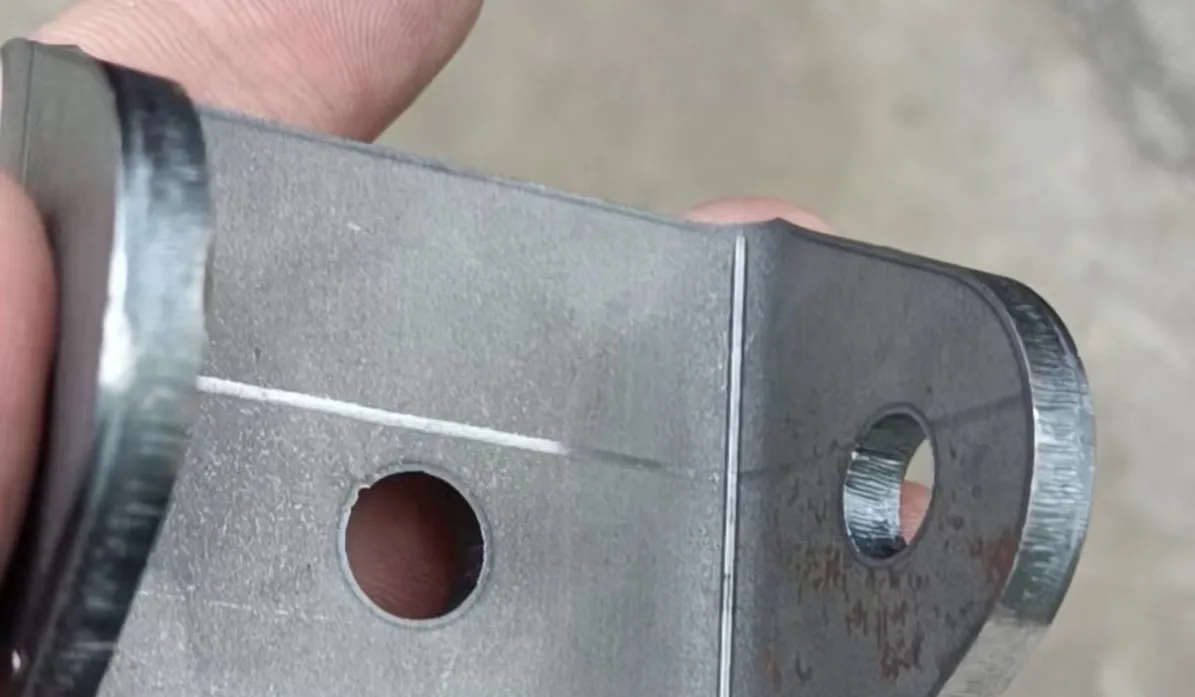
Most sheet metal work lives between 1 and 3 mm. Then there are parts like the bracket in the photo — cut and bent from SPCC steel plate around 6 mm thick. At that thickness the part stops behaving like "sheet" and starts behaving like a structural component: it carries real loads, it needs real force to form, and the rules that work for thin gauges need adjusting.
Here's what changes when brackets get thick.
Laser Cutting Thick Plate
A fiber laser cuts 6 mm mild steel cleanly and quickly, but thick plate is less forgiving than thin sheet in a few specific ways:
- Edge taper and dross. As thickness grows, the cut edge develops a slight taper and can hold onto dross (resolidified metal) along the bottom edge, especially on internal corners. Correct focus, speed, and gas pressure keep the edge clean; parts are deburred and checked before they go to the brake, because a ragged edge becomes a stress riser in a loaded bracket.
- Heat-affected zone. Thick cuts put more heat into the part. Hole positions and edges near the cut sit in material that has been hot, which is one more reason critical hole tolerances on thick parts are worth a conversation — and why features that must be very precise are sometimes cut undersize and finished afterward.
- Piercing points. Where the laser starts a cut matters on thick plate. Pierces are placed in scrap or on non-critical edges so the small mark they leave never lands on a face anyone sees or measures.
What doesn't change: the laser still holds tight profile tolerances, and our sheet metal work is held to ±0.1 mm on the features that matter, thick or thin.
Bending 6 mm Is a Different Sport
Forming thick plate at the press brake is where the real differences show up.
Bend radius has to grow. Thin sheet can bend at a radius around its own thickness. Thick mild steel wants more — an inside radius of 1.5 to 2 times the thickness is a safer starting point at 6 mm, because the outer surface of the bend stretches much further on a thick part, and a too-tight radius cracks it. Design the radius the material can actually survive, not the radius that looks neat in CAD.
Tonnage climbs fast. Bending force rises steeply with thickness — roughly with the square of it. A 6 mm bend can need several times the force of a 3 mm bend of the same length, which decides which brake and which tooling the job runs on. It's a capacity question, not a preference.
Springback is bigger and less shy about it. Thick plate springs back more after forming, and the amount varies with the material batch. Production runs are dialed in on the first parts — bend, measure, compensate the angle — and then checked as the run proceeds, so bracket number fifty has the same angle as bracket number one.
Holes near bends distort more. The deformation zone around a thick bend is wider, so holes need more clearance from the bend line than thin-gauge rules suggest. Our sheet metal design tips article gives the standard distances; on thick plate, treat them as minimums and add margin.
A Bracket Is a Structural Part — Treat It Like One
At 6 mm, a bracket is usually holding something up, holding something down, or holding something together under vibration. The details that matter follow from that: clean edges without notches where cracks start, bend radii that don't thin the material at the corner, hole edges with enough material around them to carry the bolt load without tearing out. None of this is exotic — it's the difference between a bracket that was designed as a flat pattern and one that was designed as a part.
Finishing follows the job the bracket does: powder coating for corrosion protection and a clean look on equipment, painting, or galvanizing and plating where the environment demands it — all handled alongside the fabrication, so the part arrives finished rather than raw.
Getting a Thick Bracket Quoted
Send the drawing or model via our sheet metal fabrication page — or start from laser cutting if the part is flat. Tell us the material and thickness, and flag any holes that carry precise positions. We'll quote within 24 hours, and if the bend radius or a hole position is going to fight the material, we'll tell you before cutting rather than after. FAI reports, material certificates, and a certificate of conformance are available on request.