Brushed Sheet Metal Enclosures in 5052-H32 aluminum
Brushed aluminum enclosures in 5052-H32 aluminum: laser-cut panels, welded corners ground invisible, and a brushed grain that has to run the same way on every face.
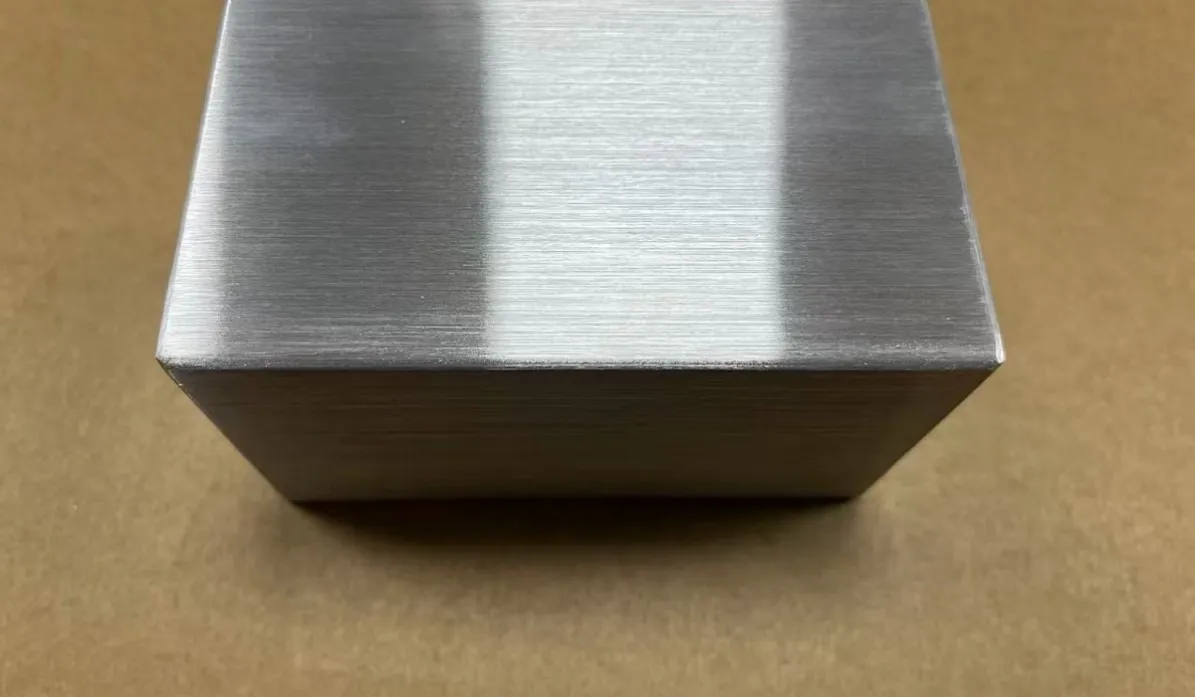
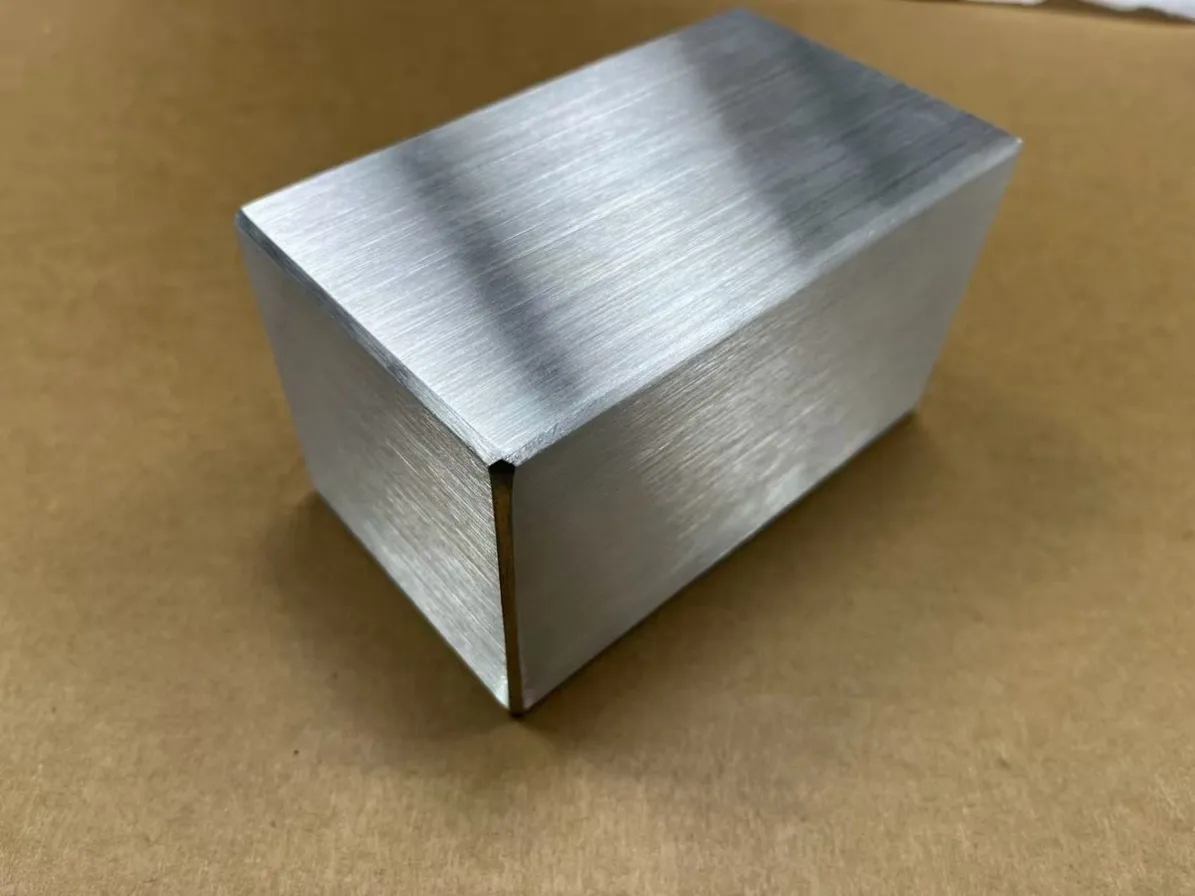
A brushed enclosure is a finish problem wearing a fabrication problem's clothes. The boxes in the photographs are 5052-H32 aluminum: panels laser cut and bent to shape, welded at the corners, the welds ground back, and the whole part brushed so the grain runs clean and consistent across every face — including across the corners where the welds used to be. Done well, the enclosure reads as one piece of metal. This page explains the route, and why the order of operations is the whole secret.
Why 5052-H32 is the enclosure alloy
5052-H32 is the sheet alloy enclosures keep coming back to, for three reasons that compound. It forms and welds well — and a welded enclosure lives or dies on its welds. It resists corrosion in indoor and sheltered service without any coating at all, which matters when the finish is the bare metal itself. And it takes a brushed finish evenly, without the patchiness some alloys show. The grade sits alongside the other enclosure materials in our sheet metal materials guide; for a bare-metal brushed finish, it is the default recommendation.
Cut flat, bent, then welded
The enclosure starts as flat panels, laser cut with their openings, vents and mounting features in one operation. The panels are bent where the design folds — a bent corner is stronger and cleaner than a welded one, so welding is kept for the joints bending cannot make — and the remaining corners are welded to close the box form. Welding a thin aluminum enclosure is a distortion discipline: the heat that joins the corner also wants to pull it, so seams are welded in a sequence that balances the pull, and the part is checked for squareness before it goes any further. A brushed finish forgives nothing — any twist left in the box will be visible in the grain — so the geometry has to be right before the finishing starts, not corrected by it.
Grinding: where the weld disappears
The step that separates a welded box from a seamless enclosure is the grinding. Weld beads at the corners are ground back flush with the parent metal — carefully, because grinding through or dishing the surface trades a visible weld for a visible hollow. On a painted part this step is quick; paint hides a multitude of sins. On a bare brushed part it is the craftsmanship: the corner must be geometrically true and metallurgically continuous, because the brushing that follows will show any difference in the surface as a difference in the grain.
Brushing: one direction, every face
Brushing is a directional finish — fine parallel lines abraded into the surface — and its quality is judged by consistency. The grain must run the same direction across faces that meet at a corner, with no cross-scratches, no swirl marks from the grinding stage, and no change of character where the weld was dressed. That is why the order matters: grind first, brush last, over the whole part, in one campaign. The result is the satin, low-glare surface in the photographs — professional without paint, and repairable in a way paint is not: a scuffed brushed panel can be re-brushed; a scuffed painted panel is a respray. Where a coated finish serves better, the comparison is in our sheet metal finishes piece, and the enclosure design groundwork is in our sheet metal design tips.
Handling a finish that shows everything
A brushed bare-metal part records its handling: fingerprints etch into the grain's appearance, and a scratch cannot hide. Finished enclosures are handled with gloves, wrapped for transit, and packed so faces cannot rub — the same protective logic as our general packing, applied to a surface with no coating to sacrifice. It is also why brushed enclosures are usually an indoor or sheltered-service choice; outdoors, a powder-coated enclosure — like the EV charging enclosures — carries the weather better.
Send the drawings through our contact page — flat patterns or a 3D model, the gauge, and the grain direction you want on the principal face. We respond within 8 hours and normally quote within 24 hours.
FAQ
Why 5052-H32 aluminum for a brushed enclosure? It welds cleanly, resists corrosion bare, and brushes evenly. For an uncoated satin finish on a welded enclosure, it is the sheet alloy that does all three.
Can the welds really be made invisible? Yes — ground flush and then brushed over in the same campaign as the rest of the part, the corner's grain continues like the parent metal. It is skilled, slow work, and it is most of what a brushed enclosure costs.
Is a brushed finish durable? The metal itself is the finish, so there is nothing to chip or peel. Scratches can be re-brushed rather than refinished. It does show fingerprints and is best suited to indoor or sheltered service.
Does grain direction matter? It is the first thing the eye checks. We brush to the direction specified for the principal face and keep it consistent across the part — state it on the drawing if a face matters most.
Can a brushed enclosure be clear-coated instead? A clear coat over brushing is possible where extra protection is needed, but it changes the surface character slightly. Most customers choosing brushed aluminum want the bare metal; if the service is harsh, powder coating is usually the better answer.