How to Call Out Finishes on a Drawing
"Anodize black" is not a specification. What a finish callout needs — process, standard, color, thickness and masking — so parts come back as intended.
Most finishing problems are not finishing problems. They are drawing problems: the note said "anodize black," the shop anodized black, and the part still came back wrong — wrong type, wrong shade, coated on a face that had to stay bare. A finish callout that actually protects you takes one line per process and answers five questions: which process, to which standard, which color or class, how thick, and where it must not go. This article goes process by process. Send the drawing with your finish notes and we will quote exactly what is written — and flag anything ambiguous before it costs a batch, not after.
The five things every finish note needs
- 1. Process and standard. "Anodize per MIL-PRF-8625" says far more than "anodize."
- 2. Type and class. Anodize Type II vs Type III (hardcoat) are different coatings with different costs. Dyed vs clear is a class decision — decide it up front.
- 3. Color, in a system. "Black" is a color family. A RAL number for powder coat, or an approved sample for anodize dye, is a specification.
- 4. Thickness, where it matters. A range the inspector can measure, not "thick" or "heavy."
- 5. Where it must not go. Masked faces, plugged threads, bare grounding pads — written on the drawing, not agreed in an email. See our article on masking for anodizing, plating and powder coating for how to mark those areas.
Anodize
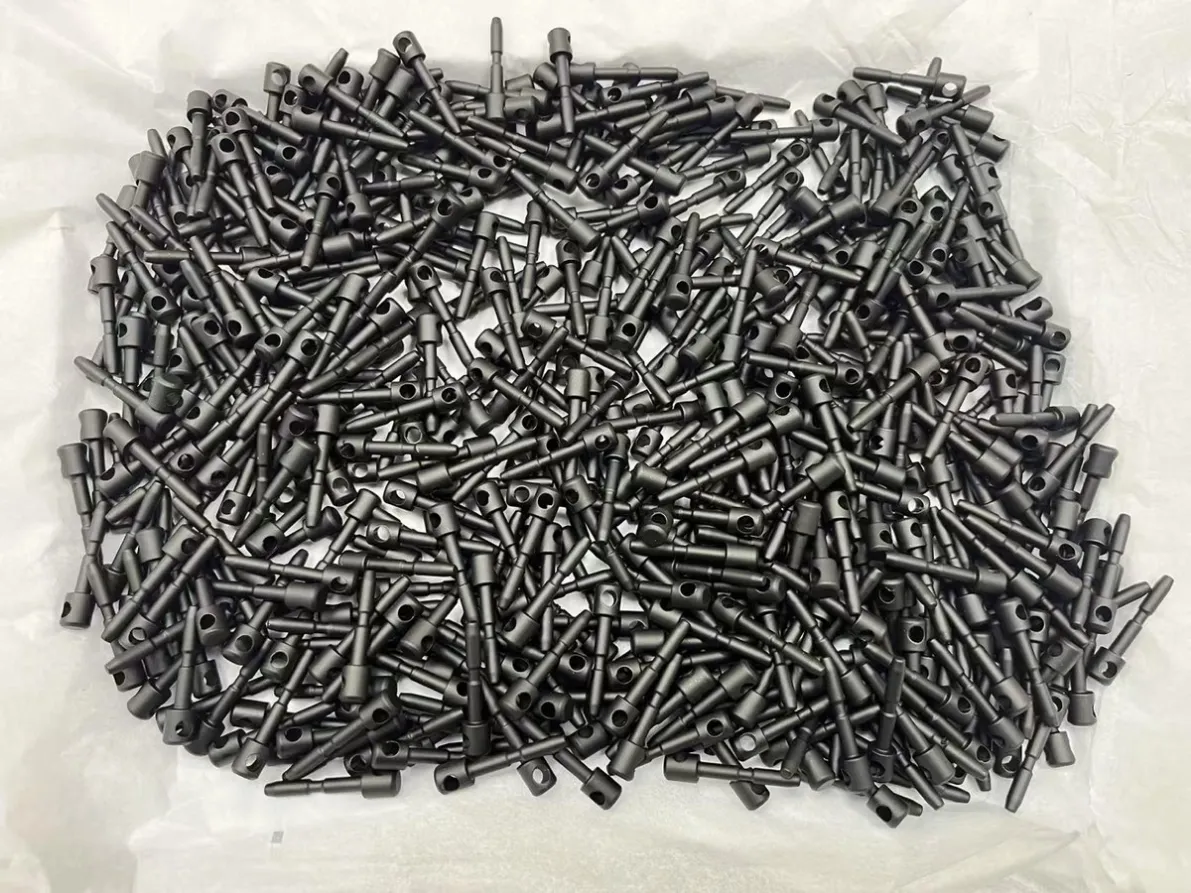
A complete note reads like: "Anodize per MIL-PRF-8625 (formerly MIL-A-8625), Type II, Class 2, black." Add coating thickness if a dimension depends on it — remembering that roughly half the coating grows into the metal and half builds up, so precision bores and threads need the allowance planned at machining, or a mask note. If the part is a cosmetic housing, say so: it tells the shop the part gets bead blasted before anodizing and handled as a visible surface. Our anodizing specs guide covers Type II Class 1 vs Class 2 in detail.
Chem film
Write "Chem film per MIL-DTL-5541" and the class: Class 1A for maximum corrosion protection, Class 3 where low electrical resistance matters — grounding and EMI contact faces are the usual Class 3 case. Chem film is often the finish people forget to call out on faces that must stay conductive under paint or anodize; if a face needs it, name the face.
Powder coat
Name the color by RAL number, the texture (smooth, fine texture, matte) and the film thickness — typically 60–80 µm (2.4–3.1 mil) for general industrial parts. Note any faces to mask: mounting faces that must sit flat, grounding points, threaded holes. Powder coat is thick enough to change fits, so "powder coat all over" on a part with press fits is a callout that will come back as a question — save the round trip and mark the exceptions.
Plating
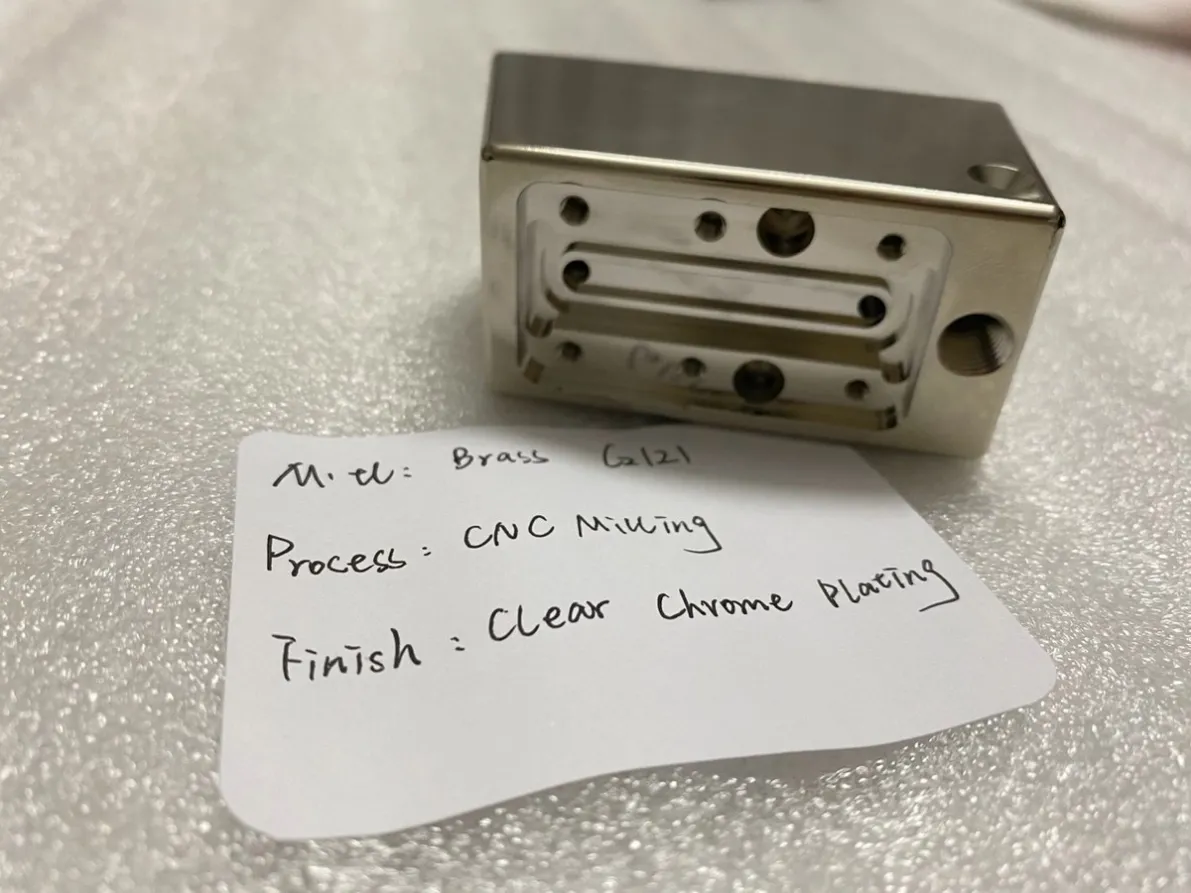
For zinc on steel: "Zinc plate per ASTM B633" plus the thickness class and the chromate color (clear, yellow/color, black) — and trivalent passivation if the product goes to the EU. For nickel on brass or steel, say whether it is electrolytic nickel or electroless nickel (ENP); they differ in uniformity and hardness, and the price differs too. Selective plating — only a contact area plated, the rest bare — is available; call out the plated area on the drawing view, not in prose.
Passivation and electropolishing
For stainless: "Passivate per ASTM A967" is a complete note. If the part is electropolished, say so separately — electropolishing includes a passivation effect but is specified and priced as its own process, and it changes the surface brightness, which is usually the point.
Surface roughness
Where a finish meets a function — sealing faces, sliding faces, cosmetic faces — add an Ra value with units: "Ra 0.8 µm (32 µin)" is a specification; "smooth" is a hope. Sealing faces on the parts we machine are held at Ra 0.8 µm (32 µin) unless the drawing says otherwise.
The omissions we see most
- "Anodize" with no type — Type II and hardcoat differ in price by enough to change the quote.
- Color with no reference — no RAL, no sample, no previous batch to match.
- Masking agreed verbally — the drawing travels with the part; the email does not.
- Threads and bores not mentioned on a coated part — the coating thickness lands in the fit.
- A finish note that contradicts the material — hardcoat on a part drawn in a soft temper, chem film specified on stainless.
FAQ
Can I just write "finish per our standard practice"? Only if the shop knows your standard practice in writing. A one-line note with process, standard and color takes a minute and removes the guesswork.
Where should the finish note go — title block or the views? The general note goes in the title block area; anything that applies to one face only (masking, selective plating, a local Ra) goes on the view, pointing at that face.
Do I need to specify coating thickness for anodize? If any dimension is tight, yes — or tell us which dimensions are tight and we will machine with the build-up in mind. For purely cosmetic parts, type and color are enough.
What if two finishes meet on one part? Common — black anodize outside, chem film on a grounding face, for example. Call out both, and mark the boundary on the view; "approx." is fine if the boundary is not critical.
Will you flag a bad callout before quoting? Yes. An ambiguous finish note is one of the things our manufacturability check catches — we would rather ask one question than refinish a batch.