Sheet Metal Welding: What to Specify
Specifying welding on sheet metal parts: where welds go, continuous or spot, what to expect on distortion and finishing, and what to put on the drawing.
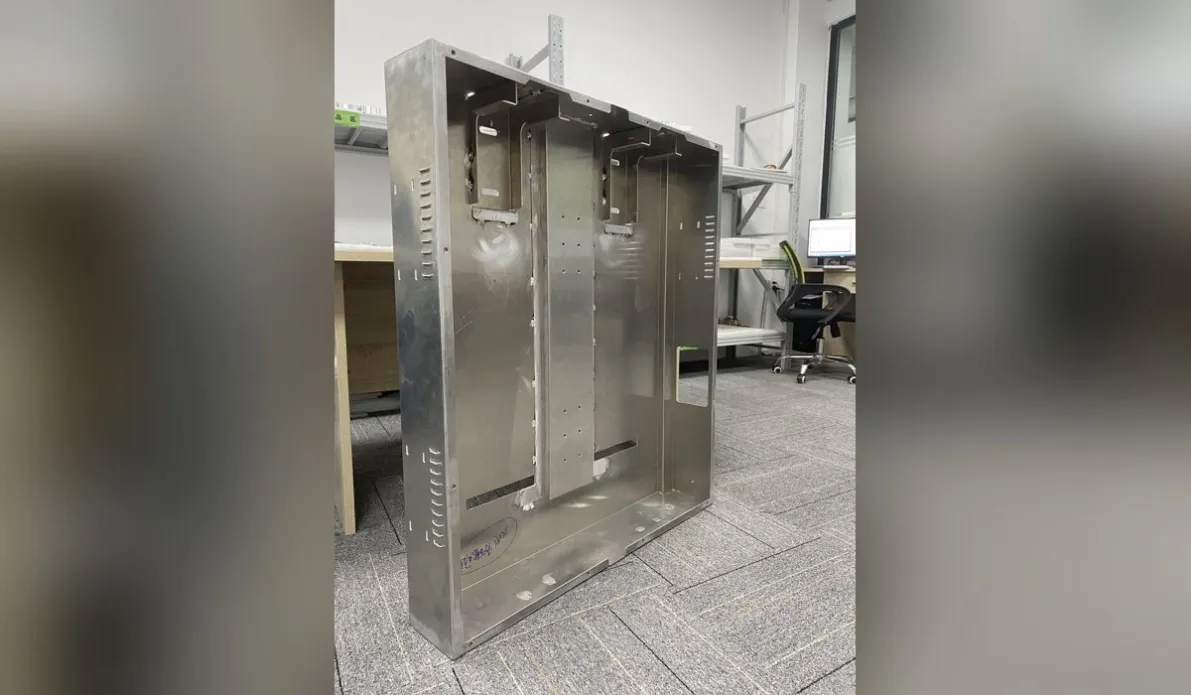
Yes — welding is a standard step in our sheet metal work: corners closed, seams joined, brackets and bosses attached, frames squared up. We weld by laser, TIG (argon arc), MIG and resistance spot welding, choosing the method by material and thickness — our companion article on welding methods for sheet metal compares the four. This article is the buyer's side of the subject: what to specify on the drawing, and what to expect from the finished part. Send the drawing and the quantity and we will quote it — inquiries are answered within 8 hours and quotes usually come back within 24 hours.
What welding does in a sheet metal part
A folded sheet metal part is an open shape. Welding is what closes it and stiffens it:
- Corner joints — closing the corners of a box or enclosure so the shell is rigid and the seams do not gape.
- Seams and flanges — joining two pieces along an edge where folding alone cannot make the shape.
- Attachments — brackets, standoffs, bosses, hinge leaves and mounting feet welded onto a panel or frame.
- Frames — the square and rectangular structures in our sheet metal equipment frames and panels work, where welding turns cut-and-folded sections into one rigid structure.
What to specify on the drawing
Most welding problems on finished parts are drawing problems first. Four things are worth stating clearly.
Where the weld goes — and where it must not. Mark the joints to be welded. Just as important, mark faces that must stay weld-free: a sealing face, a sliding face, a face another part bolts against. Weld spatter and a raised bead on the wrong face are the two most common welding complaints, and both are prevented by one note.
Continuous or intermittent. A continuous (full) weld seals a joint and gives the most strength; intermittent or stitch welds hold a joint with less heat, less distortion and less cost, and are enough for many covers and frames. Spot welds suit overlapping flanges on enclosures. If the joint has to be sealed against dust or liquid, say so — that decides continuous welding for you.
Inside or outside. On a box corner, welding the outside leaves a bead to dress back for appearance; welding the inside keeps the outside clean but is not always accessible. State which faces are visible in the finished product and we will plan the joint accordingly.
Post-weld finish. Decide whether beads are left as-welded, dressed flush, or ground and blended before coating. On visible parts that will be powder coated, a dressed weld under the coating is the difference between a seam you can see and one you cannot. Our article on powder coating sheet metal covers how coating interacts with welds and edges.
A standard weld symbol is welcome but not required — a clear note ("weld all corners continuous, outside, dress flush") tells us everything. If the drawing says nothing about welding at all, we will ask at the quote stage rather than assume, because the answer changes the price.

Distortion: what to expect
Welding puts heat into thin sheet, and thin sheet moves. Thin welded assemblies always move a little; what matters is how the distortion is controlled. What can be done, and what we do, is control it:
- The joint design and weld sequence are planned so heat is balanced — welding opposing corners in turn rather than chasing around the part.
- Parts are clamped in fixtures during welding, and stitch welding is used where full welds would pull the panel.
- Tolerances are agreed with the welding in mind: a welded assembly is held to sheet metal tolerances (±0.1 mm (±0.004") on individual features), but long welded frames will not hold machining tolerances across their full length, and a drawing that asks for it will be flagged at the manufacturability check with a workable alternative — machining a face after welding, for example.
Design helps more than any of this: symmetric joints, welds kept away from bend lines, and sections sized so the weld is not fighting the part. Our sheet metal design tips cover the related rules for bends, flanges and holes.
After welding: finishing the part
Welded parts are usually dressed and finished as one piece. Beads on visible faces are ground and blended, the assembly is cleaned, and then the finish goes on over everything at once — powder coating, wet paint, or for stainless, passivation. Welding before finishing means the joint and the parent metal take the same coating, with no bare weld left to rust or show a different color. If part of the assembly must stay uncoated — a grounding face, a thread — it is masked, and that too belongs on the drawing.
What to send for a quote
The drawing or 3D model of the assembly (individual part drawings plus an assembly view is ideal), the material and thickness, the finish and the quantity — plus your welding notes if you have them, or a sentence about which faces are visible and whether the joints must be sealed. Small-batch welded assemblies typically take longer than simple folded parts; we will give the lead time with the quote rather than guess it here. Send your drawing for a quote via our contact page.
If your drawing calls out a welding standard such as AWS D1.3 for sheet steel, tell us at quote stage and we will confirm against it.
FAQ
Which welding method will you use on my parts? The one that suits the material and thickness: laser welding for thin sheet and fine, low-distortion seams; TIG for visible, high-quality joints in stainless and aluminum; MIG for thicker carbon steel sections and frames; spot welding for overlapping flanges in volume. If your specification names a method, we weld to it; otherwise we choose and can tell you which and why.
Do I need weld symbols on the drawing? No. Standard symbols are fine, but a plain note covering which joints, continuous or spot, inside or outside, and whether beads are dressed flush is equally workable. What matters is that the information is there.
Can a welded seam be invisible after powder coating? Very close to it. The bead is dressed flush and blended before coating, and the coating goes over the whole part at once. A faint witness line can remain on close inspection, which is normal for fabricated parts — tell us if a face is a cosmetic show face and it gets the extra dressing time.
Will welding distort my enclosure? Some movement is unavoidable in thin sheet, and we control it with fixturing, weld sequence and stitch welds where they are sufficient. Critical faces can be machined after welding if the drawing needs them precise. We will flag any tolerance we think welding puts at risk before you order, not after.
Can you weld aluminum sheet metal as well as steel? Yes — aluminum enclosures and frames are welded by TIG or laser, stainless by TIG, laser or MIG, and carbon steel by any of the four methods. The method follows the material; say the material on the drawing and the choice is made from there.