Machining Long Shafts and Threaded Rods: Keeping Long Parts Straight
Long steel shafts and threaded rods bend, whip and drift if they are machined like short ones. Steady rests, sequenced cuts and straight shipping — how long parts stay straight.
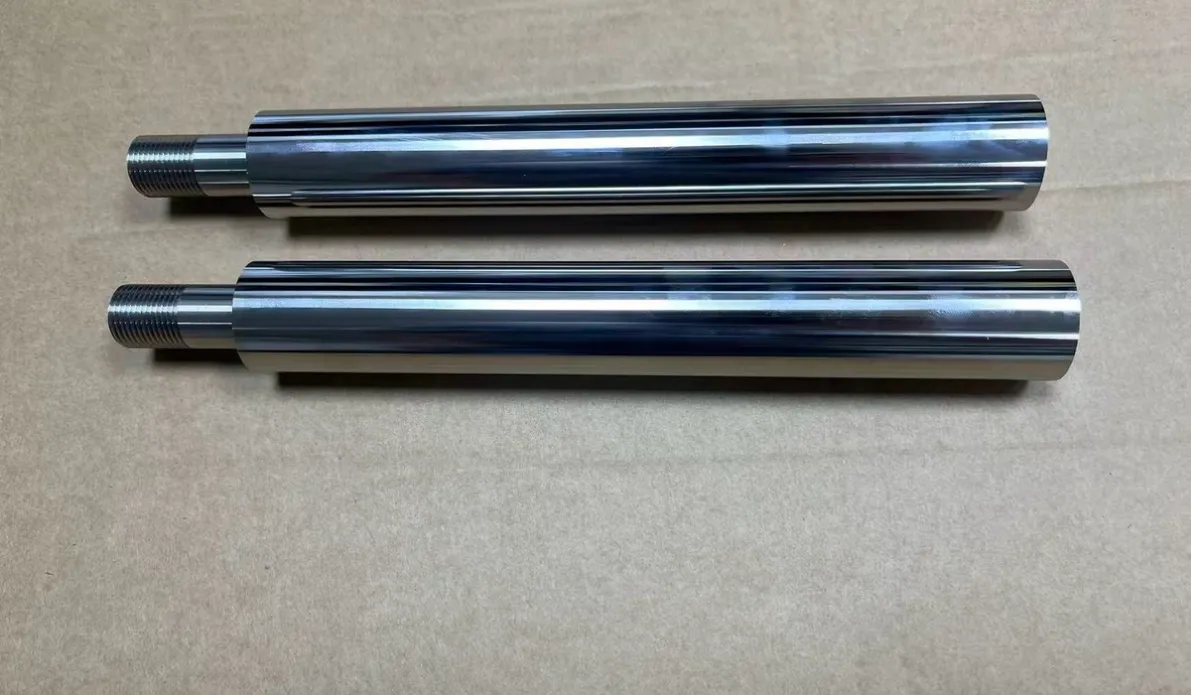
A short shaft is a turning job. A long one is a fight against physics: the part flexes away from the tool, whips at speed, heats and grows while it is being cut, and — having survived all of that — can be bent by its own weight in the shipping carton. The steel shafts and threaded rods in our photos are the everyday version of this work. Our earlier piece on turned shaft parts covers the parts themselves; this one is about the length problem, and how it is managed from the first cut to the crate.
Deflection: the part pushes back, badly
Cutting force bends a long, slender part away from the tool, most at the middle of its span. The result, uncorrected, is a barrel shape — correct diameters at the ends, oversize in the middle — and a surface finish that records every vibration along the way. The countermeasures are mechanical:
- Support the span. A steady rest or follow rest carries the part near the cut, so the tool always works on a supported section instead of the middle of a spring.
- Sequence the cuts. Roughing passes are balanced along the length so stress is relieved evenly; finishing passes are light and taken when the part has settled, not straight off a hot roughing cycle.
- Mind the overhang. How much part sticks out of the chuck, and whether the tailstock center is doing its share, decides the stiffness of the whole setup before a single cut is made.
Threads along a long rod
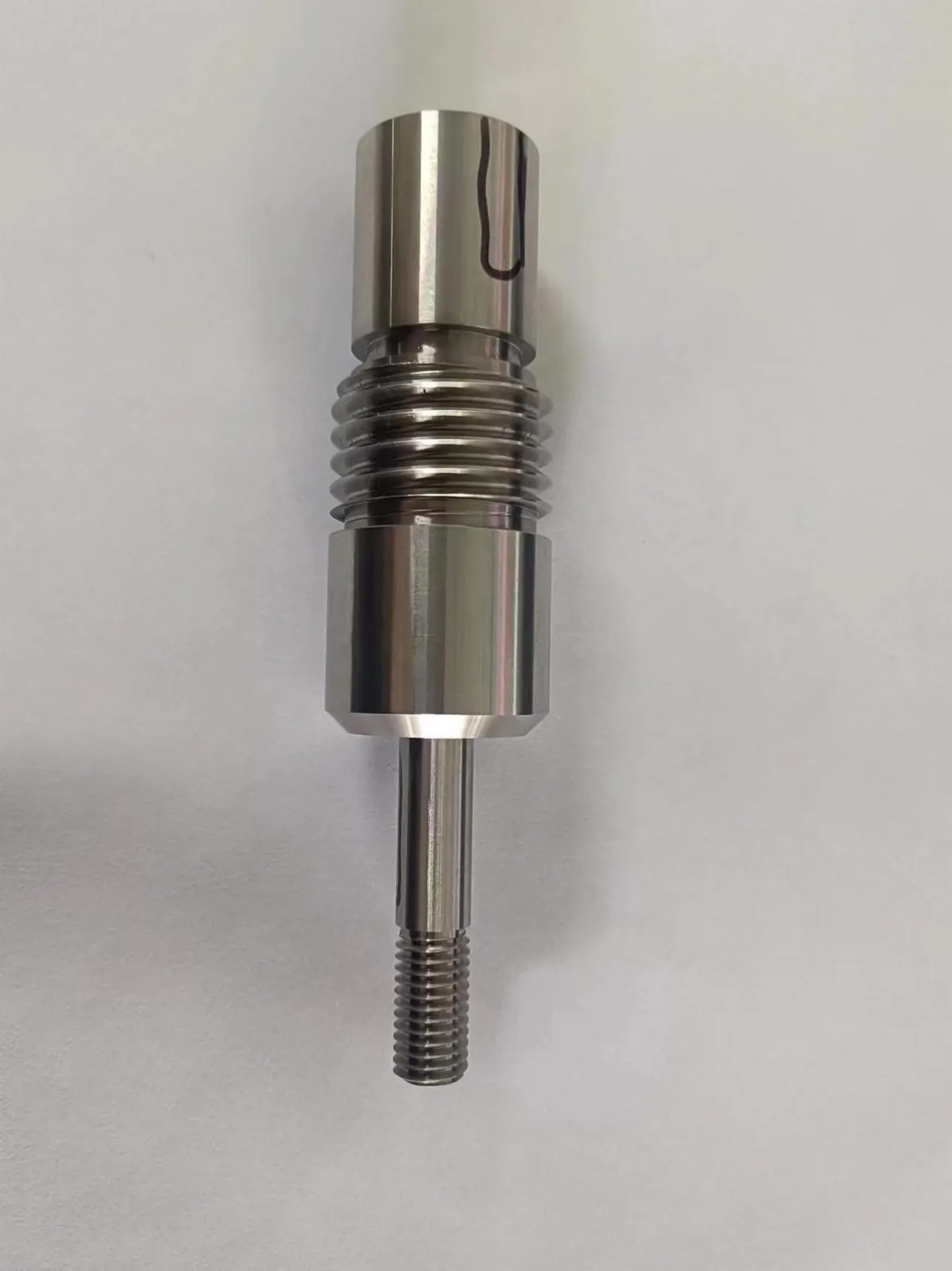
Threading adds its own length problems. A long threaded rod — the pile in our photo is the production version — must hold its thread form along the whole engagement length, and any bow in the rod becomes a thread that binds at one end and rattles at the other. Thread cutting and thread rolling both start from a straight blank; checking straightness before threading, not after, is what keeps the batch honest. Long threads also accumulate heat pass over pass, and a rod that was straight hot can tell a different story cold — final checks happen at room temperature, on the finished part.
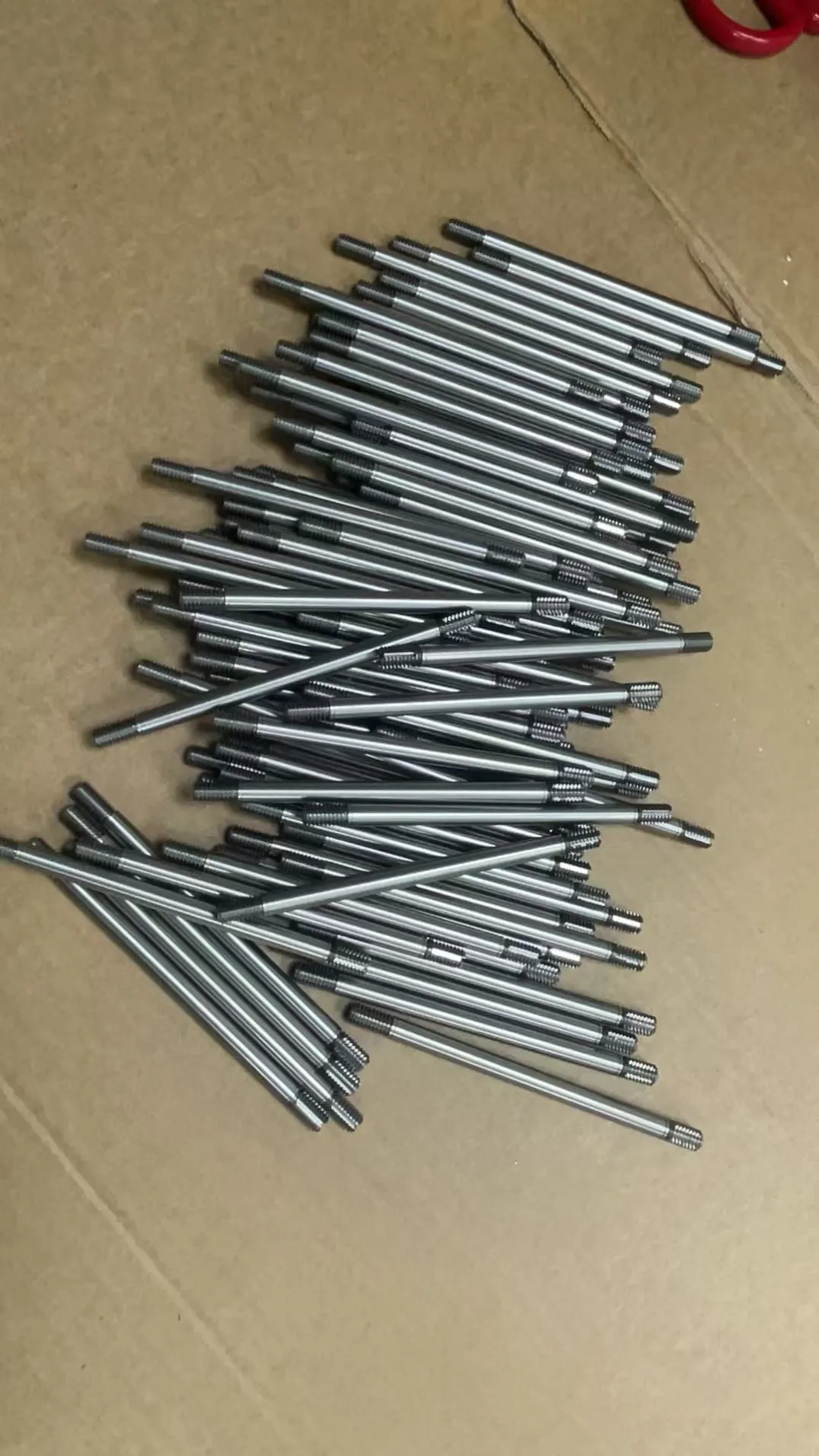
Straightness is a specification, not a hope
On long parts, straightness has to be treated like any other tolerance: defined, measured and recorded. We check long shafts over their length — on centers, with the indicator reading the runout along the span — because a diameter can be perfect at five stations while the part is quietly bent between two of them. If your drawing carries a straightness or runout callout, it is machined and inspected to it. If it does not, and the part is long and slender, expect us to ask: a shaft that must run true in bearings needs the callout, and adding it at drawing stage costs nothing compared with discovering the need at assembly.
Polishing and finishing long parts
The polished shafts in the photo were finished along their length, and long-part finishing has the same rule as long-part cutting: support the span. Polishing an unsupported shaft presses it into the same bow the turning worked to avoid. Steel shafts of this kind are typically left polished and oiled, black-oxided, or plated, according to service — the finish follows the corrosion requirement, and every route starts from a straight part.
Shipping: where straight parts go to bend
More long parts are bent after inspection than during machining. A long shaft packed loose in a carton sags, gets stacked under heavier freight, and arrives with a bow it did not leave with. Our long parts ship supported — sleeved or tubed, packed so the carton carries the load instead of the part — the same thinking as the rest of our packing, applied to the parts that need it most. If your receiving inspection checks straightness on arrival, that is the moment this packing earns its cost.
Send long work to our CNC turning team with the drawing — including, if the application needs it, the straightness callout. Length is a solvable problem; it just has to be in the plan.
FAQ
How long a shaft can you turn? Long shafts are regular work for us. The practical answer depends on the diameter and how the part must be supported — a slender shaft is a support and sequencing question long before it is a size question. Send the drawing with the length and diameter, and we will confirm it against the actual part rather than quote a generic figure.
Why did my long shaft measure fine at the ends but oversize in the middle? Deflection. The cutting force bowed the part away from the tool at mid-span. It is the classic long-part error, and it is prevented with steady or follow rests and balanced cutting sequences — not with a more careful final measurement.
Can a bent long shaft be straightened? Sometimes, by controlled press straightening, and the result can be perfectly serviceable — but it is a salvage operation, not a process. The economical answer is a part that never bends: supported machining, verified straightness, supported packing.
Should I specify straightness on the drawing? If the shaft runs in bearings, slides in a bore, or carries a long thread — yes. A straightness or total runout callout tells us the requirement and how it will be inspected. Without it, "straight" is an opinion, and opinions differ at goods-in.
How do you check straightness? On centers, with a dial indicator traversed along the part, which reads the bow directly as runout along the span. Diameter stations alone cannot see a bend; the traverse check can.
How are long parts packed so they arrive straight? Supported along their length — in tubes or sleeved, in cartons that carry stacking loads themselves. A long part should never be the stiffest thing in its own box.