Machined Standoffs and Spacers
Custom machined standoffs and spacers in aluminum, brass, stainless steel and POM: hex, round and threaded types turned to length in small batches.
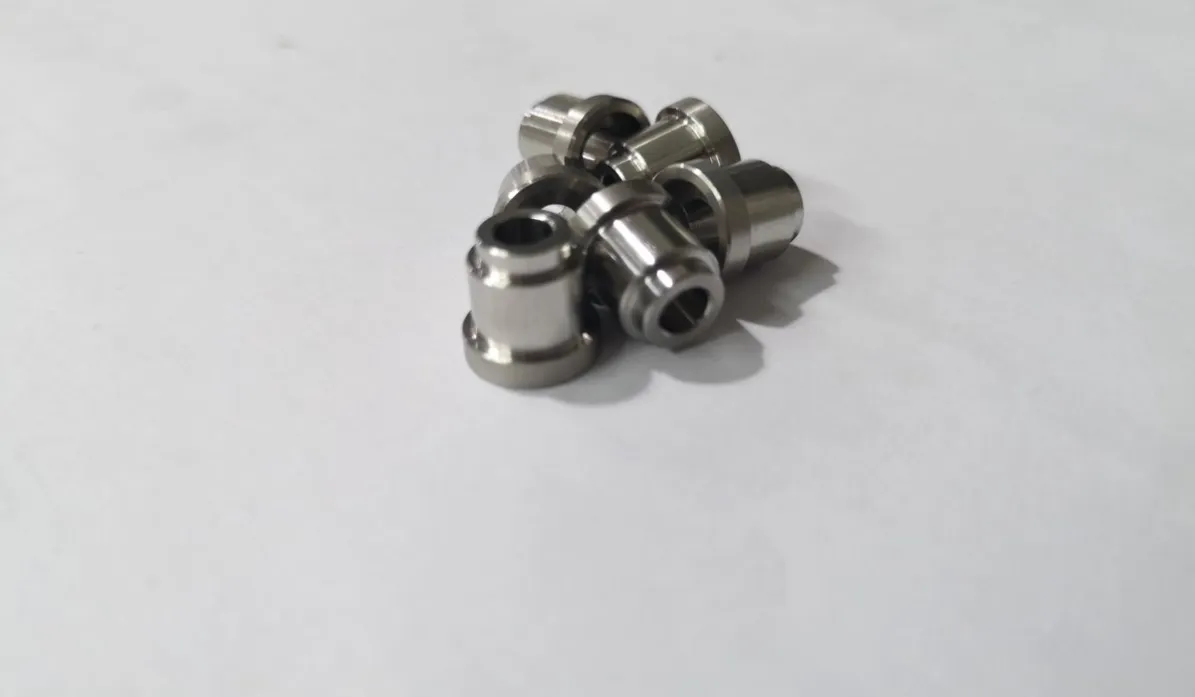
Yes — we turn custom standoffs and spacers: hex standoffs, round spacers, and male-female threaded standoffs in aluminum, brass, stainless steel and engineering plastics. These are small parts, but they are rarely catalog parts once the length, thread or material is even slightly unusual. Send the drawing and the quantity and we will quote it — inquiries are answered within 8 hours and quotes usually come back within 24 hours.
The types we turn most
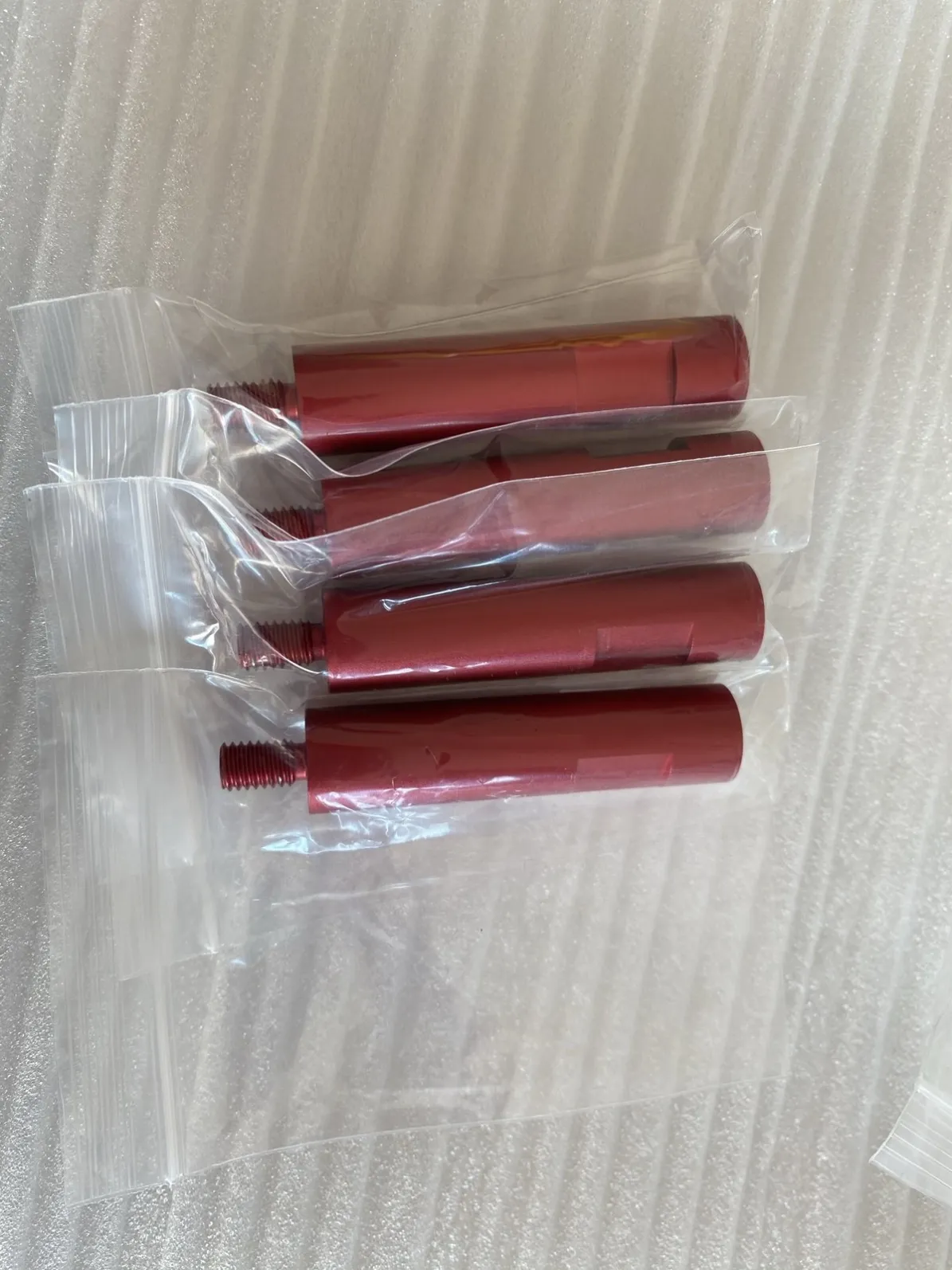
- Hex standoffs — the board-and-panel classic: a hex body you can hold with a wrench, with a threaded hole, a stud, or one of each. Female-female, male-female and male-male are all routine.
- Round spacers and sleeves — plain tubes and collars that set a distance: over a shaft, around a bolt, between two plates. Often unthreaded, sometimes with a close-fitting bore.
- Threaded spacers and coupling nuts — longer hex or round bodies with internal threads both ends, used to join threaded rods or extend a stud.
- Shoulder spacers and stepped sleeves — a spacer with a locating shoulder, where the shoulder registers in a hole and the length sets the gap.
- Insulating spacers — the same shapes in POM (Delrin) or nylon, where the part also has to break an electrical path or avoid marking a surface.
Most orders are prototypes and small batches: a board stack height that changed, a panel that moved, a thread combination the catalogs do not stock. Parts like these sit in the same family as the turned shafts, flanges and knurled knobs we machine every week — small turned work is a large share of what the lathes do.

Materials
Brass (C36000 free-machining brass, or CZ121 on European drawings) is the traditional standoff material: it threads beautifully, does not gall, and takes nickel plating well. Most threaded standoffs we make are brass.
6061-T6 aluminum is the choice when weight matters or the part will be anodized to match a housing. Threads in aluminum are fine for assembly loads; for threads that will be undone often, brass or stainless lasts longer.
303 and 304 stainless steel cover the corrosion-resistant and higher-strength cases. POM and nylon cover insulation and light-duty spacing. If the drawing just says "standoff" without a material, we will ask — the right answer depends on what the thread has to survive.

What actually matters on a spacer
Length. The length of a standoff is its function — it sets the gap. Lengths are turned and faced to our standard ±0.1 mm (±0.004"), and to ±0.01 mm (±0.0004") where a stack of parts has to add up to a controlled total. If several spacers stack, tell us: holding each one a little tighter is cheaper than sorting a mixed batch later.
Thread fit and concentricity. A threaded standoff whose hole is off-center wobbles as it tightens and cocks the board it holds. We turn the body and thread the hole in the same setup wherever the size allows, so the thread runs true to the hex or the outside diameter. Thread sizes are metric or imperial as drawn — if your drawing mixes systems or the callout is unclear, our guide to UNC, UNF and metric thread callouts shows the formats we work to, and we confirm the thread at quote stage rather than assume.
End faces parallel and clean. The two faces of a spacer are its reference surfaces. They are faced flat and parallel, deburred so no raised edge falsifies the stack height, and the thread entry is chamfered so the part starts by hand without cross-threading.
Hex size. Worth stating on the drawing rather than leaving to habit — across-flats sizes differ between metric and imperial practice, and the hex has to fit the wrench space the assembly allows.
Finishes
Brass standoffs are commonly nickel plated, which is also the finish that keeps them looking clean in visible assemblies. Aluminum parts are clear or black anodized per MIL-PRF-8625 (formerly MIL-A-8625) Type II, or chem filmed where electrical contact through the part is needed. Stainless is passivated. Plastic spacers are supplied as-machined. Threads can be masked during coating on request — a plated internal thread changes the fit, and we machine with the coating build-up in mind where the thread has to stay to gauge.
Quantities, packing and quotes
Standoffs and spacers suit batch turning well: once the program and the bar are set, runs from a handful of prototypes to production quantities are straightforward, and repeat orders come back the same as the first. Our article on small parts in bulk turning runs covers how batch sizes affect pricing. Small parts ship sorted and protected — threaded parts packed so the threads do not damage each other in transit, in trays or bags by type.
For a quote, send the drawing or a dimensioned sketch: type, material, overall length, body size, thread size and depth, and quantity. Small-batch prototypes typically take 3–5 days, and simple parts can ship in 24–48 hours depending on complexity. Send your drawing for a quote via our contact page.
FAQ
Can you make a standoff length that the catalogs do not stock? Yes — that is most of the work. Length, thread combination and material are all set by your drawing, so a 17.5 mm male-female standoff is no harder than a stock 18 mm one.
Which material is best for a threaded standoff? Brass for most cases: it machines and threads cleanly and the threads survive repeated assembly. Aluminum when weight matters, stainless when corrosion or strength governs, POM or nylon when the spacer also has to insulate.
Can you hold a stack of spacers to a total height? Yes. Tell us the spacers work as a stack and the tolerance that matters is the sum, and we will hold the individual lengths accordingly and inspect them as a set.
Do you make imperial-thread standoffs? Yes, UNC and UNF as well as metric. Put the full thread callout on the drawing — size, pitch and internal or external — and we confirm it on the quote.
What is the smallest quantity you will turn? Prototypes are welcome; a handful of parts to prove a stack-up is a normal order. Pricing per piece improves quickly with quantity on turned parts, and the quote will show the quantity breaks.