SPI vs VDI: Choosing Mold Textures for Injection Molded Parts
SPI and VDI 3400 are two different languages for mold finish — polish grades vs texture depth. What each grade looks like, what it costs, and how to specify it.
Two molded parts can come from identical tools in identical plastic and still look completely different — one glossy as glass, one matte as stone. The difference is the finish worked into the mold surface, and it is specified in one of two languages: SPI grades or VDI numbers. They are not two names for the same scale. SPI describes how a surface was polished and how it looks; VDI 3400 describes how deep an EDM texture is, in numbers tied to roughness values.
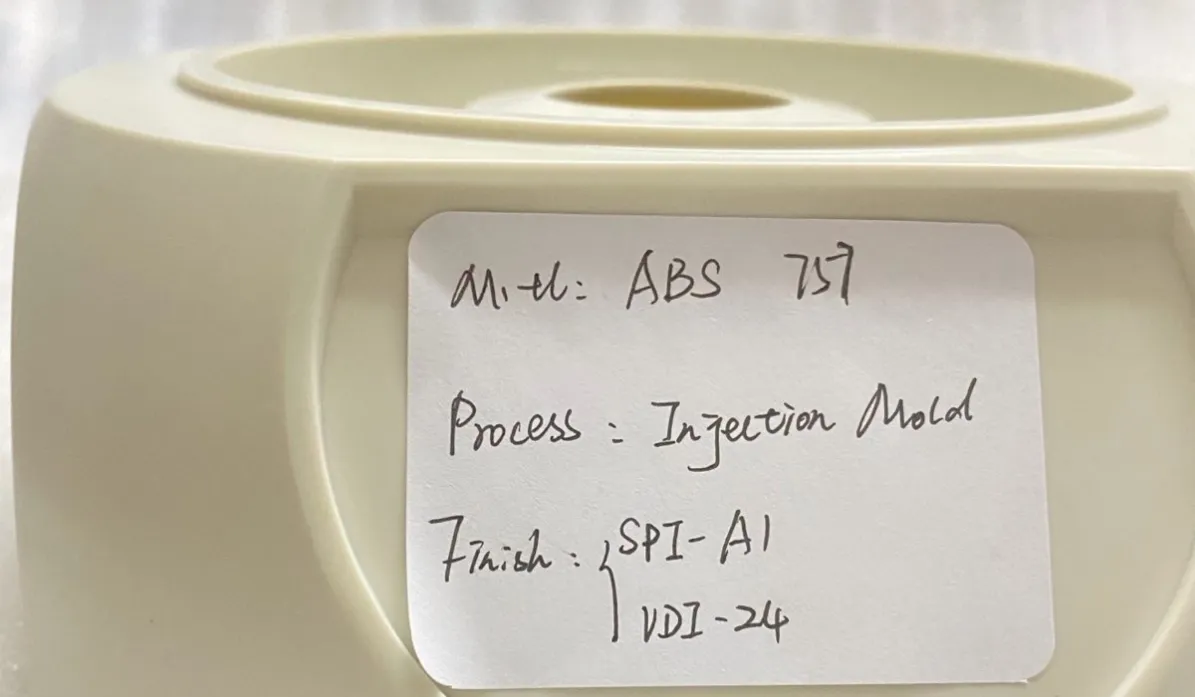
We mold parts to both standards — including housings that carry an SPI-A1 gloss face and a VDI-24 texture on the same part. Here is how to choose, and how to write the choice so the mold gets built the way you imagined.
SPI: a polish scale, from mirror to dull
The SPI standard (from the Society of the Plastics Industry) grades mold finishes in four families, each made by a different finishing method:
| Grade | Method | Result on the part |
|---|---|---|
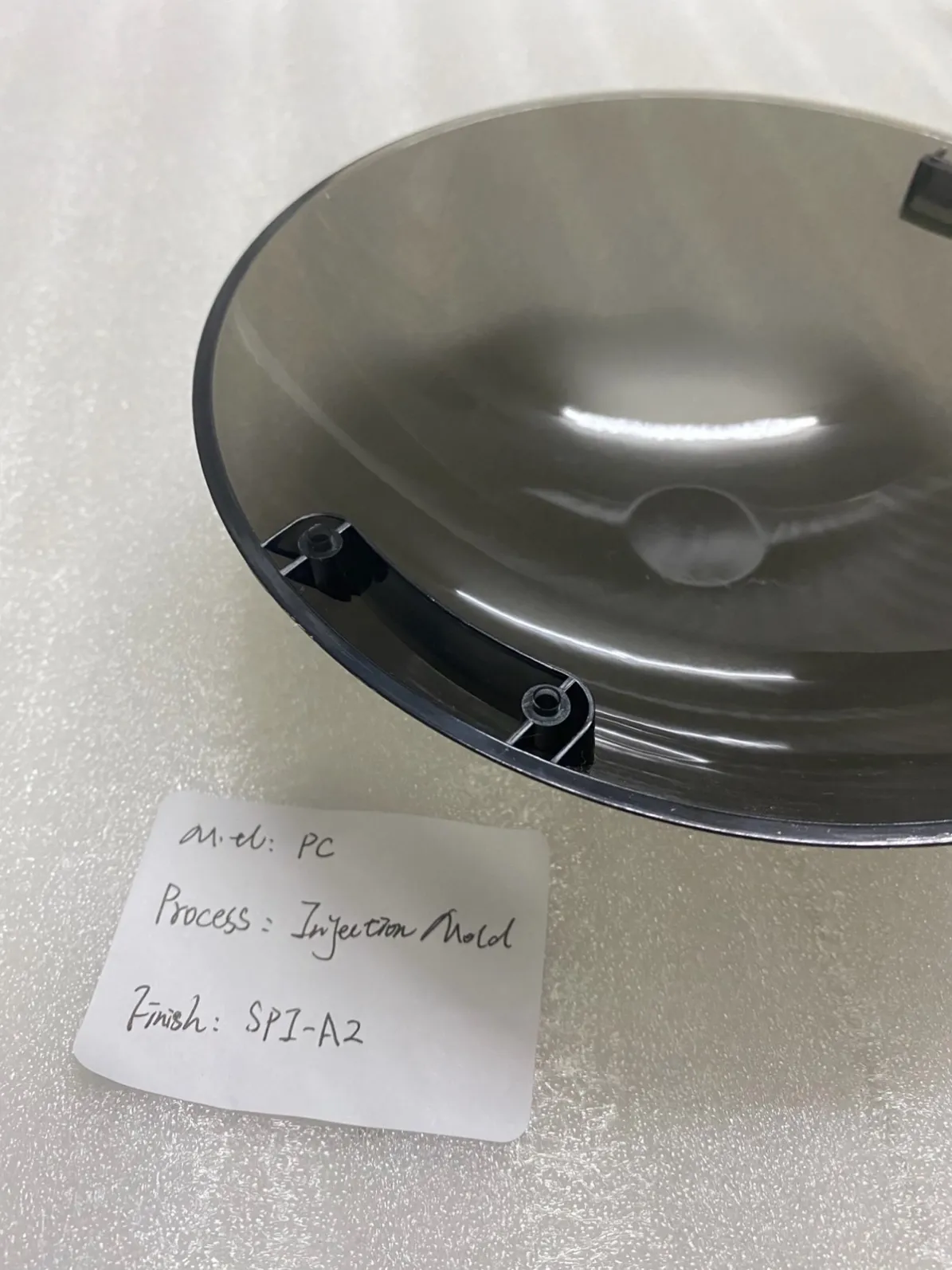
| A-1 to A-3 | Diamond buff polishing | Glossy to mirror; A-1 is an optical-grade mirror |
| B-1 to B-3 | Grit sandpaper polishing | Semi-gloss, smooth with a faint sheen |
| C-1 to C-3 | Grit stone | Matte, flat appearance |
| D-1 to D-3 | Dry blasting (glass bead / aluminum oxide) | Dull, lightly textured, no shine |
Within each family, the lower number is the finer finish. SPI is fundamentally an appearance scale: it tells the mold maker what the surface should look like, and the polishing is done by hand, which is why the A grades — above all A-1 — are the most expensive finishes in the catalog. A mirror polish is hours of skilled handwork on hardened steel, and every scratch in the mold prints onto every part.
VDI 3400: a texture depth scale, in numbers
VDI 3400 comes from the German engineering association and works the other way around. The texture is cut into the mold by EDM (electrical discharge machining), and the grade number maps directly to a surface roughness:
| VDI grade | 12 | 15 | 18 | 21 | 24 | 27 | 30 | 33 | 36 | 39 | 42 | 45 |
|---|---|---|---|---|---|---|---|---|---|---|---|---|
| Ra (µm) | 0.40 | 0.56 | 0.80 | 1.12 | 1.60 | 2.24 | 3.15 | 4.50 | 6.30 | 9.00 | 12.5 | 18.0 |
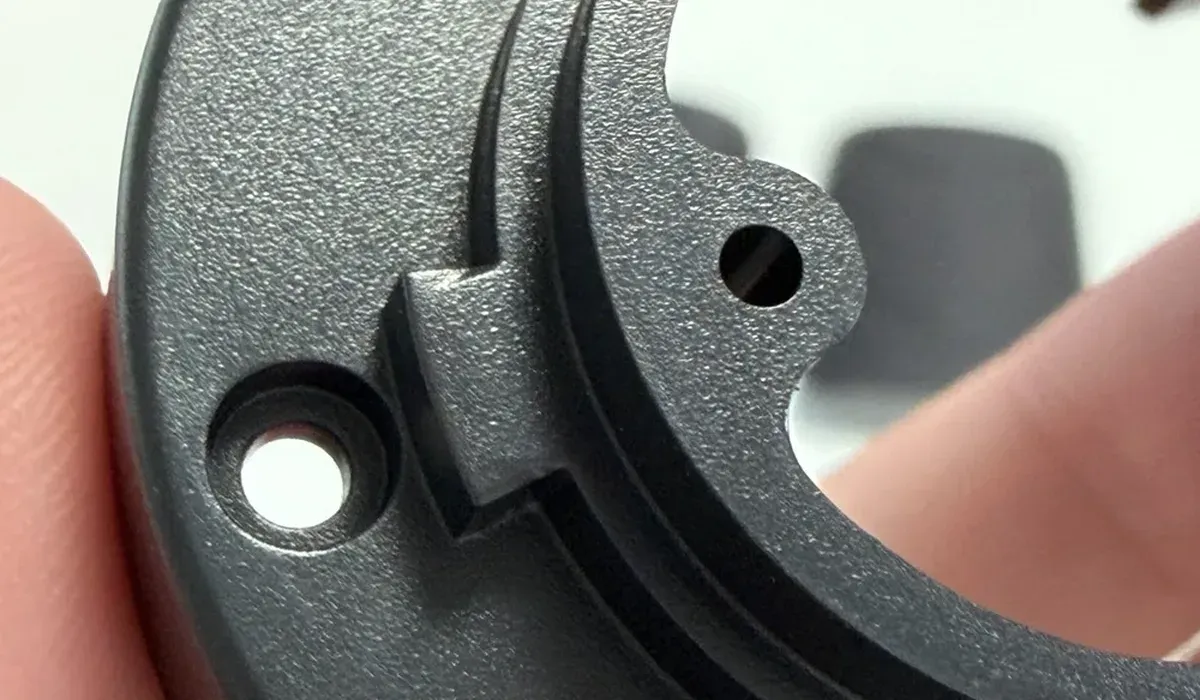
Low VDI numbers are fine textures you feel more than see; high numbers are coarse, visibly grained surfaces. Because the number is tied to a measurable roughness, VDI is the more engineering-friendly of the two standards — two mold shops on two continents will produce the same VDI-30 from the number alone, with no reference plaque to argue over.
Putting them side by side
There is no exact conversion — the scales measure different things — but in appearance terms the working correspondence used by most mold shops is:
| Appearance | SPI | VDI 3400 |
|---|---|---|
| Glossy / polished | A-1 to A-3 | 12–18 |
| Semi-gloss | B-1 to B-3 | 18–24 |
| Matte | C-1 to C-3 | 24–33 |
| Dull / heavy texture | D-1 to D-3 | 33–45 |
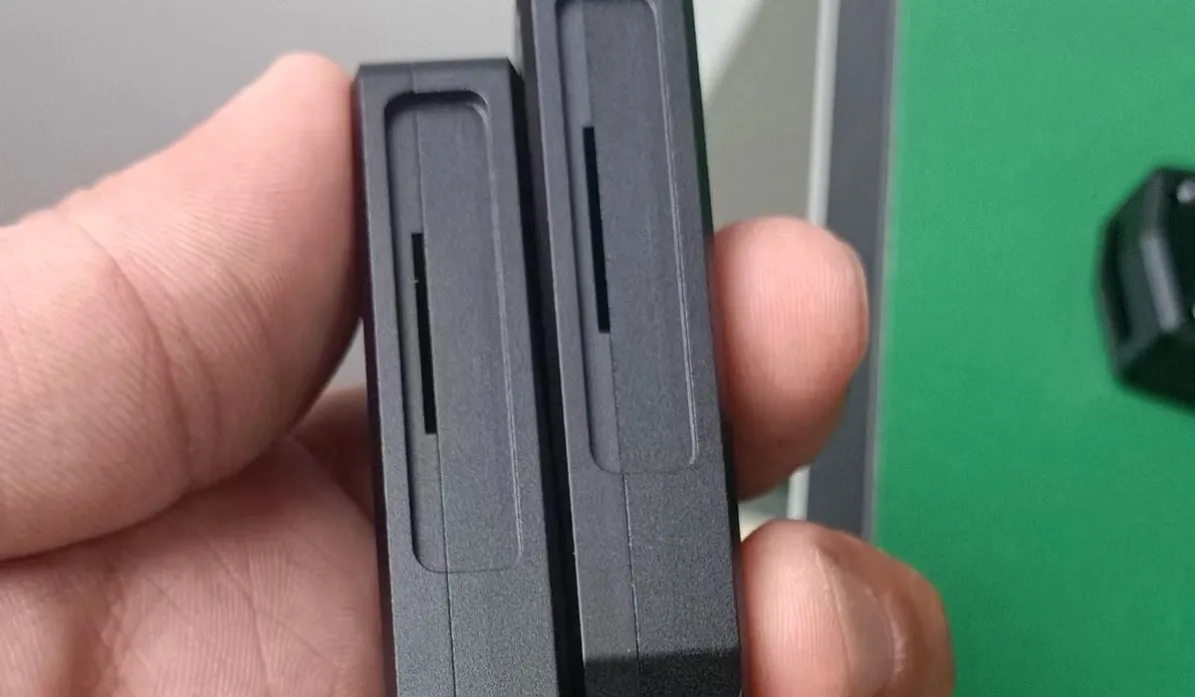
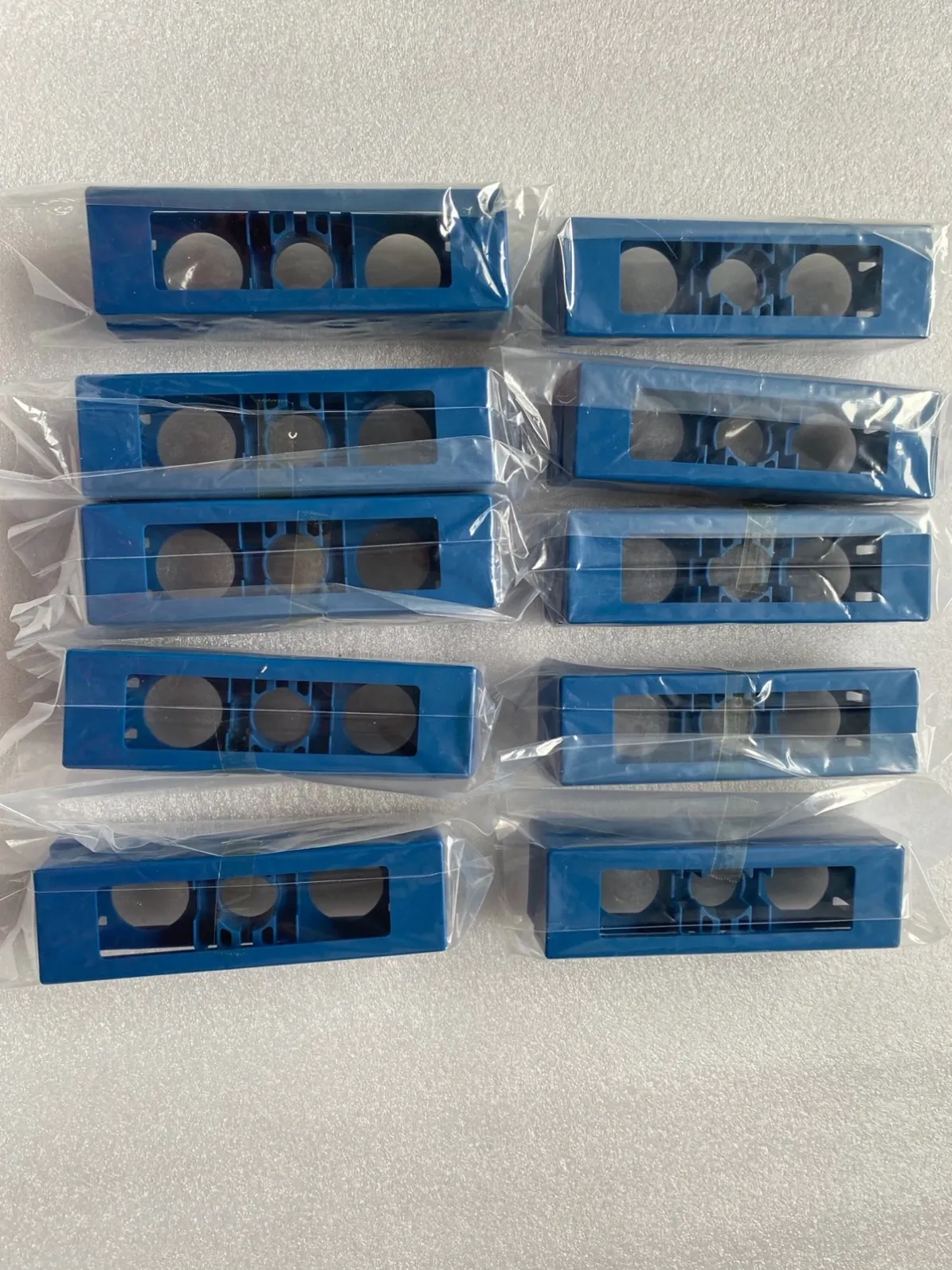
Our ABS housing in the photo sits at two points of this table at once: the feature face is polished to SPI-A1, while the surrounding surface carries a VDI-24 fine matte texture (Ra 1.6 µm) — glossy where the part wants to shine, matte where it wants to hide fingerprints and read as a technical surface.
Mixing finishes on one part
Combining a gloss area with a textured area on the same part is routine, with two conditions:
- A clean boundary. The two finishes need a defined edge between them — a step, a groove, a shutoff line. A finish cannot fade into another; wherever the boundary is vague on the drawing, it will be wrong on the part.
- Separate tool work. The polished area is masked while the texture is EDM-cut, then polished by hand. It adds mold cost and time, so it belongs on parts where the contrast is doing real work — a display window against a matte housing is the classic case.
What the choice does to draft and cost
Texture is not free, in two currencies:
- Draft angle. A textured surface grips the mold. The rule of thumb is roughly 1° of added draft for every 0.025 mm of texture depth: a light VDI-21 to 24 texture may release with 1–2°, while a coarse VDI-36 to 45 surface can need 3–5° or more on the walls that carry it. Polished SPI surfaces need the least draft — but a mirror finish on a near-vertical wall will show drag marks, which is its own argument for a degree or two.
- Mold cost and lead time. The texture itself is machine time; the polish is hand time. An A-1 mirror is the most expensive finish here, a mid-range VDI texture the most economical way to get a deliberate matte. Per-part cost barely changes — the money is all in the tool, paid once.
One more practical effect: matte textures forgive. Flow lines, slight sink and handling scuffs that would shout on a gloss surface disappear into a VDI-27 or C-grade finish. On large visible housings, a fine matte is often chosen for that reason alone.
How to write it on the drawing
Specify the finish per surface, not per part:
- "Face A: SPI A-2. Side walls: VDI 3400-27."
- Name the standard every time — "24 finish" means nothing; "VDI-24" and an SPI grade are different languages.
- If one surface must match an existing part, say so and send the part or a photo; matching by eye across standards is guesswork.
If you are unsure which finish your product wants, send the 3D file and tell us what the part should look and feel like — we will propose the grades with the injection molding quote and flag anywhere the draft needs adjusting for the texture you picked. For the plastic itself, our CNC machining materials guide covers the common molding and machining resins side by side.
FAQ
Can SPI and VDI finishes be combined on one part? Yes — it is common. A polished SPI face with a VDI texture elsewhere, like the housing in our photo, just needs a clean boundary line between the two areas on the drawing.
Which standard is cheaper? Mid-range textures on either scale are comparable. The outlier is the top of the SPI scale: A-1 and A-2 mirror polishes are handwork and cost noticeably more in mold making than any standard EDM texture.
What VDI grade equals SPI B-2? There is no exact equal — SPI grades describe appearance, VDI numbers describe roughness. In look and feel, SPI B-2 sits in the same semi-gloss territory as roughly VDI 18–24. If a match matters, compare against a physical sample, not a conversion table.
Does a matte texture hide molding defects? Largely, yes. Fine matte finishes (VDI 24–30, SPI C range) hide flow lines, minor sink marks and fingerprints far better than gloss. It is one reason technical housings are so often specified matte.
Can a transparent part have a texture? It can, but texture scatters light and the part stops being transparent where the texture is. Clear windows and covers are polished — SPI A grades — and texture, if wanted at all, goes on the opaque areas only.
Do I need more draft for a textured part? Yes. Plan roughly 1° of extra draft per 0.025 mm of texture depth, so deep textures (VDI 36 and up) need several degrees on textured walls. Flag the texture early and we will check the draft in the manufacturability review before the mold is cut.