
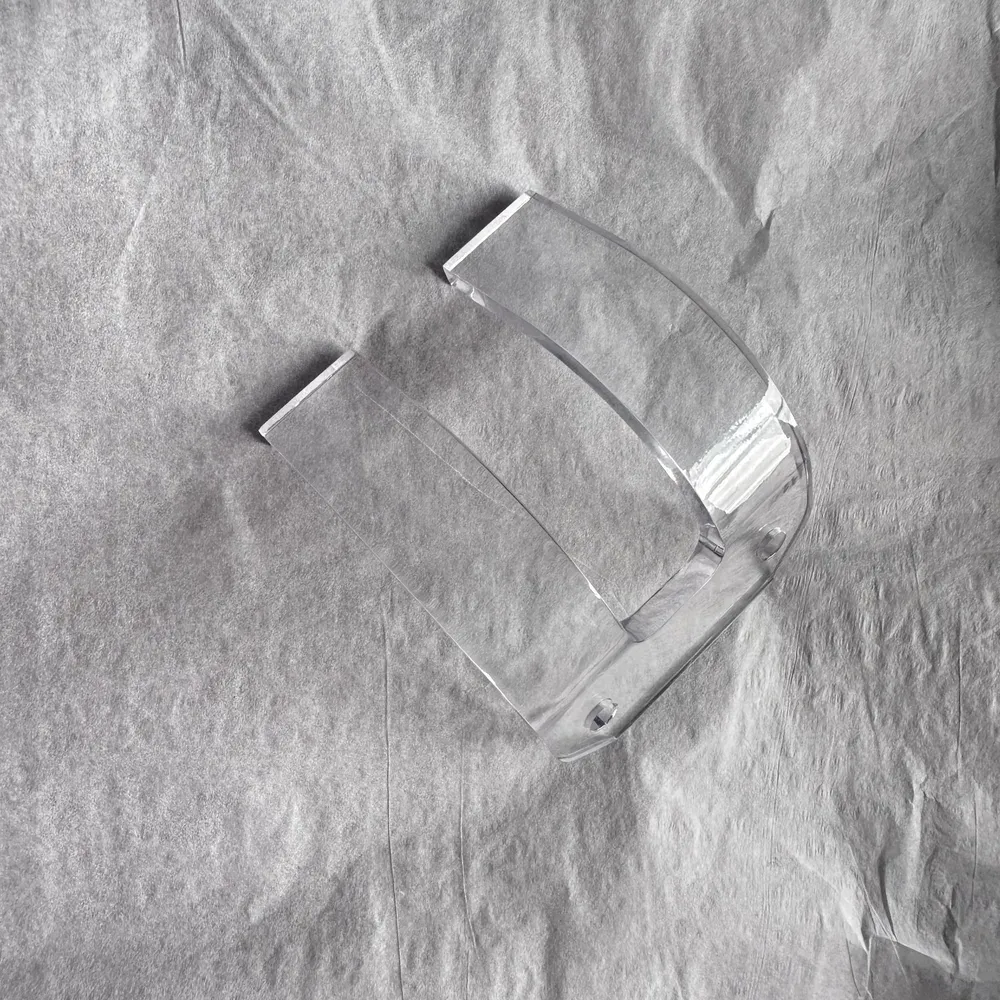
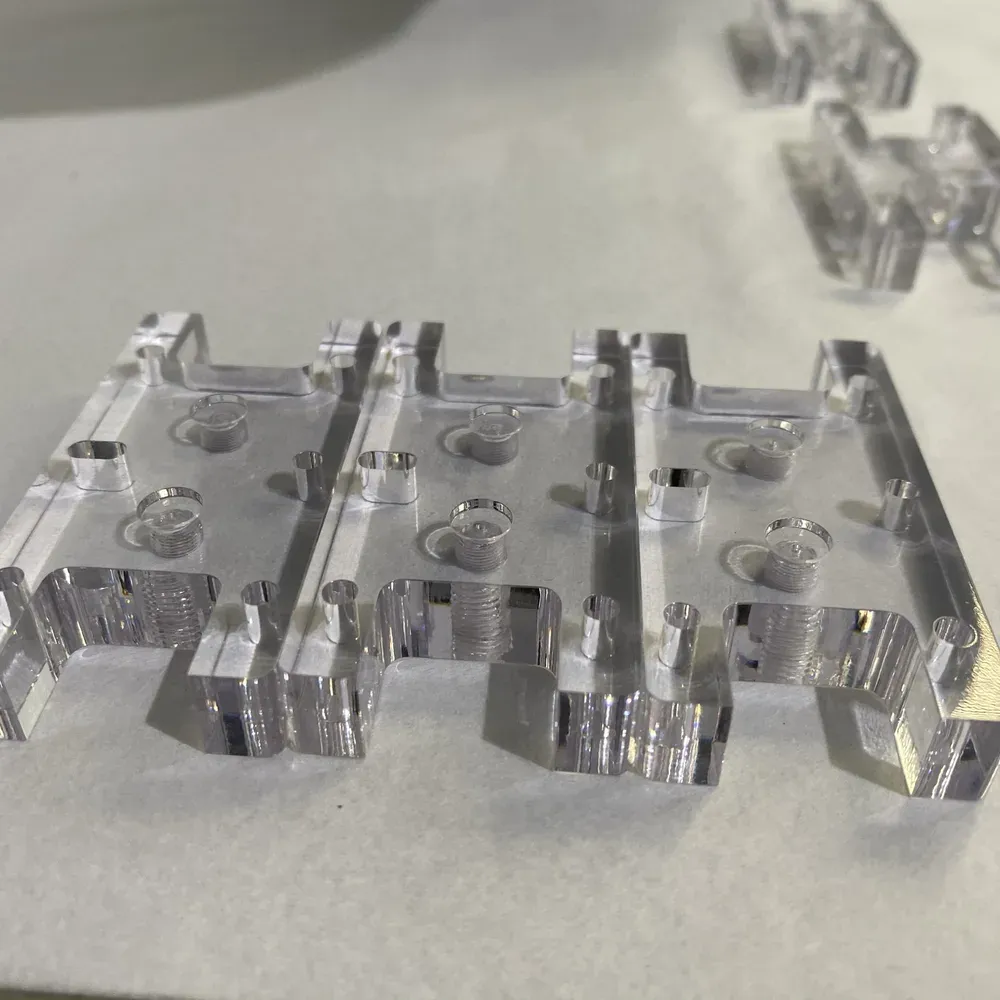
Vacuum Casting
Vacuum casting with silicone molds for short-run plastic parts that look and feel molded. Typical tolerance ±0.3 mm. A bridge to injection molding.
LEADER PROTO vacuum-casts short runs of plastic parts from silicone molds — parts that look and feel like injection molded parts, without the cost of a steel mold. Typical tolerance is ±0.3 mm. It is the usual bridge between a machined prototype and full injection molding.
How it works
A master part is machined first. Silicone is poured around it to form the mold; once cured, the mold is filled with polyurethane resin under vacuum, which pulls out air bubbles and fills fine detail. The result is a cast part that reproduces the master's surfaces, in a resin chosen to simulate the production plastic.
Vacuum casting vs injection molding
| Vacuum casting | Injection molding | |
|---|---|---|
| Tooling | Silicone mold, low cost | Steel mold, higher cost |
| Time to first parts | Faster | Slower — steel tooling first |
| Best for | Prototypes and short runs | Production volumes |
| Design changes | New master and mold | Mold rework |
The full comparison is in our article on vacuum casting vs injection molding.
Tolerances
Cast parts typically hold ±0.3 mm. They follow the master part and the resin's shrinkage, so vacuum casting suits housings, covers and appearance parts — for precision fits, CNC machining is the better route. Tolerances are confirmed with the quote.
Materials and finishes
Polyurethane casting resins simulate common production plastics — rigid, flexible and rubber-like grades. Resin can be pigmented, and parts can be painted and finished after casting, so a short run can look like the final product.
Quality, documented
Cast parts are inspected before they ship, like everything else we make. On request we provide FAI first-article reports, material certificates and a CofC. NDAs are signed on request, before drawings change hands.
Frequently asked questions
What is vacuum casting?
A way to make short runs of plastic parts without a steel mold. A machined master part is used to form a silicone mold, and polyurethane resin is cast into it under vacuum, which pulls out air bubbles and fills fine detail.
How many parts can one silicone mold make?
A limited run — the silicone degrades a little with every cast, so a mold is good for a short production run rather than ongoing volume. Send the quantity you need and we will plan the number of molds with the quote.
What tolerance does vacuum casting hold?
Typically ±0.3 mm. Cast parts follow the master part and the resin's shrinkage, so they are less precise than machined parts — fine for housings, covers and appearance parts, not for precision fits.
How does vacuum casting compare with injection molding?
Vacuum casting uses a low-cost silicone mold and gets to first parts faster; injection molding uses a steel mold that costs more and takes longer, but produces production volumes at a lower unit cost. Our article comparing vacuum casting and injection molding works through the choice.
What materials are used?
Polyurethane casting resins that simulate common production plastics — rigid, flexible and rubber-like grades — so a prototype behaves and feels close to the final molded part.
Can cast parts be colored and finished?
Yes. Resin can be pigmented, and cast parts can be painted and finished after casting. Color and finish are agreed with the quote.
How fast can I get vacuum-cast parts?
Faster than injection molding, because there is no steel tooling — but the master part and mold have to be made first. The lead time is stated in the quote for your part.
When should I choose vacuum casting over CNC machining?
When you need several copies of a plastic part — for testing, fitting or showing — and the part will eventually be molded. Machining is better for one-off parts and tight tolerances; casting is better for short runs that should look and feel like production parts.
How do I get a quote?
Send your drawing or model and the quantity you need through the contact page or by email. Enquiries are answered within 8 hours and quotes within 24 hours.
Can you sign an NDA?
Yes. We are happy to sign an NDA before you send drawings or models. Files are only used to quote and manufacture your parts.
Send a drawing — quote within 24 hours. Contact us to start.